Date Opened: October 1940
Date Closed: May 1946
Capacity: 650
Type of POW:
– Civilian Internees/Refugees (October 1940 to January 1942)
– Enemy Merchant Seamen (April 1942 to December 1942)
– Combatant Officers (and Other Ranks) (December 1942 to June 1943 and October 1944 to May 1946)
Description:
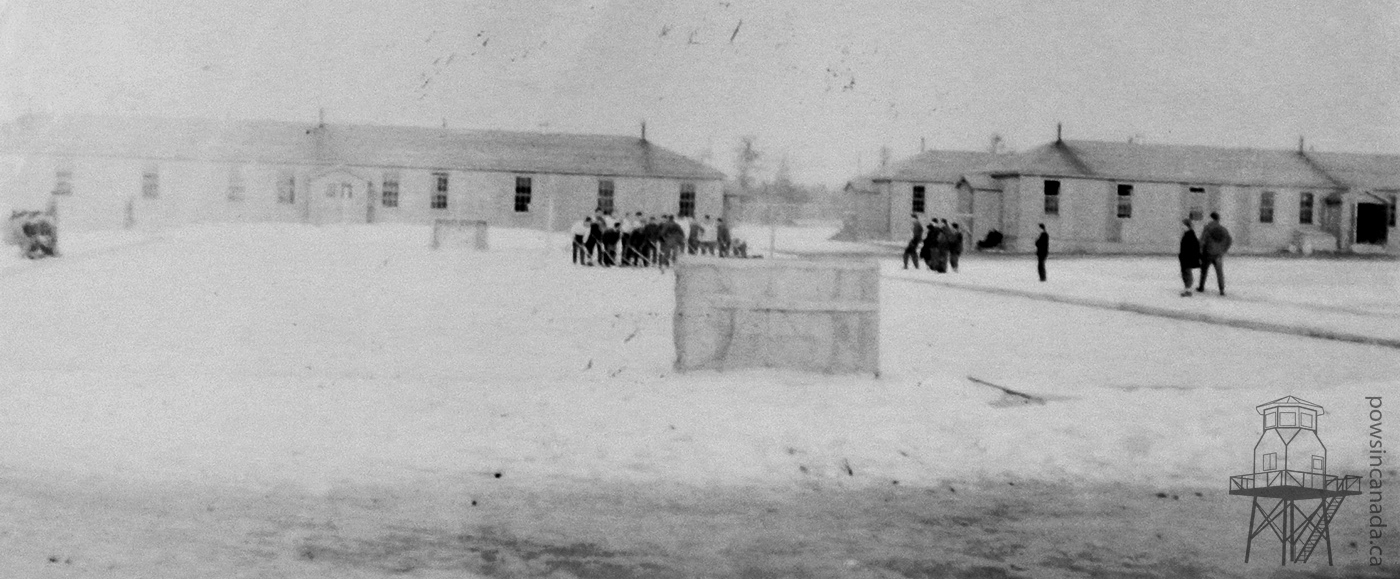
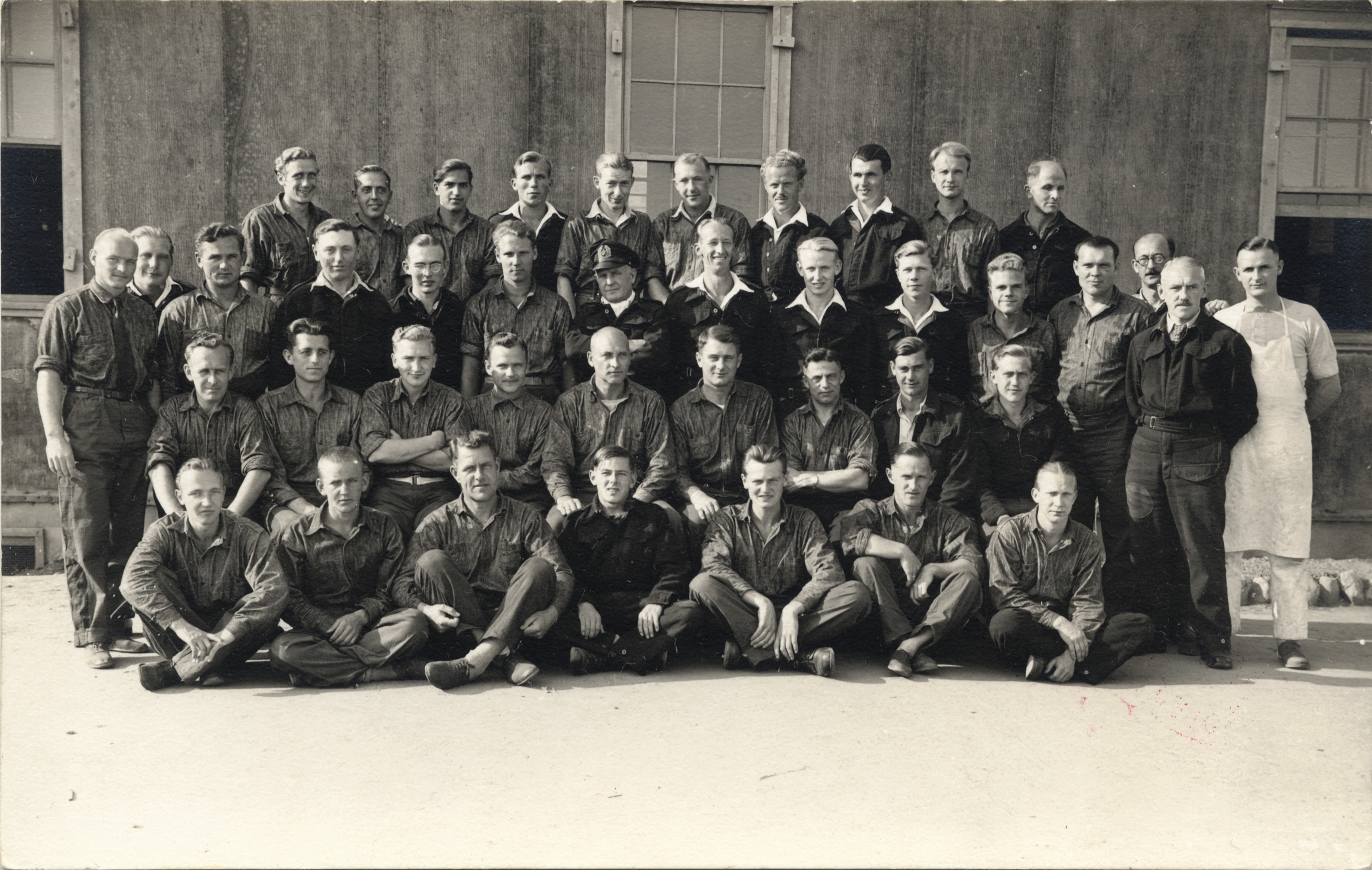
Camp A at Farnham opened in October 1940 to accommodate civilian internees – later re-categorized as refugees – from the United Kingdom. The camp was built upon the Farnham Experimental Station, a government-run farm that conducted research to improve farming in the region. Several of the facility’s buildings were converted to guard and camp staff quarters and messes but the enclosure consisted of all new army-standard buildings, including four barracks to house a total of 650 men, kitchen and mess hall, two hospitals (one of which was used for isolating tuberculosis patients), office, detention hut (including a tailor and a shoe repair shop), and recreation hut. Two layers of barbed wire fences and four guard towers surrounded the enclosure.
The Department of National Defence originally intended to continue to operate the property as a farm but the release and transfer of many internees prevented the program from realizing its full potential. Instead, the camp housed a division of the Works Programme, a Directorate of Internment Operations initiative that employed internees in various types of work. At Farnham, internees were employed in woodworking, sewing, knitting, netting, farming, and draughting, with production focusing on the manufacturing and repair of holdalls, chests, camouflage nets, kit bags, folding tables, socks, and trousers.

Over the coming years, most of the refugees in camp were slowly released, either returned to the United Kingdom or permitted to remain in Canada. The camp closed temporarily in January 1942, with the remaining refugees transferred to Camp 42 (Sherbrooke).
In April 1942, Camp 40 reopened, this time to hold Enemy Merchant Seamen transferred from the United Kingdom.
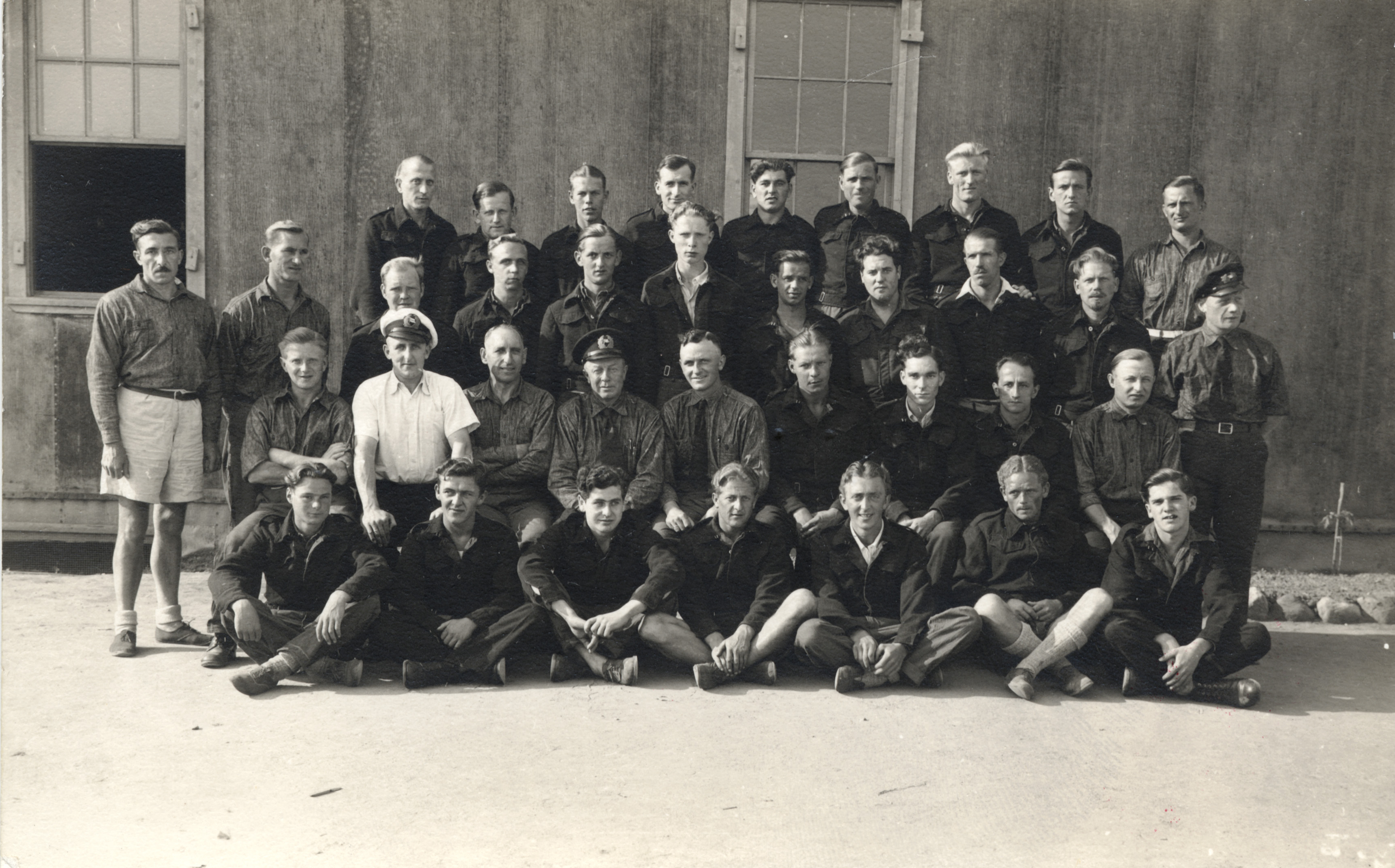
Within a month, the prisoners had set up an organized education system with twenty-five lecturers teaching some 300 students subjects like astronomy, French, Spanish, Norwegian, German, Mathematics, Physics, and technical courses.

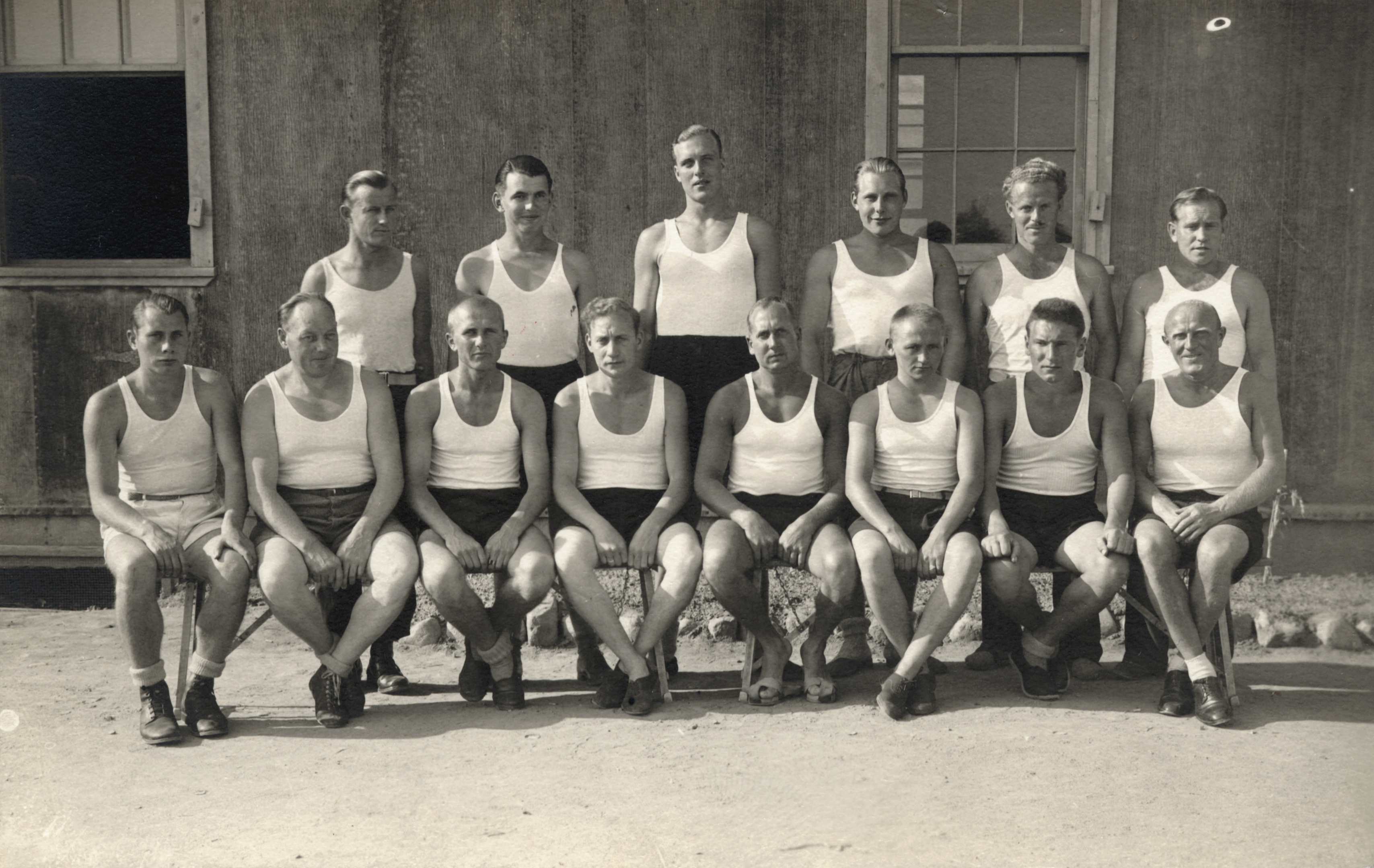
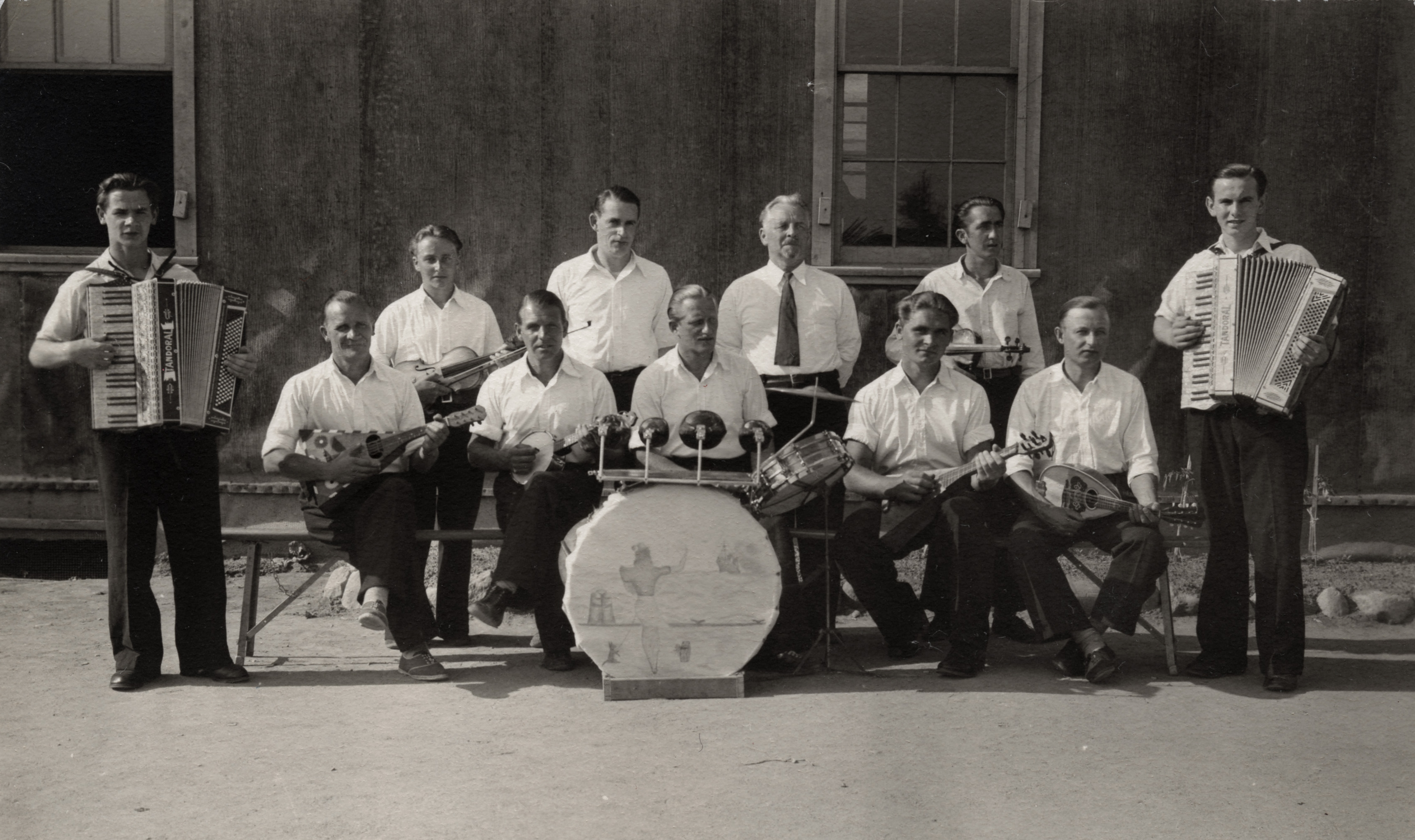
The seamen set up sports in the enclosure, playing tennis, football, handball, and boxing. Inside, they busied themselves with gymnastics, table tennis, chess, and cards while a band and theatre group entertained their comrades from a stage in the recreation hut.

The EMS were transferred to Camp 42 (Sherbrooke) in early December 1942, after which the camp was re-categorized to hold combatant prisoners. Some 175 officers and fifty other ranks were transferred to Farnham from Camp 20 and Camp 30 but these POWs were then moved to Camp 44 (Grande Ligne) when this new camp opened in June 1943. Although Camp 40 closed at the end of the month, the Veterans Guard of Canada continued to use the facility for training scouts (guards posted within the enclosure) and for training guards posted to labour projects.
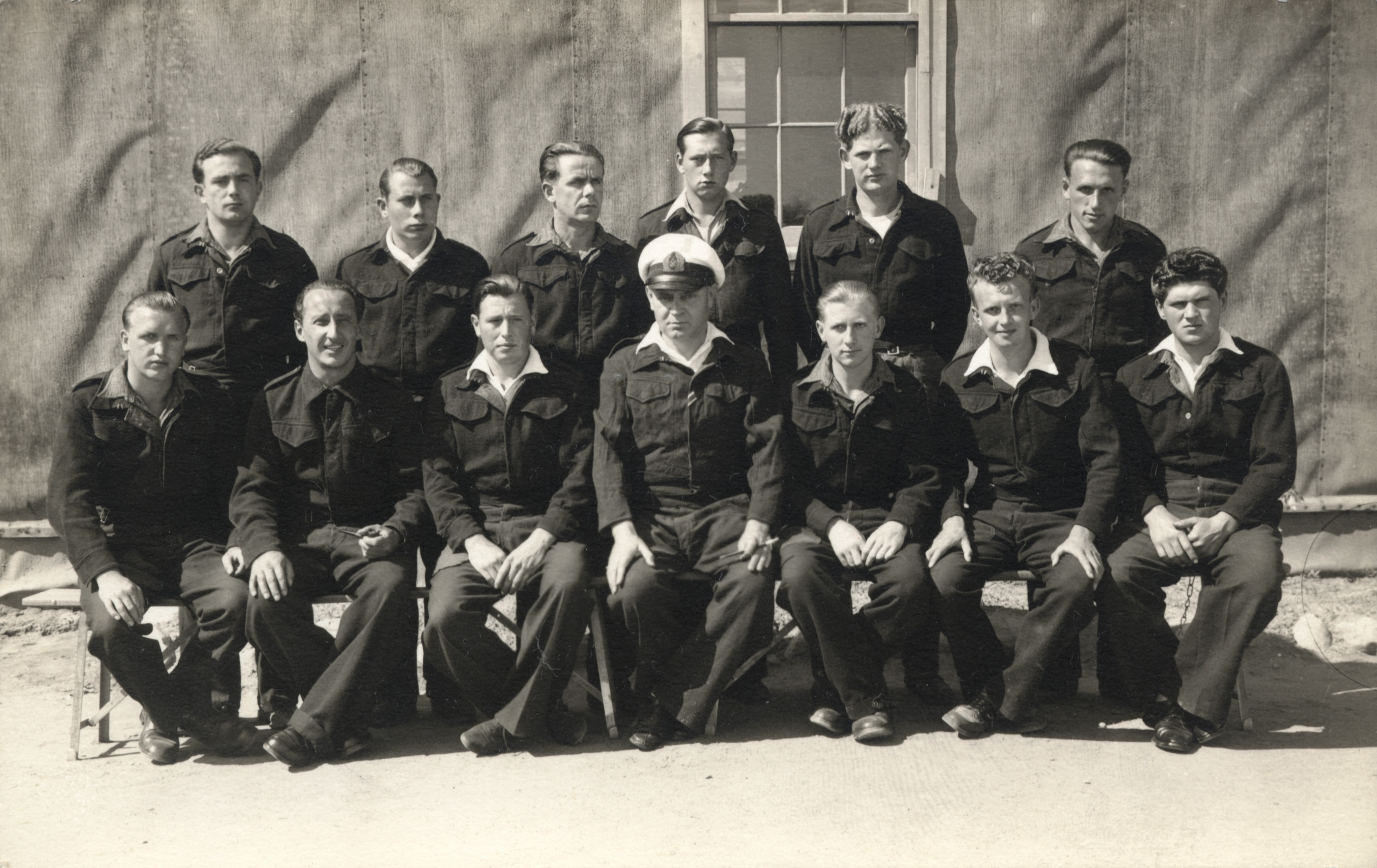
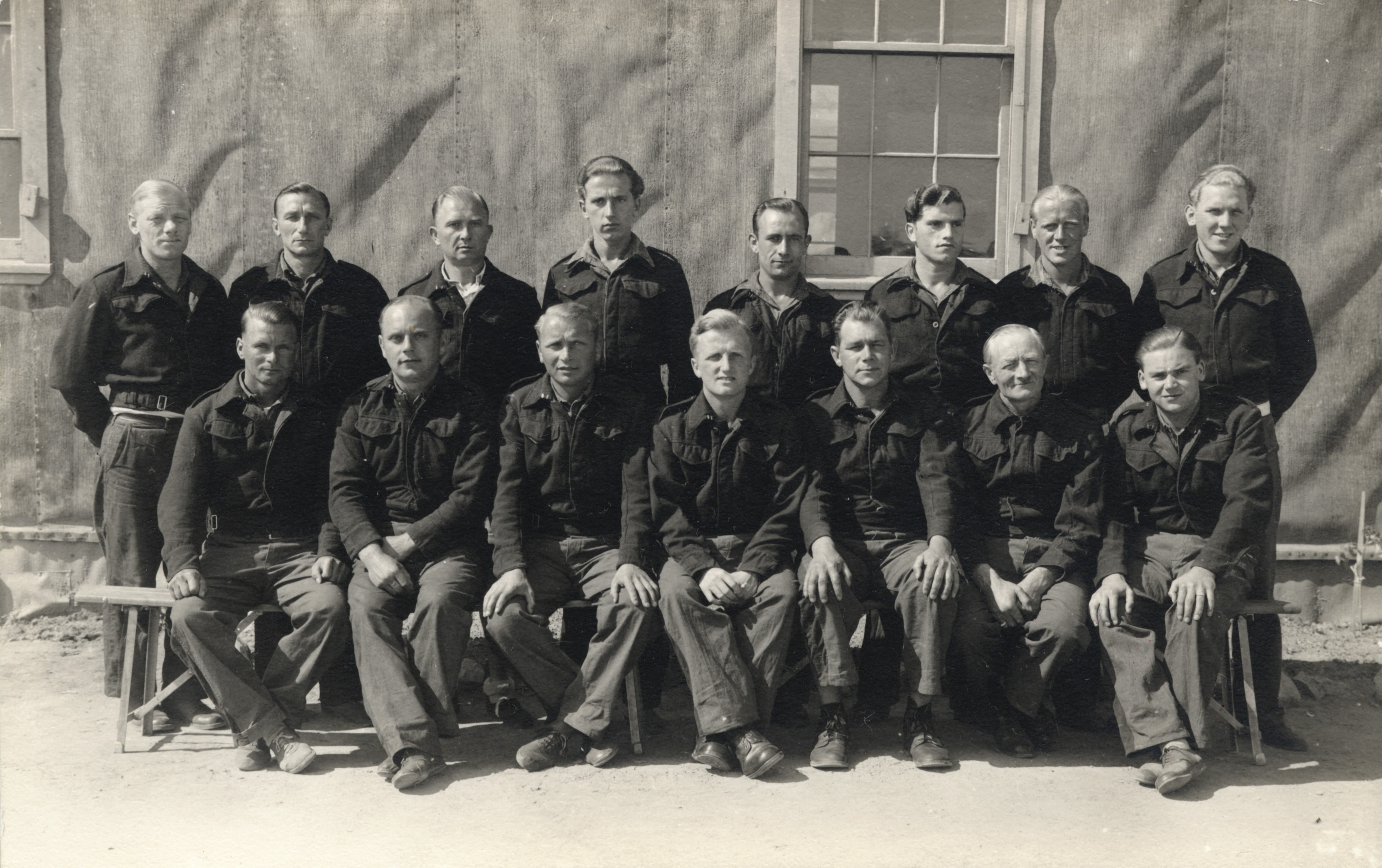
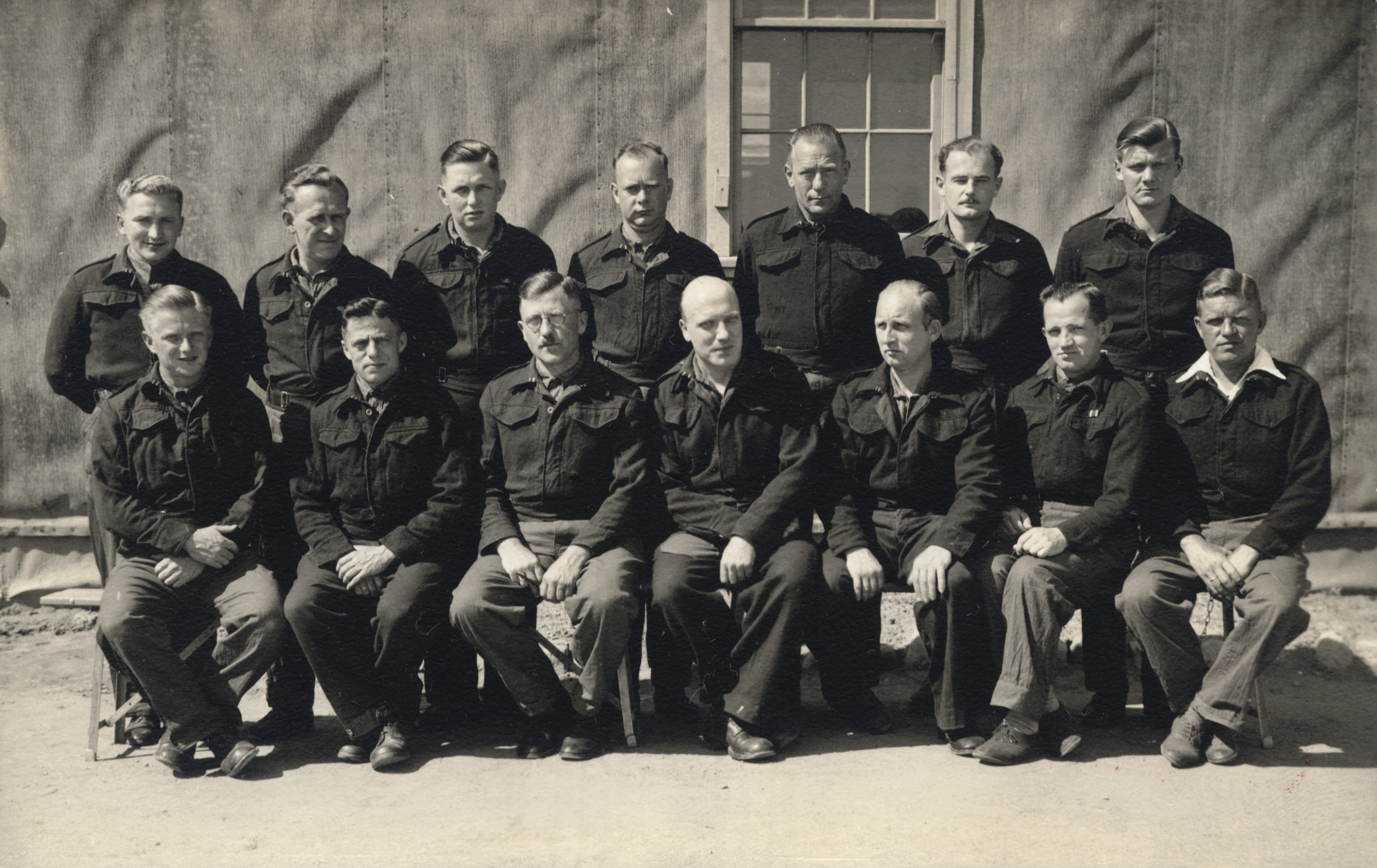
In September 1944, the camp reopened once more, this time to house 500 German officers captured after the D-Day landings. These prisoners were originally bound for the United States but were rerouted due to a lack of accommodation.
Their spokesman, Colonel Hans Jay, was an anti-Nazi willing to cooperate with camp staff but a group of ardent Nazis quickly established control within the enclosure. They spied on anti-Nazis, documenting their activities and contacts, and threatened those who spoke out against Hitler and the Nazi cause. Several officers even attempted to murder or seriously injure an openly anti-Nazi POW who who had been supplying information to the guards, but this attempt was thwarted by vigilant scouts.
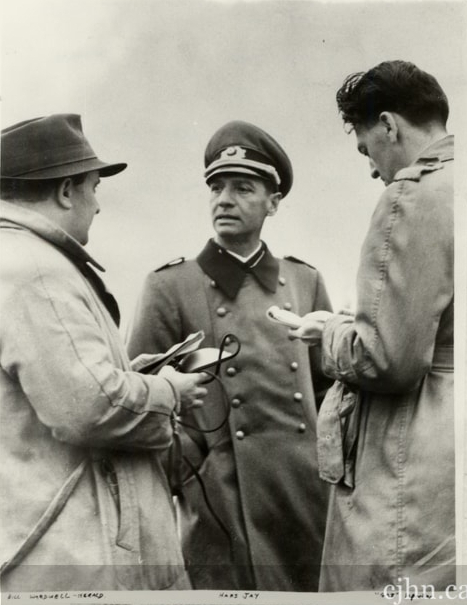
Despite risk to themselves, small groups of anti-Nazis, supported by Camp Spokesman Colonel Jay, were organizing themselves and preparing for the Nazis’ removal. Fortunately, they did not long to wait for most of the “Black” POWs were transferred in February and March 1945, effectively eliminating the pro-Nazi element in Farnham. This emboldened the anti-Nazis to make their views more public and, following Germany’s surrender in May, brought democracy to Camp 40.
In mid-1945, a democratic “Representative Assembly” was introduced, composed of three elected officials including Spokesman Colonel Jay. These three not only administered internal matters but introduced POWs to democracy and helped with re-education.
An item which many PW never fail to mention is the treatment by the Camp Authorities here, the patience and coolness of judgement exercised, that, after Germany had been defeated, the Canadians carried on in their efficient and incomparable way. They frankly admit that they can not quite understand this, and are most impressed and fascinated with our methods, which by their own exclamations, have caused the swing towards democratic ideas as much as our newspapers, Films, English lectures, etc.
Lt-Col. A.W. de Wolf, “Political Developments, Camp 40,” July 7, 1945, HQS 7236-94-6-40 – Intelligence Reports – Farnham, C5416, RG24, LAC.
In Summer 1945, the prisoners began working the farmland immediately surrounding the camp They planted tobacco, tomatoes, potatoes, cabbage, beans, corn, lettuce, cauliflower, radishes cucumbers, celery. The vegetables helped supplement their diet but excess produce was canned at local cannery or sold in Montreal, with two-thirds of profits going back to the prisoners’ canteen fund and the remaining third to Canadian authorities. The 1945 crop earned an estimated $15,000.
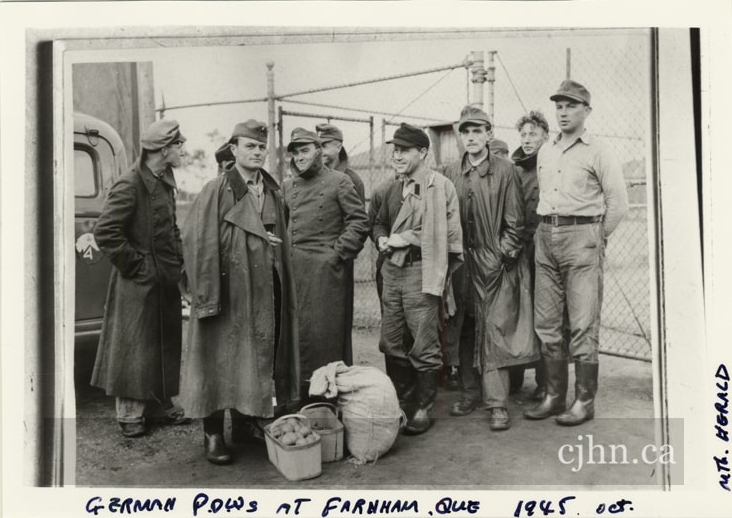
In late 1945, a small group of officers volunteered to work on local farms. Each had to sign a parole form vowing they would not try to escape. The success of the program brought an increase in applications from Farnham-area farmers and the program was expanded to employ some 130 officers by April 1946.
Outside of work, the prisoners spent considerable time and effort to improving the sports ground, leveling out the field, adding ash, and laying cinder blocks to improve drainage. They played football (soccer), handball, and athletics while others enjoyed parole walks in the fields next to the river where they were able to read and fish. In the fall, the prisoners began converting the sports field into a skating rink with the addition of earthen walls and the rink was used every day for hockey, skating, and figure skating in the following months.
Several officers also organized courses, with over thirty teachers teaching some 45 classes in languages, history, mathematics, law, geography, economics, etc. With the guidance of the Camp Interpreter and Intelligence Officers, courses on English, world politics, and democratic governments, were offered to aid in re-education and introducing prisoners to democracy. Visiting lecturers from McGill University and Toronto-area universities supplemented regular course offerings and were always well-attended.
The transfer of 352 officers and 88 other ranks from Grande Ligne following the closure of Camp 44 in April 1946 prompted concerns of undoing the progress made at Farnham. Most of the Grande Ligne prisoners were regular officers captured earlier in the war, including Generals Johann von Ravenstein and Georg Friemel, and thereby deemed less amenable to re-education. But thanks to the work of the Representative Assembly and the anti-Nazis, there were no reported incidents.
In May 1946, the prisoners were transferred to the United Kingdom for their eventual repatriation. The camp closed the following month.
The buildings were dismantled or relocated in the following years. The former enclosure area is now occupied by a sewage treatment plant and the Department of National Defence’s Garrison Farnham. The only surviving structures are the Officer’s mess (formerly the farm’s Superintendent’s Residence) and guard hospital (Foreman’s Residence), now both private residences.
Location:
Pictures:








 POWs in Canada