Date Opened: July 1940
Date Closed: January 1944
Capacity: 300
Type of POW: Civilian Internees and Refugees
Description:
Following Canada’s decision to accept POWs from the United Kingdom in mid-1940, the Department of National Defence began expanding its network of internment camps. The influx of prisoners required new camps and among the sites selected was Fort Lennox on the island of Île-aux-Noix, Quebec.
Located approximately forty-five kilometers southeast of Montreal, the small island of Île-aux-Noix had a long military history. The site had originally been fortified by the French in 1759 to defend against invading forces arriving along the Richelieu River and the British later built Fort Lennox between 1819 and 1829 as a deterrent against an American invasion. The invasion never came but the fort was recognized as a National Historic Site in 1920.
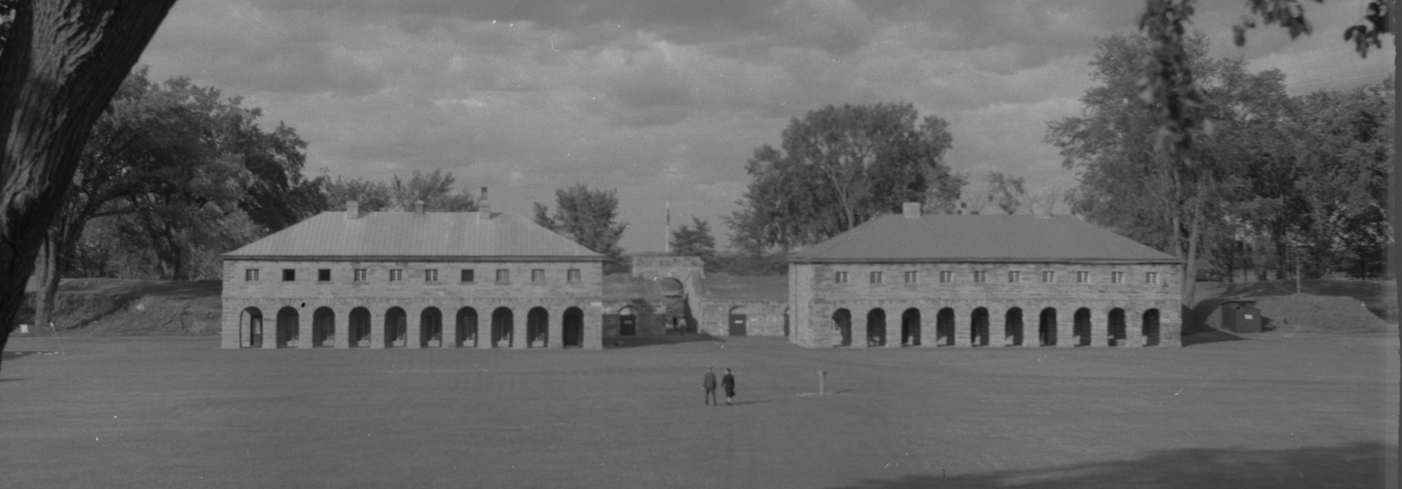
The site had seen some restorations in the years leading up to the Second World War but numerous upgrades were required to bring it up to internment camp standards. The Department of National Defence, however, was not permitted to alter the buildings’ historic features nor affect any elements of historical interest. Fortunately, many of the existing structures were well-suited for internment purposes while and some temporary buildings were added within the fort. Barbed wire fences and flood lights were erected around what was the original barracks – now the prisoners’ quarters – while sentry towers were placed at each corner.

The first prisoners arrived in Quebec aboard the SS Sobieski on July 15, 1940. All 275 internees were Jewish refugees who had fled Germany and settled in the United Kingdom. Although refugees, they were still considered enemy aliens and subsequently interned in British camps after war broke out. Most were expected to be released shortly and many had volunteered to enlist and fight against Germany.
In July 1941, the camp was re-categorized as a refugee camp and the guard force downsized to twelve unarmed guards tasked with maintaining discipline and preventing civilians from accessing the island.

While waiting for their release, many of the refugees found work in the camp as part of the Directorate of Internment Operations’ Works Programme. At Île-aux-Noix, refugees were employed in light manufacturing, producing camouflage nets for the war effort, and farming.
Over the next two years, the refugees at Camp 41 were interviewed to determine whether they were suitable for release and their preference to be released in Canada or returned to the United Kingdom. Some were transferred to the United Kingdom so that they could enlisted in the British Armed Forces while others chose to remain in Canada to start a new life.
Due to the gradual reduction in refugees in camp, Camp 43 was no longer needed by mid-1943 and authorities prepared to close the camp. The remaining refugees – including Germans, Austrians, Czechs, and Poles – were transferred to Camp 43 (St. Helen’s Island) or to Camp 32 (Hull), with the last leaving Fort Lennox in early November.
In accordance with the site’s status as a National Historic Site, Fort Lennox was returned to its pre-war state and the barbed wire fences, floodlights, sentry towers, and temporary buildings were removed.
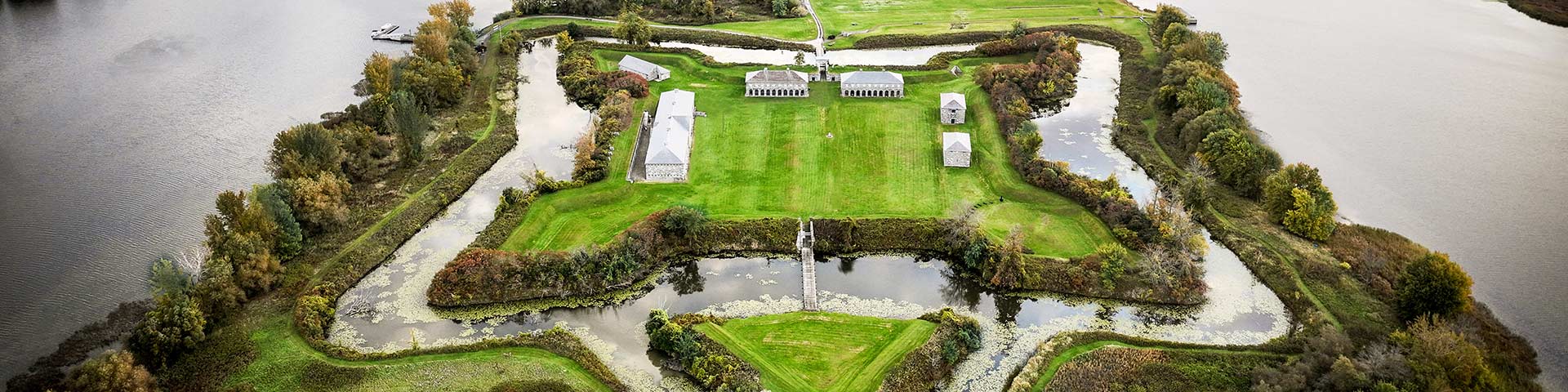
Some eight years after Camp 43 closed, the site is still maintained by Parks Canada as the Fort Lennox National Historic Site and summer visitors can tour the fort, although programs and displays focus on its pre-war history. Several of the camp’s buildings still remain, including the refugees’ quarters (the fort’s original barracks), the Officers Quarters and Camp Office (officers’ mess), the hospital and guard room (the fort’s original guard room), the guards’ mess and luggage room (originally the artillery stores), the Quartermaster Stores (the commissary stores), and the camp’s supply depot (fort’s magazine).
Location:
Pictures:

 POWs in Canada