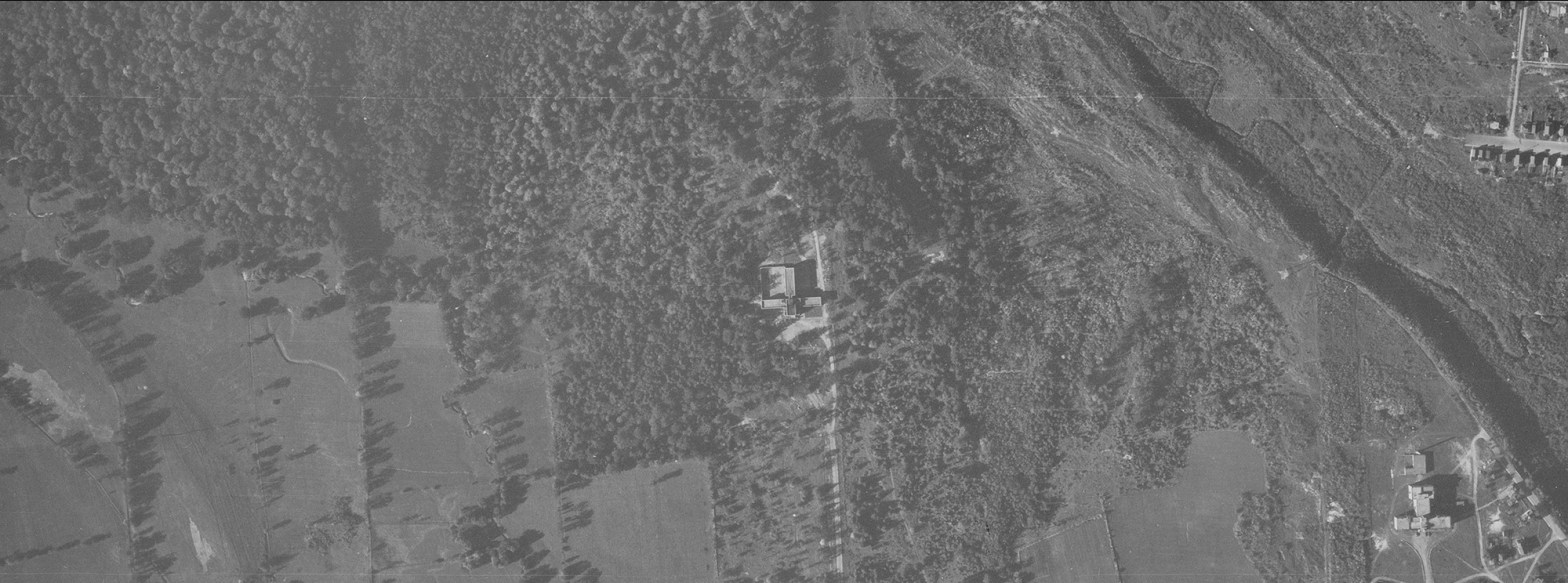
Date Opened: August 1941
Date Closed: March 1947
Capacity: 300
Type of POW: Civilian Internees, Enemy Merchant Seamen, and Combatant Other Ranks
Description:
In August 1941, trouble was brewing among the Canadian civilian internees in Camp P (Petawawa) after a group of anti-fascist Communists refused mandatory work in camp in protest of being interned in the same camp as pro-Nazi internees. Camp staff believed the continued presence of the Communist internees would only cause further trouble and recommended their transfer. But without a dedicated camp for anti-fascist internees, the Department of National Defence began an expedited search for a new camp to hold these internees, eventually settling on a newly-completed jail in Val Tétreau, Quebec.
Built as a provincial jail, the still vacant facility provided Canadian authorities with an easy alternative to building a new camp. An agreement was reached with the Quebec government and Camp H accepted its first internees – some eighty Canadian Communists – on August 20, 1941.

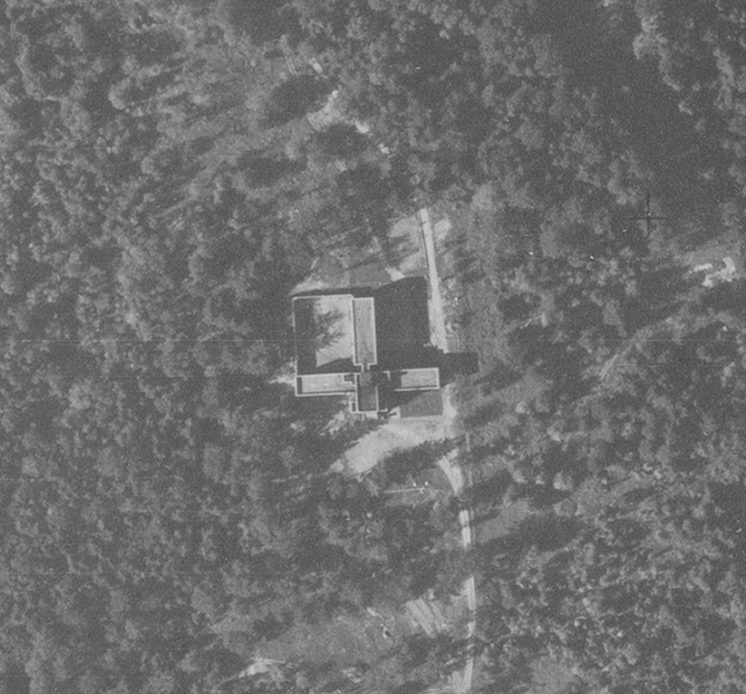
Considering their anti-fascist views, the internees at Hull submitted repeated protests of their internment, emphasizing they were being detained in a jail. In a letter to the Commissioner of Internment Operations, Camp Spokesman Normand Freed explained their situation:
As you are aware, we are a distinct group, to be differentiated from all other internees. Most of us are either Canadian born of English, Irish and Scotch descent, or naturalized Canadians having been nationals of the countries that are allied with us in the war against fascism. Despite the recognition by the government that we must be separated from fascists, in all other respects we have been treated as prisoners of war and not as political prisoners, which we are. You have stated again and again, Sir, that we are not punished for any offenses committed. Yet we are confined in a jail which is a punishment in itself.
Norman Freed to The Commissioner of Internment Operations, April 8, 1942, HQS 7236-55 – Policy – TEA – Camp H Hull Jail, C5394, RG24, LAC.
Freed’s and the other internees’ protests did not go ignored and an advisory committee began reviewing each internee’s case. Over the following months, the anti-fascist internees were gradually released, with the last man released conditionally in November 1942.
With the civilian internees gone, Camp 32 began its next phase as an internment camp for prisoners in protective custody. All anti-Nazis, these prisoners were viewed as deserters and traitors by their fellow POWs and, facing harassment, beatings, and threats to themselves and their families in Germany, requested protection from Canadian authorities. As of November 1942, this included eighteen deserters from the Germany Army, one German civilian, eleven EMS, and twelve Canadian civilian internees.
Due to the nature of the jail, recreation facilities were limited. Prisoners busied themselves with indoor activities including table tennis, chess, cards, wood-carving, and building ships in bottles. During the summer months, POWs were permitted parole walks on trails near the camp and on the nearby property of the Nordland Ski Club as well as swimming parties to the nearby Ottawa River. A tennis court was added in 1943, which was flooded in the winter months and used as a skating rink.
Boredom was a common complaint as the number of prisoners in camp slowly increased but a solution presented itself with the Canadian government’s approval of POW labour in May 1943. In August, camp staff began placing POWs on farms in the Ottawa area, with some prisoners working on the farms on a daily basis and returning to camp at night, while others lived with the farmers and worked as general farm hands. The change of scenery and the relative freedom of living on a farm was a welcome change for many of these prisoners, some of whom had spent the last four years behind barbed wire.
As Canada began transferring POWs to the United Kingdom in 1946, many of the anti-Nazis in Camp 32 were among the first groups to leave. Others chose to say, instead volunteering to remain in Canada for the summer to work on farms, primarily motivated by the hope of being permitted to remain in Canada. This, however, was not to be the case and most of the remaining prisoners in Camp 32 left Canada for the United Kingdom in November 1946.

By January 1947, Camp 32 was the last Canadian internment camp in operation. The camp remained open for several months as a handful of civilian internees, recaptured escapees, and medical cases were transferred to other countries or to the United Kingdom. With the transfer of the final prisoners in March 1947, Camp 32 closed and Canada’s Second World War Internment Operations came to a close.
The facility was returned to the Quebec Government in 1947, after which it finally began serving in its intended purpose. It remains in operation as the Centre de Détention Hull.
Location:
Pictures:

Do you have a picture of this camp and are willing to share? Please get in touch.
Further Reading:
- Posts about Camp 32 (Hull)
- Michael O’Hagan and Jane Cooper, “Museum Talks, Nov 5 2021, German POWs in WWII Canada: The Metcalfe Project,” Osgoode Township Museum.
 POWs in Canada