
Date Opened: June 1940
Date Closed: December 1943
Capacity:
Type of POW:
– Civilian Internees and Enemy Merchant Seamen (September 1939 to October 1940)
– Combatant Officers (November 1940 to November 1941)
– Civilian Internees and Enemy Merchant Seamen (November 1941 to December 1943)
Description:
By the time Canada declared war on Germany on September 10, 1939, the RCMP had already begun arresting enemy aliens and known and suspected Nazi sympathizers across the country. After internees were taken into custody, there were moved to temporary receiving stations before they were transferred to an internment camp. Among the receiving stations set up in Eastern Ontario in 1939 was Fort Henry, a British fort that had formerly held civilian internees in the First World War, but, thanks to the arrival of internees from Great Britain in 1940, Fort Henry was converted from a receiving station into a Prisoner of War Camp F (later Camp 31).
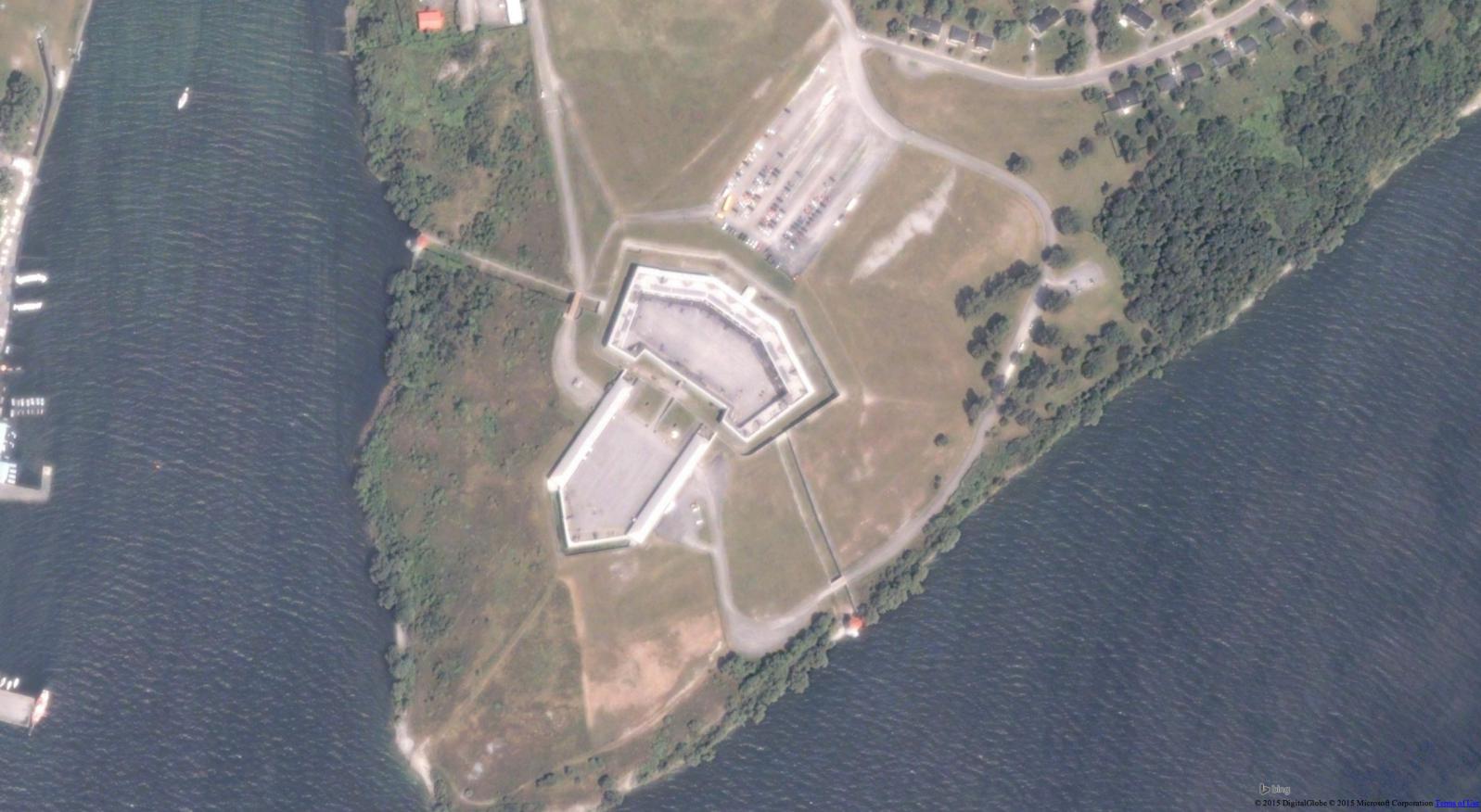
With a commanding view of the eastern end of Lake Ontario, Fort Henry was built between 1832 and 1837 to strengthen British positions in case of an American attack. Garrisoned by British and then Canadian troops until 1890, the fort fell into disuse until it was repurposed as an internment camp for enemy aliens during the First World War. After the war, the fort was declared a National Historic Site in 1923 and the site underwent significant restoration in the 1930s. Fort Henry then became a living history museum but this was interrupted by the outbreak of the Second World War.

In September 1939, the fort was converted into a receiving station and temporary internment camp for German enemy aliens arrested in Ontario. The Lower Fort (Main Redoubt) was used as the main enclosure, with prisoners’ quarters located in the fort’s casemates, while the guards and camp staff were housed in the Upper Fort (Advanced Battery). Internees were relocated to Camp P (Petawawa) following its completion in late September but the increasing number of internees in custody prompted the Department of National Defence to convert Fort Henry into an internment camp in November 1939. Over the coming months, a standard army kitchen and mess, an ablution hut, and floodlights were added to bring the camp up to army standards .

The camp reopened on July 1, 1940 with the arrival of German civilian internees and EMS transferred from the United Kingdom. These individuals, however, were transferred to other camps in October 1940 and replaced by German combatant officers and other ranks.
Almost immediately after their arrival, several German officers set their minds to escape. One prisoner attempted to escape the camp by hiding in a laundry truck but was foiled by vigilant guards, others turned to tunneling, and two even succeeded in chiseling their way through a loophole and lowering themself down with knotted bedsheets. The pair then crossed the frozen St. Lawrence but were detained by American border officials before being returned to Canada.
Other prisoners busied themselves with boxing, table tennis, chess, cards, and music. With only a small recreation ground in the lower fort, groups of prisoners were permitted to play football and handball in a recreation field on the north side of the fort.

Generalmajor Georg Friemel, one of the highest ranking German officers captured during the first half of the war, complained that the camp contravened the Geneva Convention and, although Canadian authorities argued his complaints were groundless, the situation was more complicated. British authorities were extremely cautious regarding the treatment of POWs in its custody so as not to provide the German government with any excuse for reprisals against Allied POWs in German custody. While the British government later agreed that Fort Henry was unsuitable for officers, they remained hesitant to immediately transfer the prisoners immediately lest the Germans interpret this as an admission Fort Henry contravened the Geneva Convention. As such, the prisoners remained at Camp 31 until the new officer’s camp at Bowmanville was ready to accept them in November 1941.

The combatant prisoners were promptly replaced by civilian internees and Enemy Merchant Seamen from Camp 23 (Monteith). These internees picked up the activities they had left behind at Monteith, busying themselves with, among other things, sports, coursework, and music. The internees added two tennis courts and a skating rink to their recreation fields and, with the help of the War Prisoners’ Aid of the YMCA, equipped their gymnasium with parallel and horizontal bars, a vaulting horse, a barbell, and punching bags. Some prisoners turned to art and handicraft, with several painting and woodcarving and up to forty men making model ships. Courses were especially popular and, as of mid-1943, prisoners in camp had even produced several of their own textbooks on subjects including mathematics, nautical subjects, chemistry, physics, and history of the English language.
Like the combatants before them, not all those interned at Camp 31 were keen on remaining prisoners of war. On August 26, 1943, nineteen prisoners escaped through an unused privy and then through a sewer pipe that took them beyond the walls of Fort Henry. The escape was only realized when Kingston City Police notified the camp that a prisoner had been spotted at Navy Bay. Most of the prisoners were recaptured within the next two days although three remained on the run until they were taken into custody by a US Border Patrol at Clayton, New York on September 1.
In 1943, internment authorities began consolidating prisoners, closing smaller camps and moving prisoners into larger purpose-built internment camps in Canada. In mid-November, the EMS at Fort Henry were transferred to Camp 23 (Monteith) and the civilian internees to Camp 22 (New Toronto). Camp 31 closed that December and although the facilities remained in place in case the camp was needed again, it would never reopen.
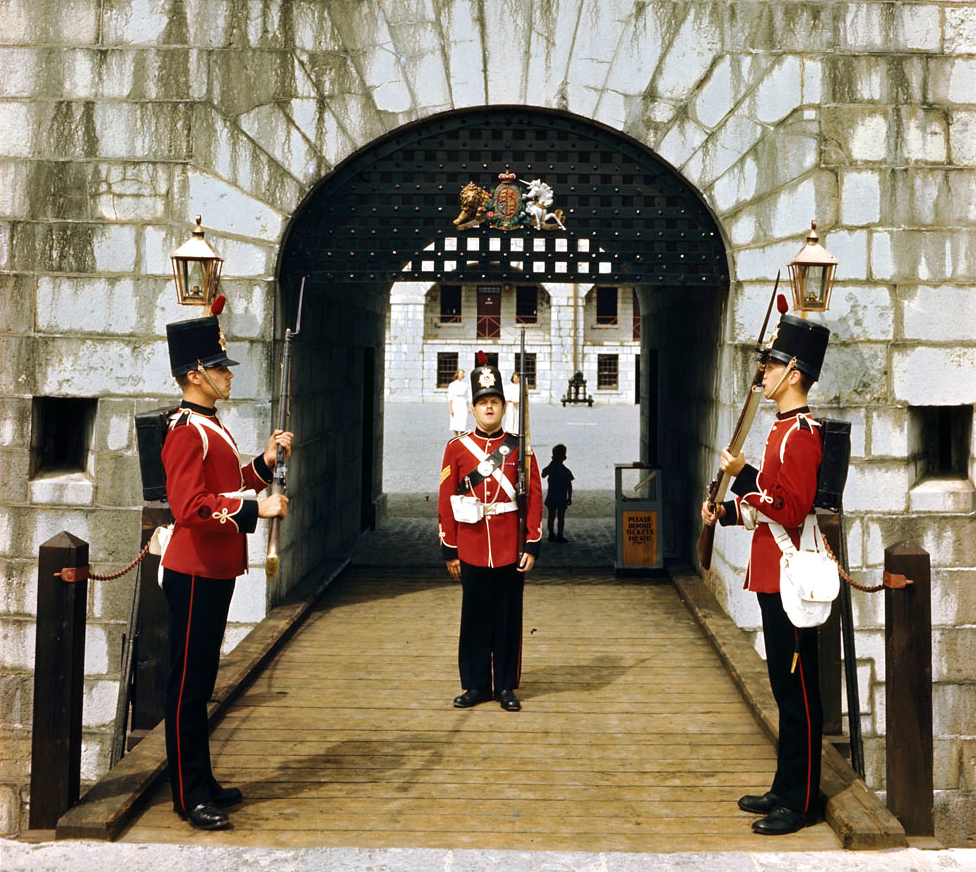
After the war, Fort Henry returned to its pre-war state and reopened as a living history museum in 1948. Parks Canada now manages the site and Fort Henry welcomes thousands of visitors every year. During the summer months, historical reenactments by the Fort Henry Guard and interpretive staff provide a glimpse into the Fort’s storied past.
Location:
Pictures:

Further Reading:
- Posts about Camp 31 (Fort Henry)
- Fort Henry, St. Lawrence Parks Commission
- Fort Henry National Historic Site of Canada, Parks Canada Directory of Federal Heritage Designations
 POWs in Canada