
Date Opened: October 1940
Date Closed: July 1946
Capacity: 750 (intended)
Type of POW: Civilian Internees and Enemy Merchant Seamen
Description:
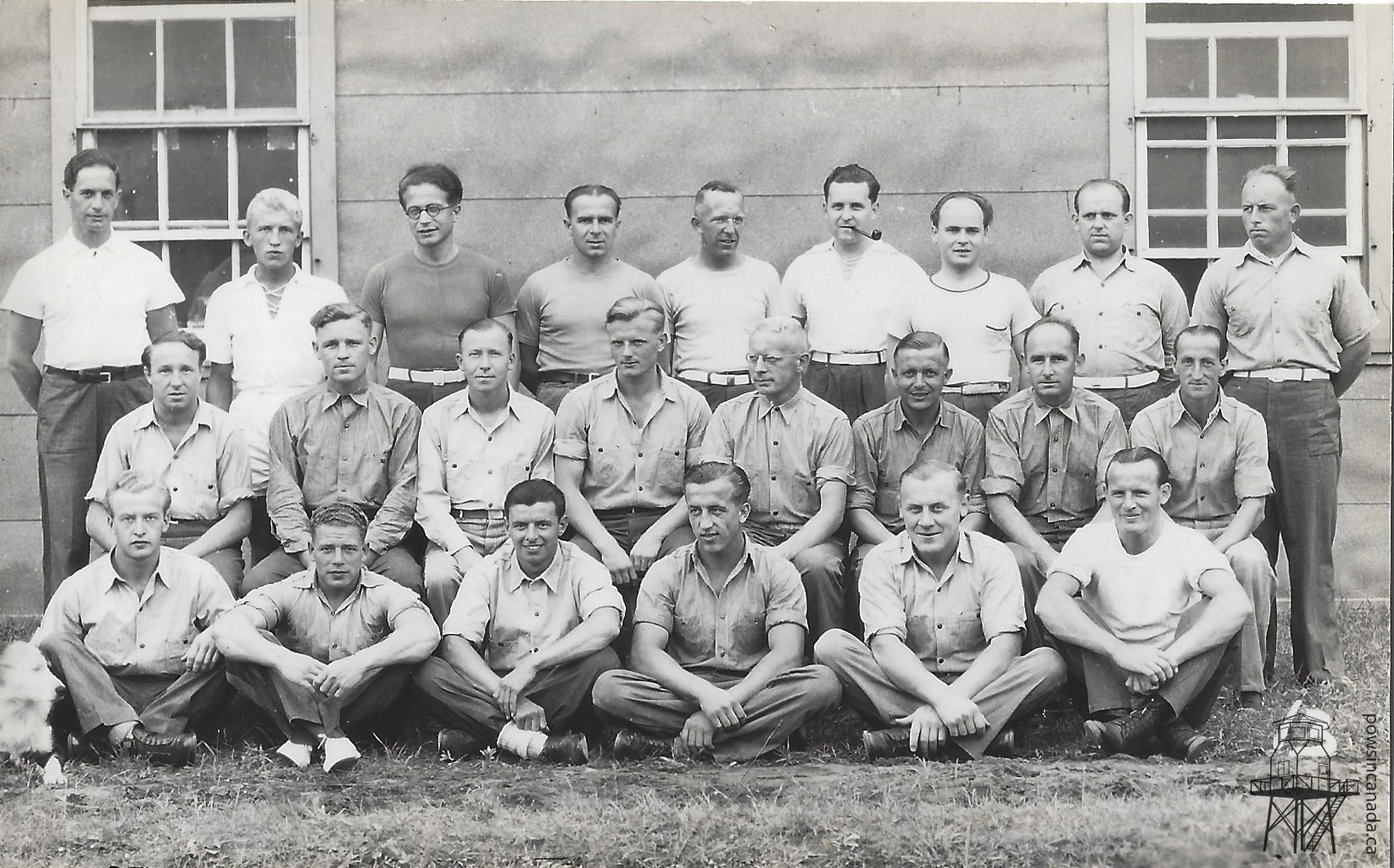
Originally designated as a camp for refugees, Camp N in Sherbrooke, Quebec, accepted its first POWs in October 1940. One of several camps built in response to Canada’s decision to accept combatant POWs and civilian internees from the united Kingdom, Camp N was located on the grounds of the Quebec Central Railway’s Newington Yard.
The yard’s Carpenter Shop (No. 1 Building) and Paint Shop (No. 2 Building) were initially converted into POW quarters while the machine shop and boiler shop housed the POW recreation room and workshops. Additional buildings, including a POW mess hall, guards’ quarters and mess, officers’ quarters and mess, were added before the POWs arrived.
By the time the 737 Category B and C internees arrived from Camp L (Cove Fields) and Camp Q (Monteith) in October, the camp was not quite fully operational. Many internees thus found themselves working to complete the camp including helping erect the outer layer of barbed wire fencing.

Due to the evolving nature of internment operations, Camp N’s status was changed from a Refugee camp to a POW camp, a change that only brought additional security measures but required additional barracks for guards, staff, and internees. A new compound, also surrounded by barbed wire fences, was added to existing camp and included six new H-Huts for POW quarters. In the original compound, one of the original POW barracks (No. 1 Building) was repurposed as a workshop while the No. 3 Building (Workshops and and Mess) was converted for dining and recreation.
The two compounds, both surrounded by barbed wire fences, were separated a small gully and connected by a walkway also surrounded by barbed wire fencing. Any POWs going to the original compound were checked, recorded at the gate, and escorted to their work or other duties.

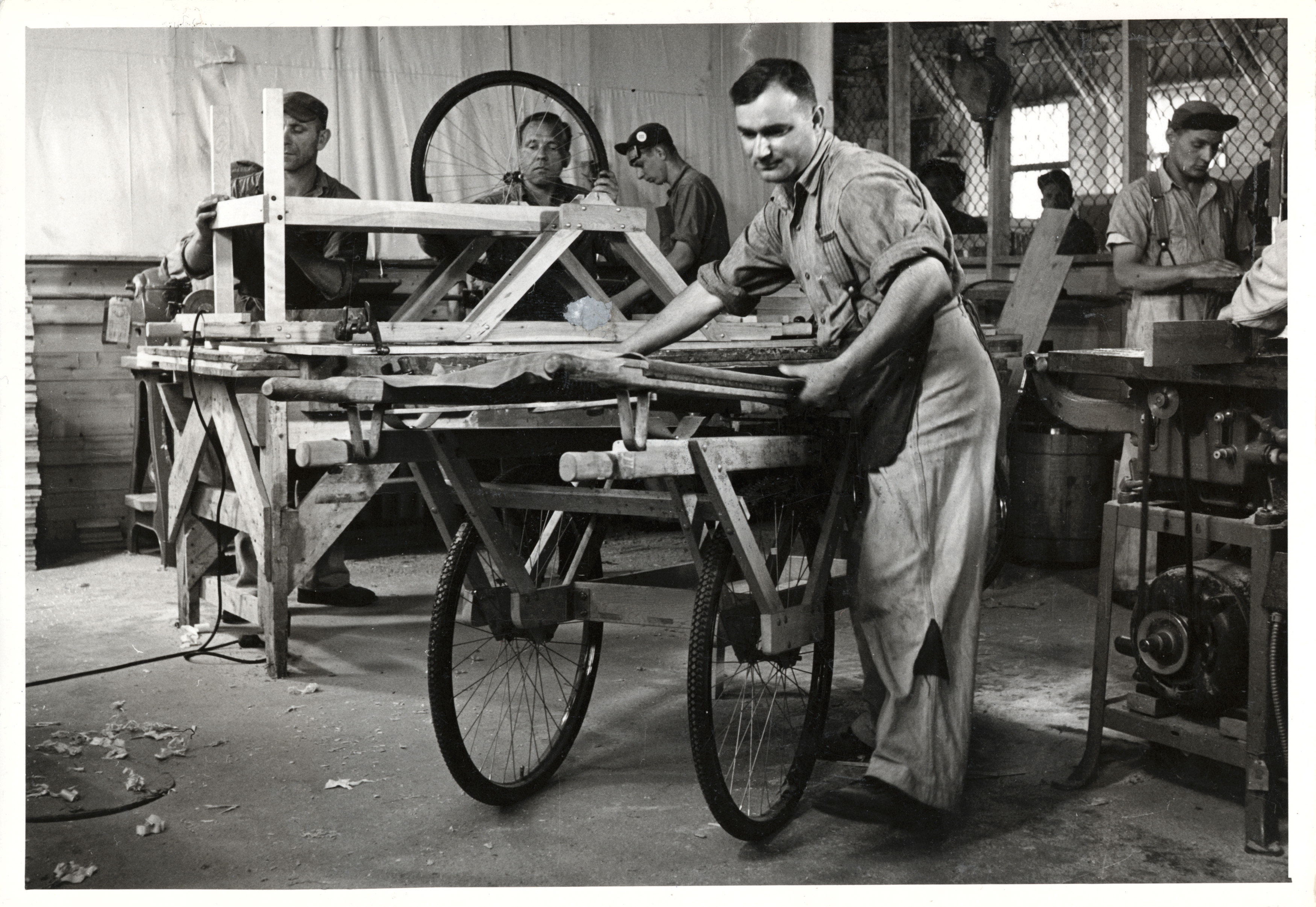
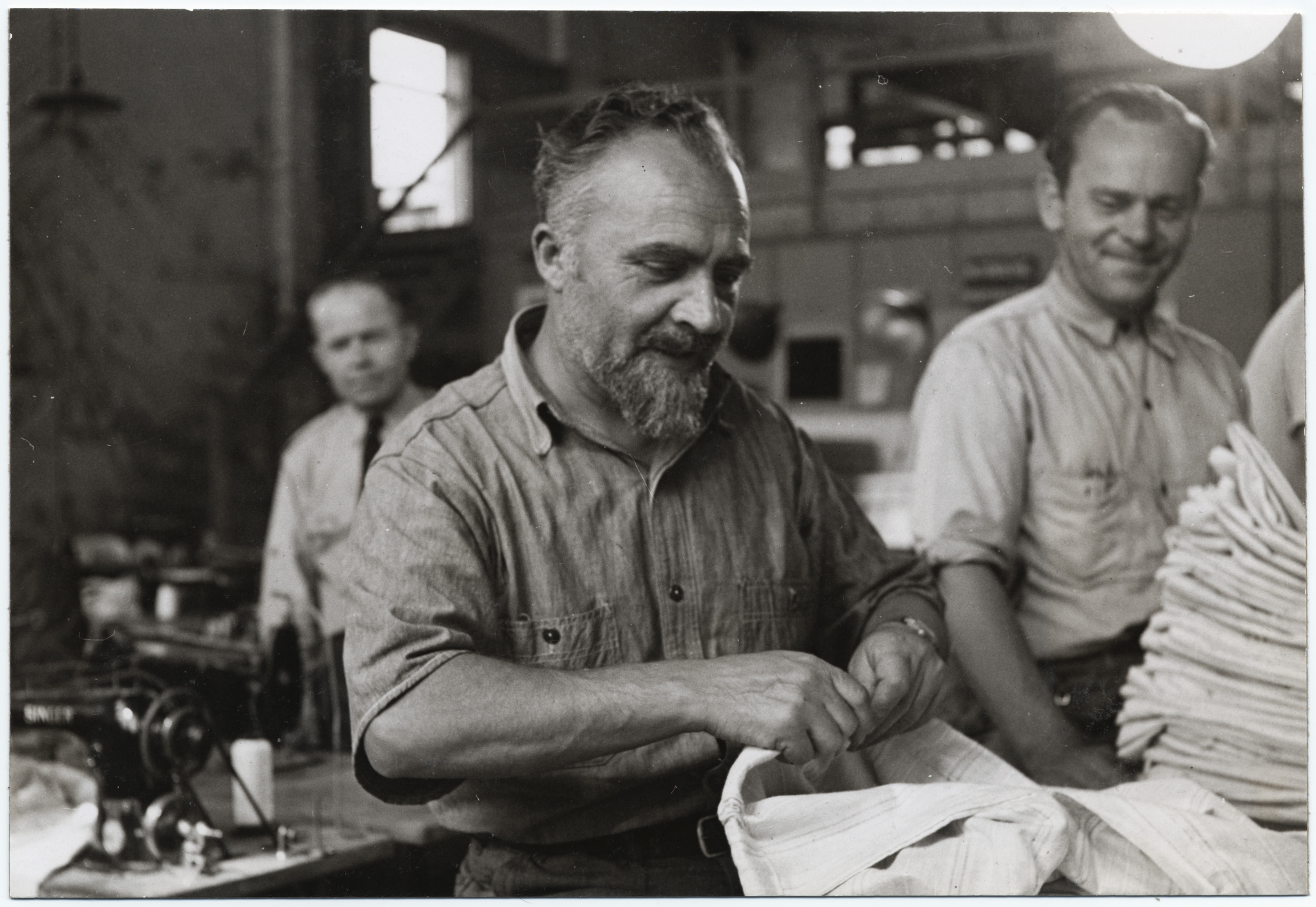
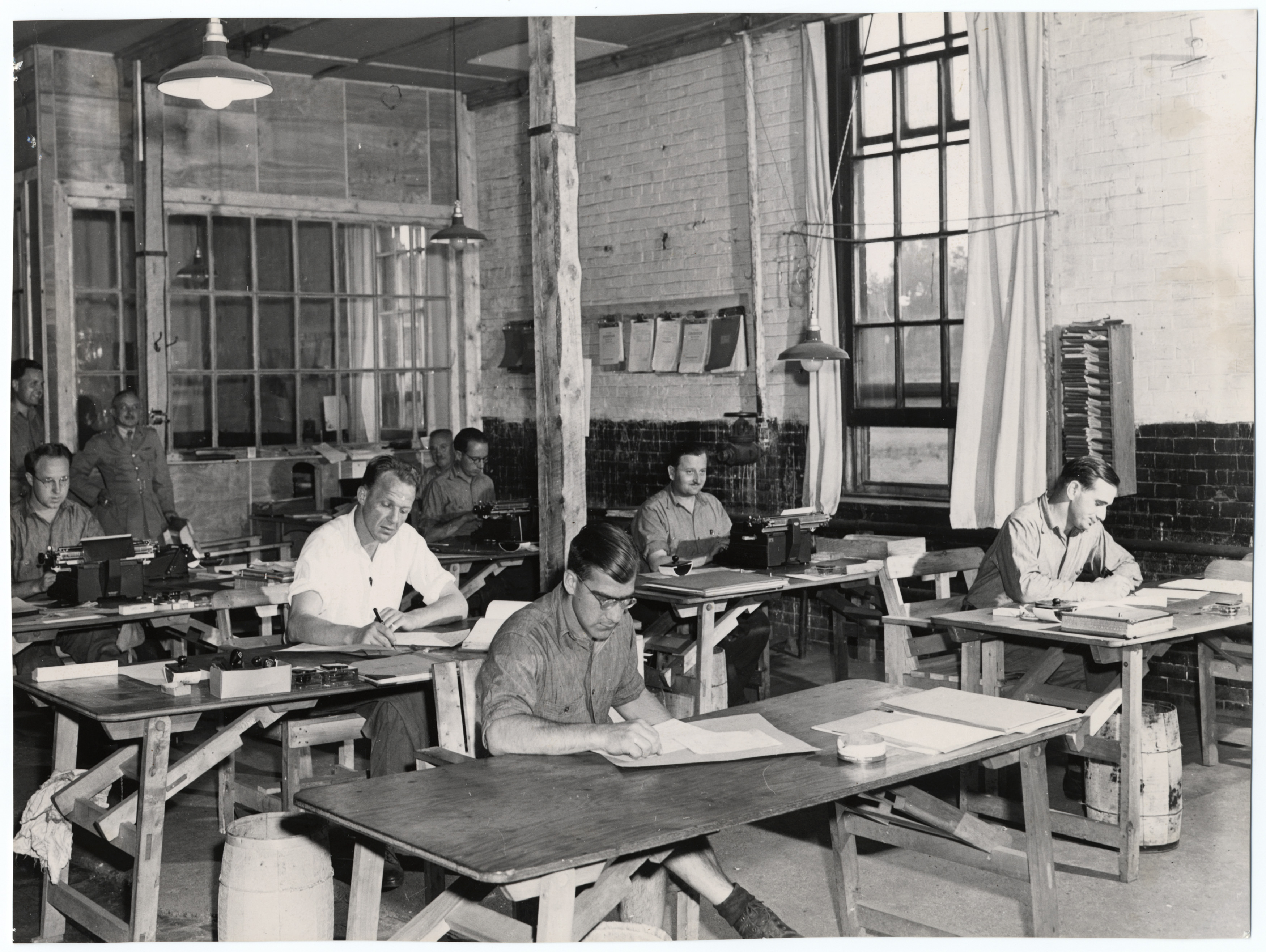
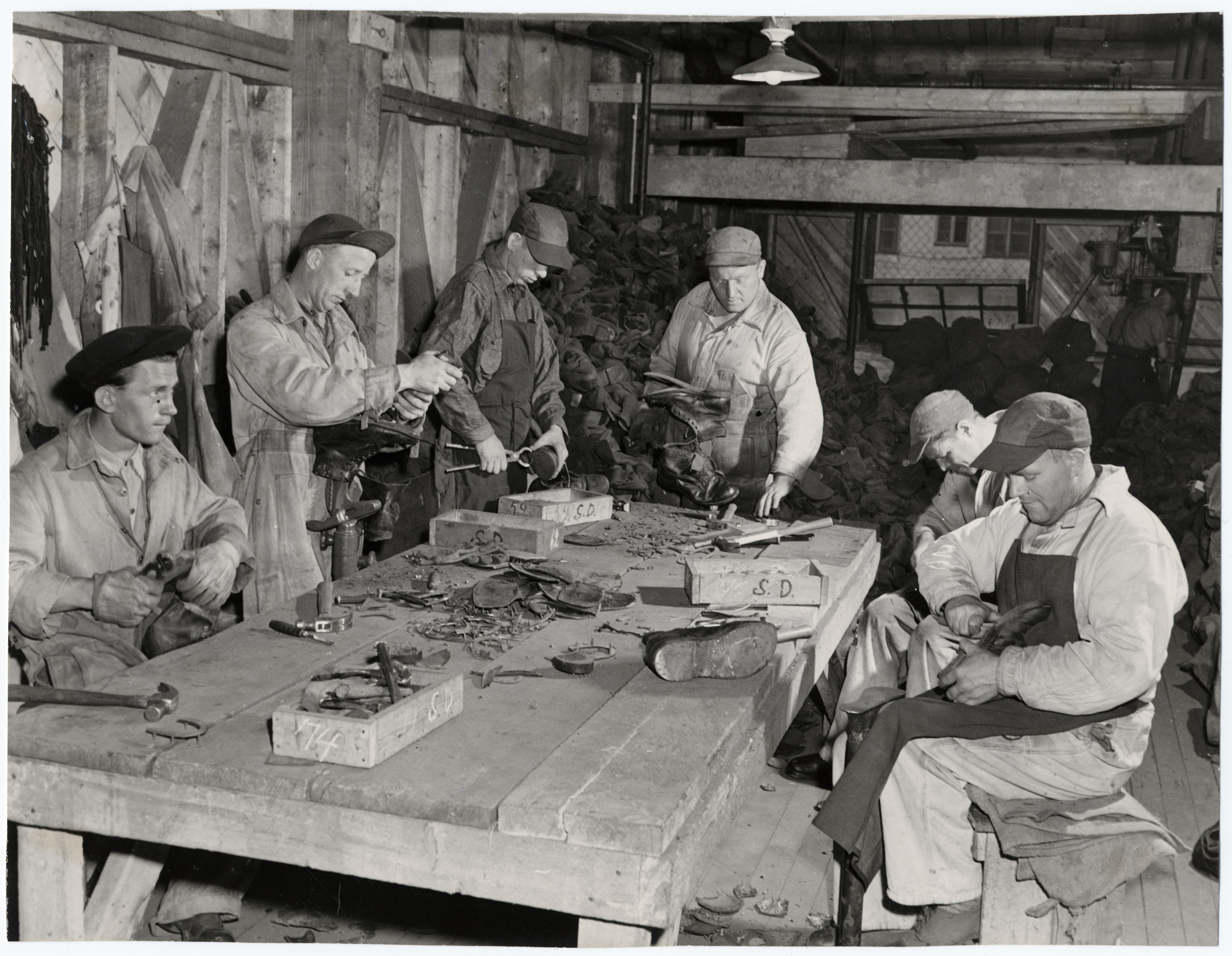
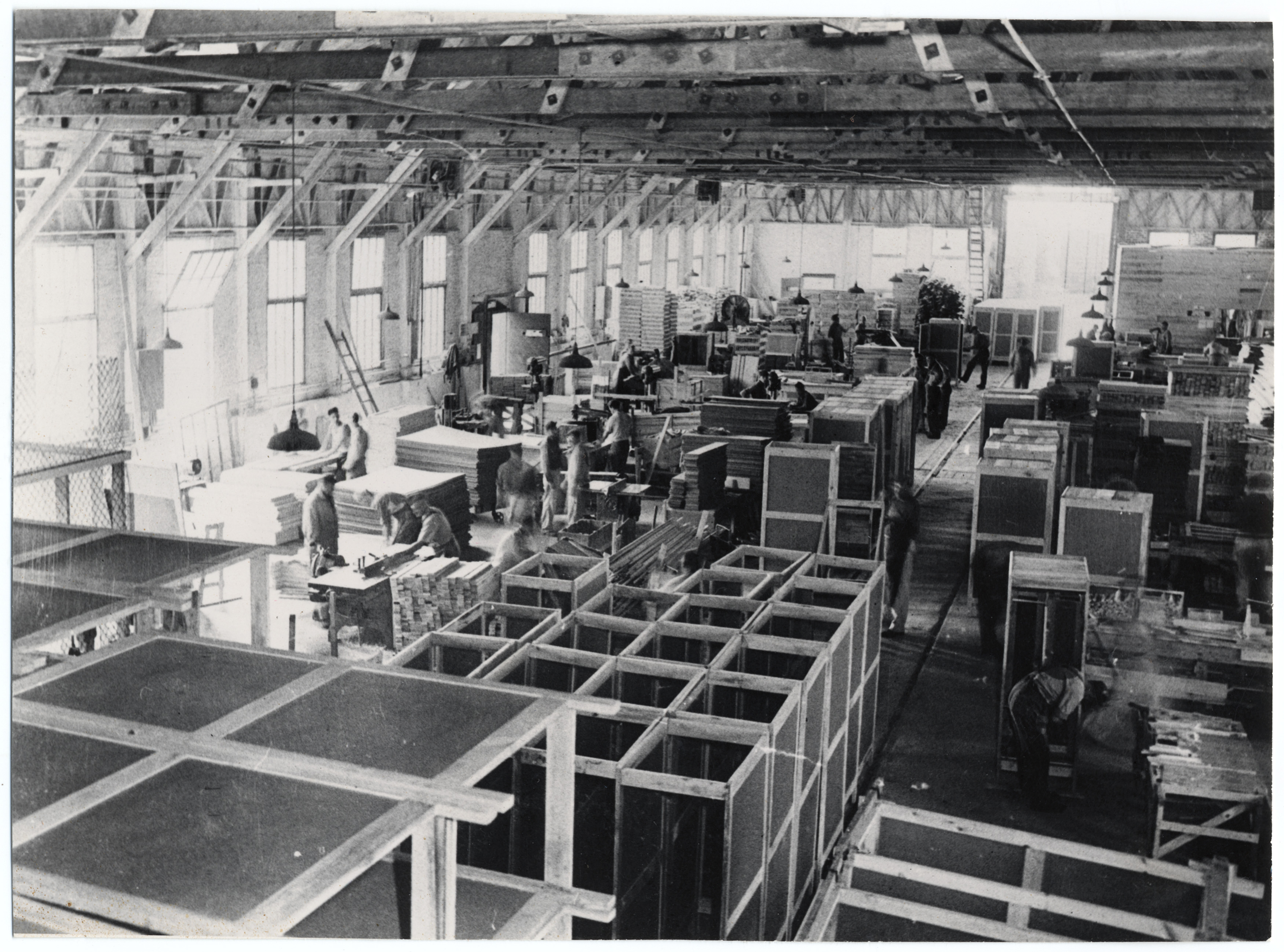
In early 1941, the Department of National Defence approved the Works Programme, an organized effort to employ civilian internees – and, later, Enemy Merchant Seamen – in light manufacturing. As the camp already had workshops from its prewar past, Camp N as well as Camp A (Farnham) and Camp S (St. Helen’s Island) were selected for the Works Programme. At Sherbrooke, the work was organized into six departments: woodworking, sewing, knitting, netting, and shoe repair. Work was divided between two shifts, with separate groups each working five-hours a day, for which prisoners earned $0.20 a day, although this was later increased to $0.50.
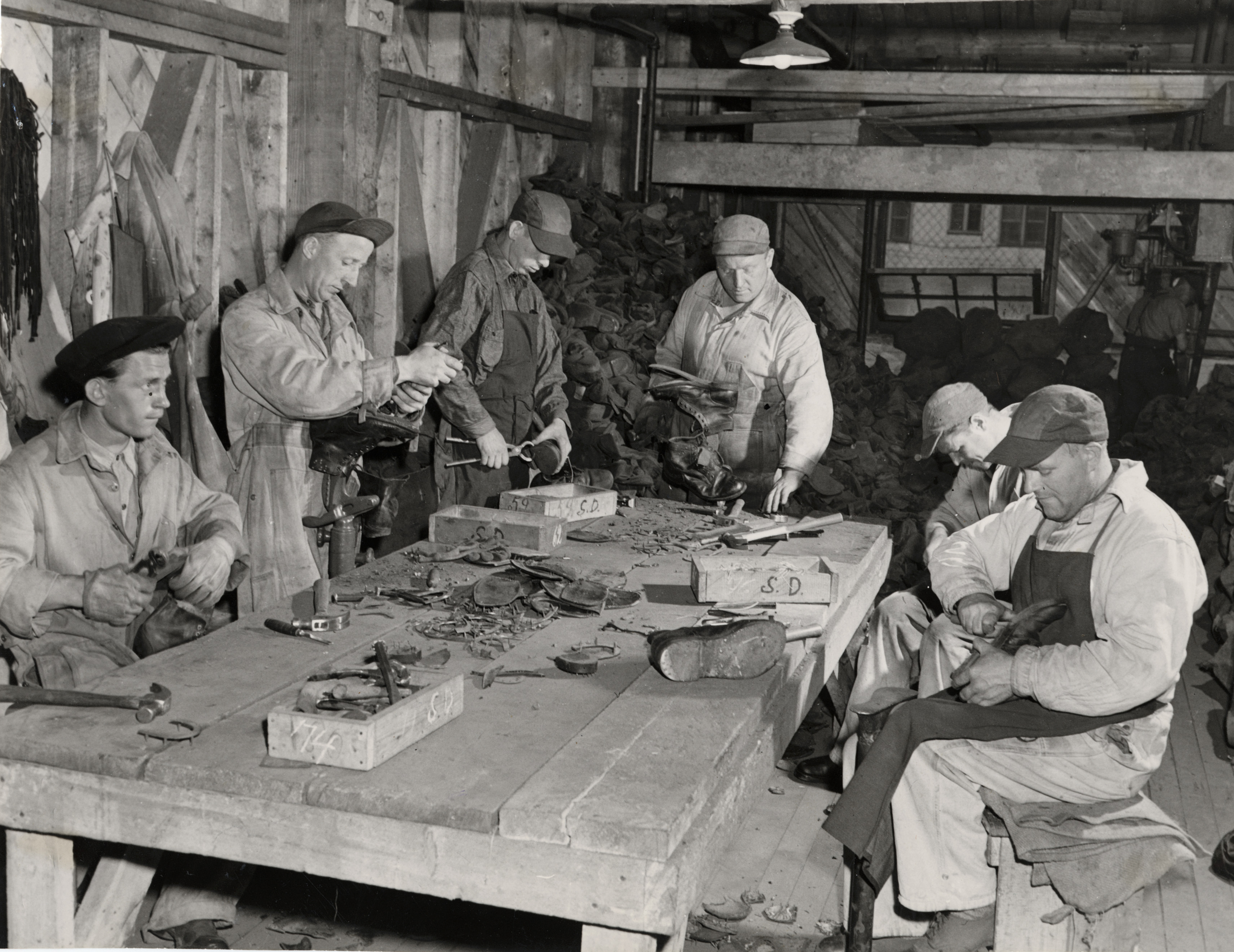
As of November 1941, internees and refugees in Camp 40 (Farnham), Camp 41 (Île-aux-Noix), Camp 42 (Sherbrooke), and Camp 43 (St. Helen’s Island) produced almost 12,000 pairs of socks, 5,000 camouflage nets, 100,000 holdalls, 3,500 folding tables, 150,000 pillow slips, over 5,000 wood packing cases, 110,000 Army and RCAF chevrons, and over 46 million pull-throughs, in addition to harvesting 225,000 lbs of vegetables, repairing 1,800 pairs of shoes, and altering 15,000 pieces of clothing. The success of the Works Programme prompted Canadian authorities to focus on production at Camp 42 and, in January 1943, some 630 EMS and Civilian Internees, all of whom had volunteered for work, were transferred to Camp 42, replace refugees transferred back to the United Kingdom or released in Canada.
Although non-combatants, the camp was very much divided between anti-Nazi and pro-Nazi elements. Fights were not uncommon between the two parties and a search of the camp in January 1944 even revealed a knife with a “deadly point” and a handmade club reportedly made by the Nazis for their fight against the anti-Nazis. Pro-Nazis regularly interrupted work operations so Canadian authorities worked to transfer them to other camps so that the works programme could continue.
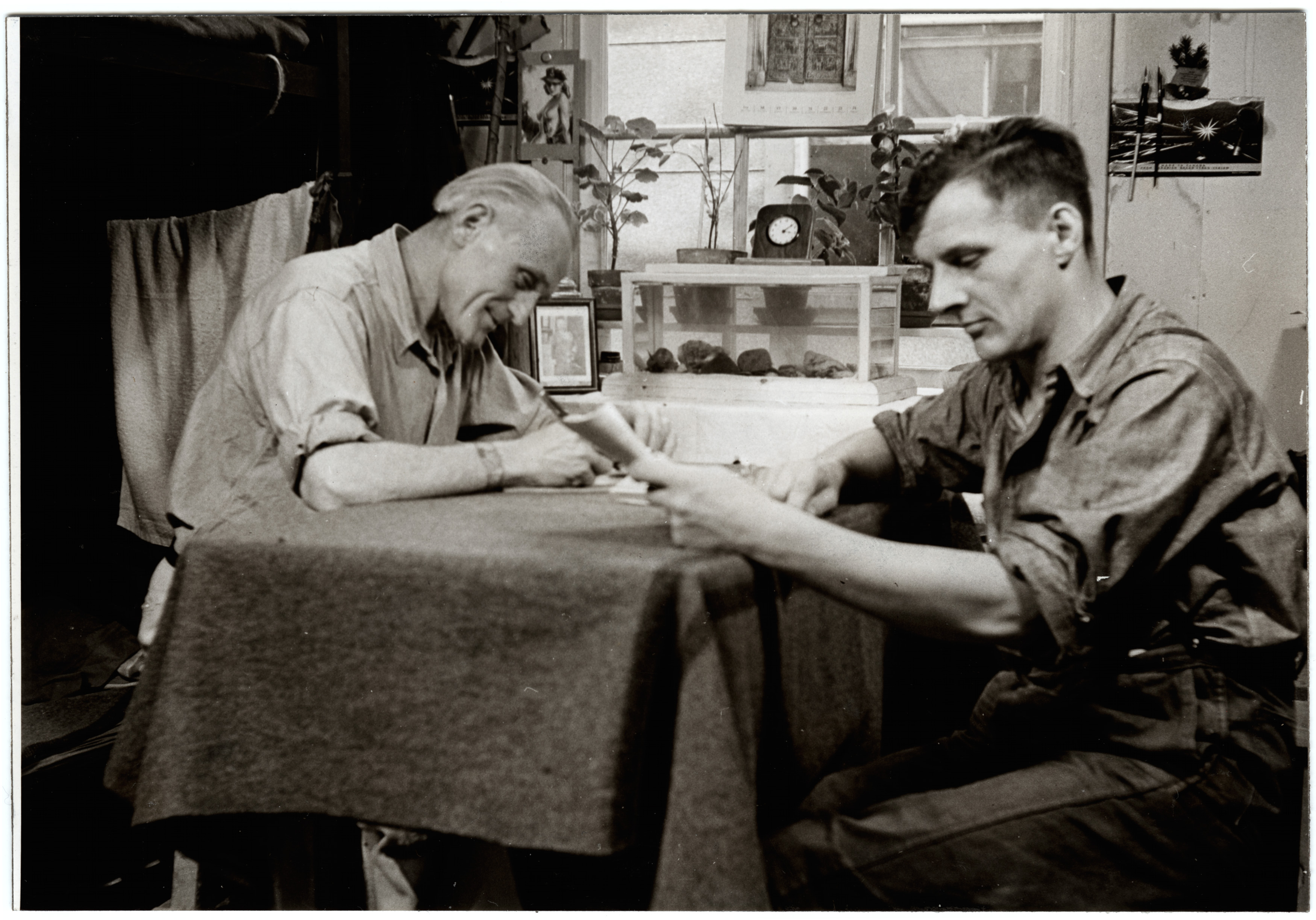
While not at work, prisoners were free to do as they pleased – at least within reason. Like other internment camps, music, sports, and handicraft were popular pastimes in camp but the prisoners also enjoyed some special privileges, like parole walks with an unarmed escort outside the enclosure. In a letter to his wife, one POW described a holiday in May:
With beautiful sunshine we started the day at 6 A.M. with concert and coffee outside, then we walked for a long stroll into the bush, by twelve we were back to the Camp. After the meal we had moving pictures, 3 o’clock coffee with cakes, than after this – there is a little river around the Camp where we are allowed to fish until five. Our dogs are crazy to go in for a swim. Then supper and after supper football game with coffee and cakes again outdoors. – As you can see, we are doing well – I wish you could be here.”
Excerpt of Letter from Paul Furth in “Intelligence Report for Month of May 1944,” HQS 7236-94-6-42 – Intelligence Reports – Sherbrooke, C5416, RG24, LAC.
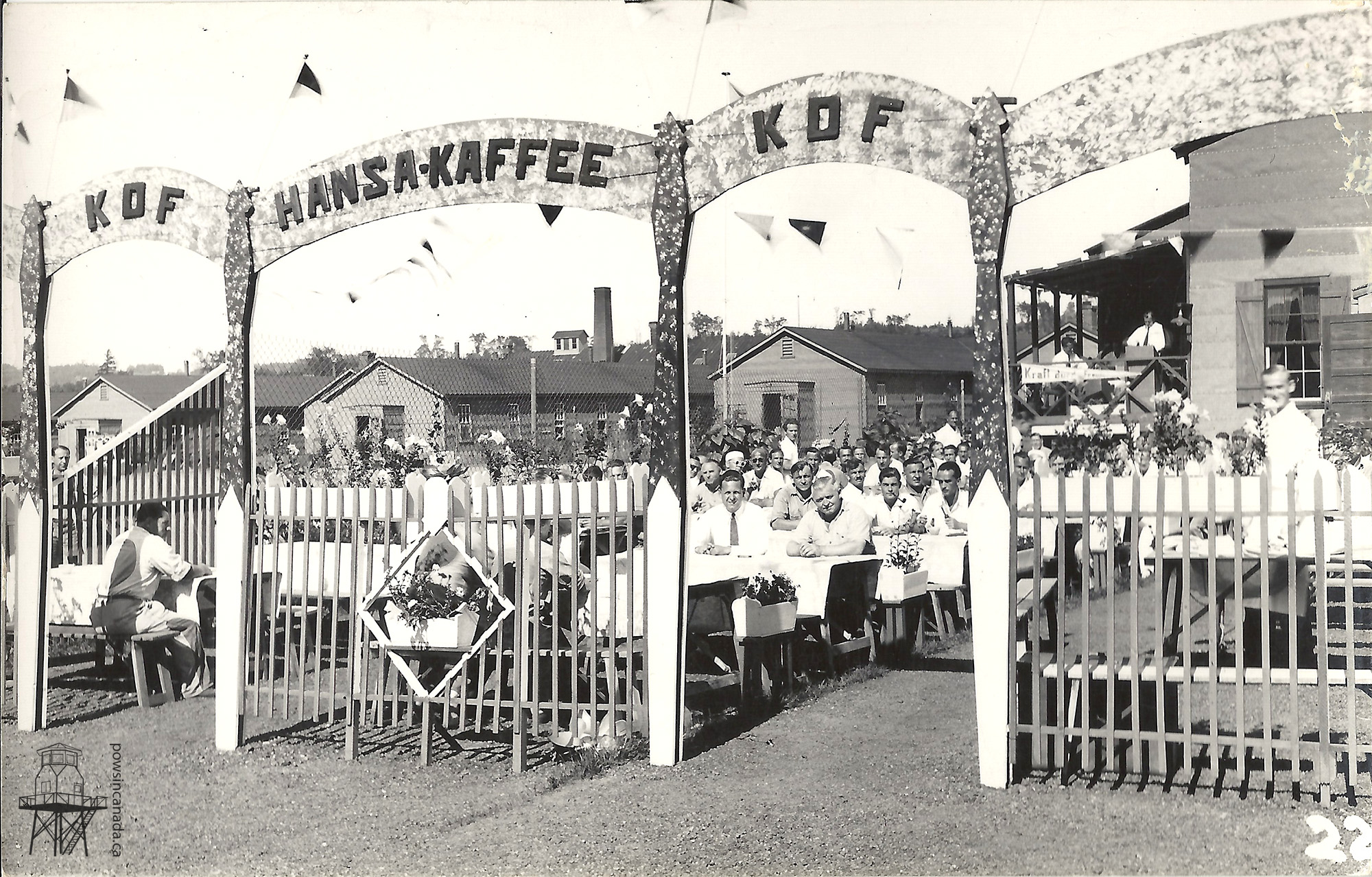
The prisoners converted their recreation hut into as a coffee restaurant, “Hansa-Kaffee,” each weekend, with the POW orchestra providing musical entertainment. As several of the EMS had worked as musicians entertaining passengers on German liners before the war, the camp possessed significant musical talent.
With access to tools and scrap materials, craftsmen busied themselves making “bottleships” – or ships in bottles – as well as model ships, cigarette holders, and even aquariums. These articles were traded amongst the prisoners and were later made available for sale through the camp office.
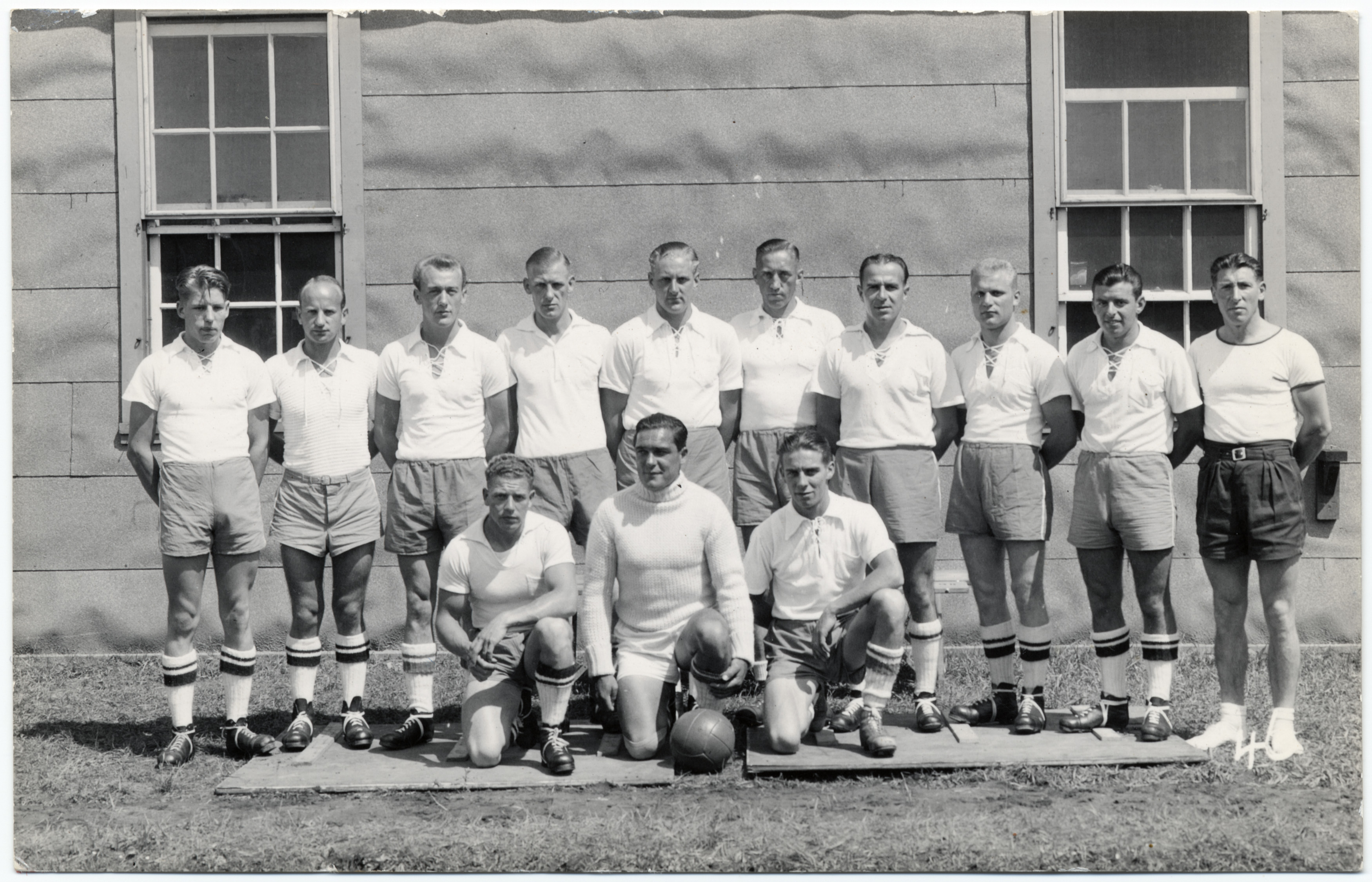
With a recreation field just outside the prisoners’ barracks, many prisoners busied themselves with football (soccer) and tennis and, in 1944, some were even teaching themselves how to play baseball. During the winter months, POWs skated and played hockey while others moved indoors and spend their their time boxing, wrestling, weightlifting, playing table tennis and card games, and practicing their gymnastics. The YMCA also provided thirty-five pairs of skis in 1944 and the POWs were permitted “skiing parties” twice a week and they also built a ski jump in the enclosure.

Others prisoners filled free time with their studies. Languages, including German, Spanish, Swedish, Norwegian, English, and French, and technical courses for shipmates, engineers, machinists, and wireless operators were among the more popular. Several craftsmen even offered courses on hobby work, wood carving, wood burning, and leather work. Professors from the nearby Lennoxville’s Bishop College even provided some public lectures.
In early 1946, Canada began winding down its internment operations and the decision was made to close Camp 42. The remaining internees were transferred to the United Kingdom in June and the camp closed soon after. Most of the Works Programme machinery and supplies were turned over to the War Assets Corporation for disposal.
Nearly all of the buildings were dismantled in the following eighty years but the main workshop buildings still remain. Most of the area that housed the prisoners’ barracks and recreation field are now home to the Établissement de Détention de Sherbrooke, a detention centre.
Location:
Pictures:





Further Reading:
- Posts about Camp 42 (Sherbrooke)
- Couture, Geneviève. “Réfugiés et Prisonniers de Guerre à Sherbrooke: Le Camp d’internment Newington, 1940-1946.” MA Thesis, Université de Montréal, 2003.
 POWs in Canada