Date Opened: June 1940
Date Closed: June 1946
Capacity: 400
Type of POW: Combatant Officers
Description:
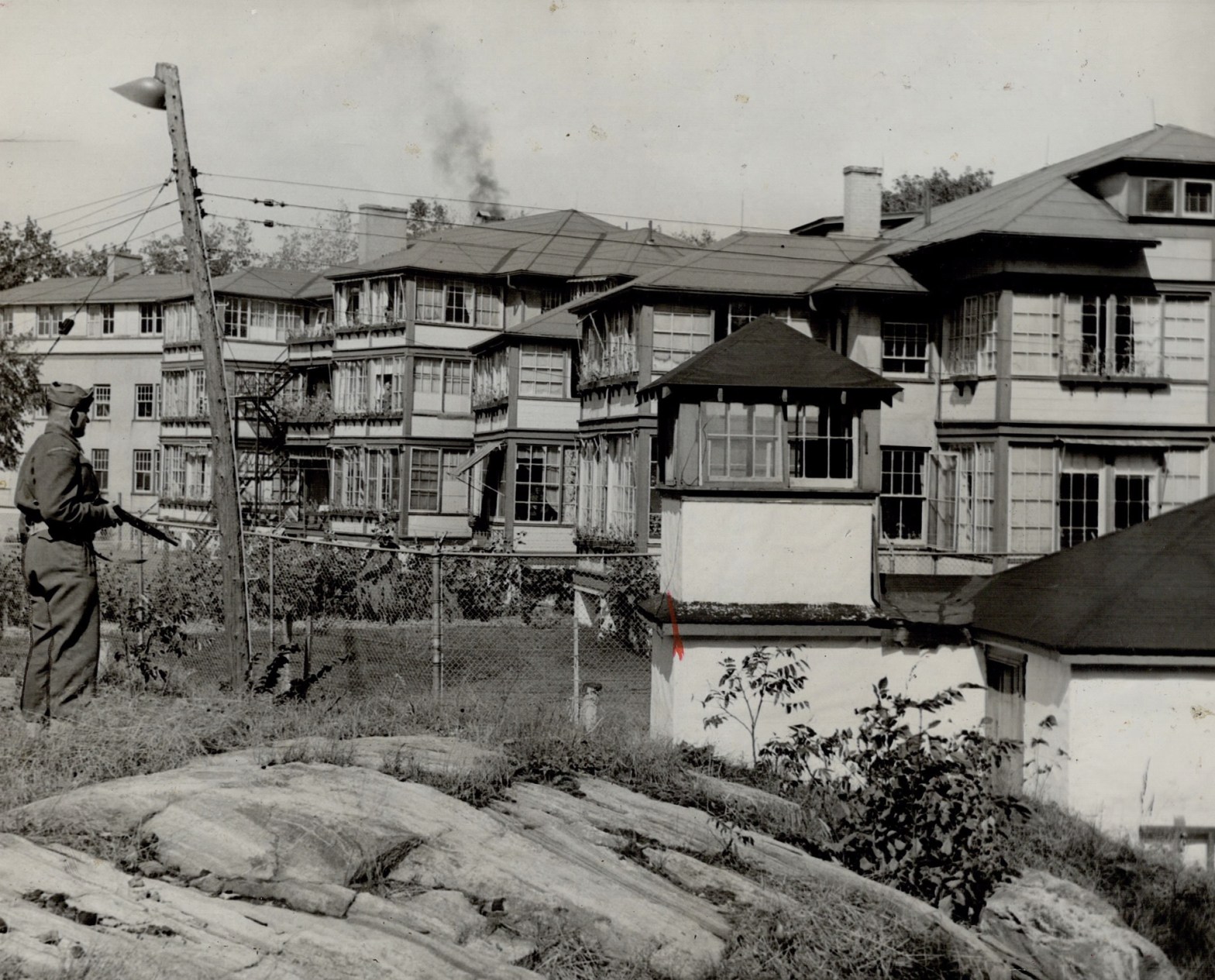
Under the 1929 Geneva Convention, officers and enlisted men were to be interned in separate camps so Canada had to establish a separate camp for officers arriving from Great Britain in 1940. After a brief search, the Department of National Defence elected to use an unused sanatorium in Gravenhurst, Ontario for the new camp, Camp C.
Located on the shore of Muskoka Bay, the site originally housed the Minnewaska Hotel but, after the hotel was converted into a temporary sanatorium, it was replaced by a new facility, the Calydor Sanatorium, in 1915. The three-story facility, expanded after the First World War, offered patients private rooms, scenic views, and excellent care in the interwar period. But a decline in Tuberculosis and the costs of private care in the midst of the Depression prompted the Sanatorium’s closure in 1935.
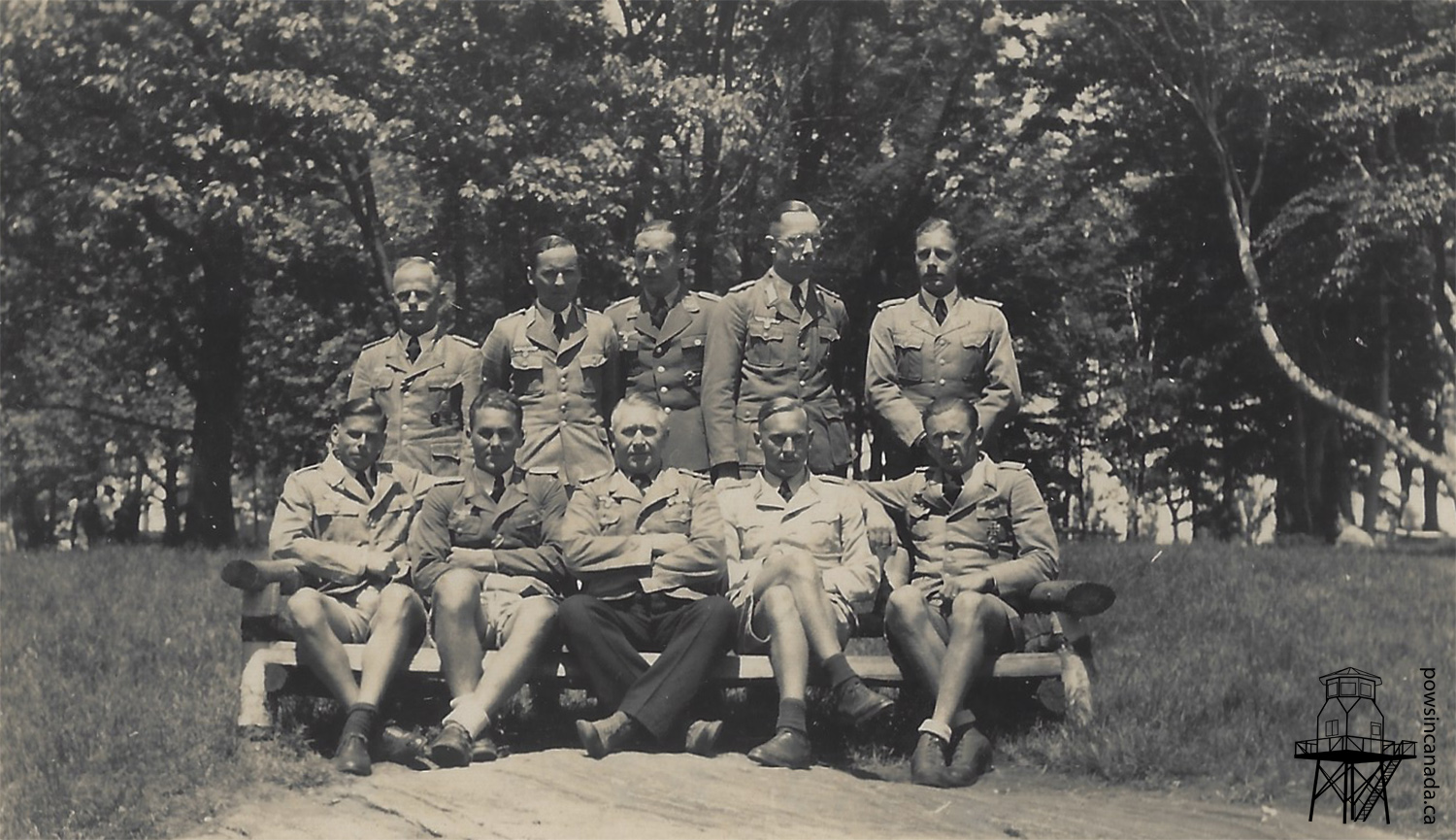
The first prisoners arrived at Gravenhurst in late June 1940. Most were pilots and aircrew shot down over the United Kingdom but several U-Boat and naval crews and soldiers captured before the British withdrawal from continental Europe were also included in the mix. Although Gravenhurst was an officers’ camp, a smaller group of enlisted men were transferred to the camp to serve as batmen, orderlies, kitchen staff, and in other roles to help with the camp’s day-to-day operations.
Camp C had some of the best POW accommodations in the country as officers were housed in the main residence. High-ranking officers enjoyed private or semi-private quarters and the junior officers lived in shared rooms. The other ranks, however, were housed in an army barracks.

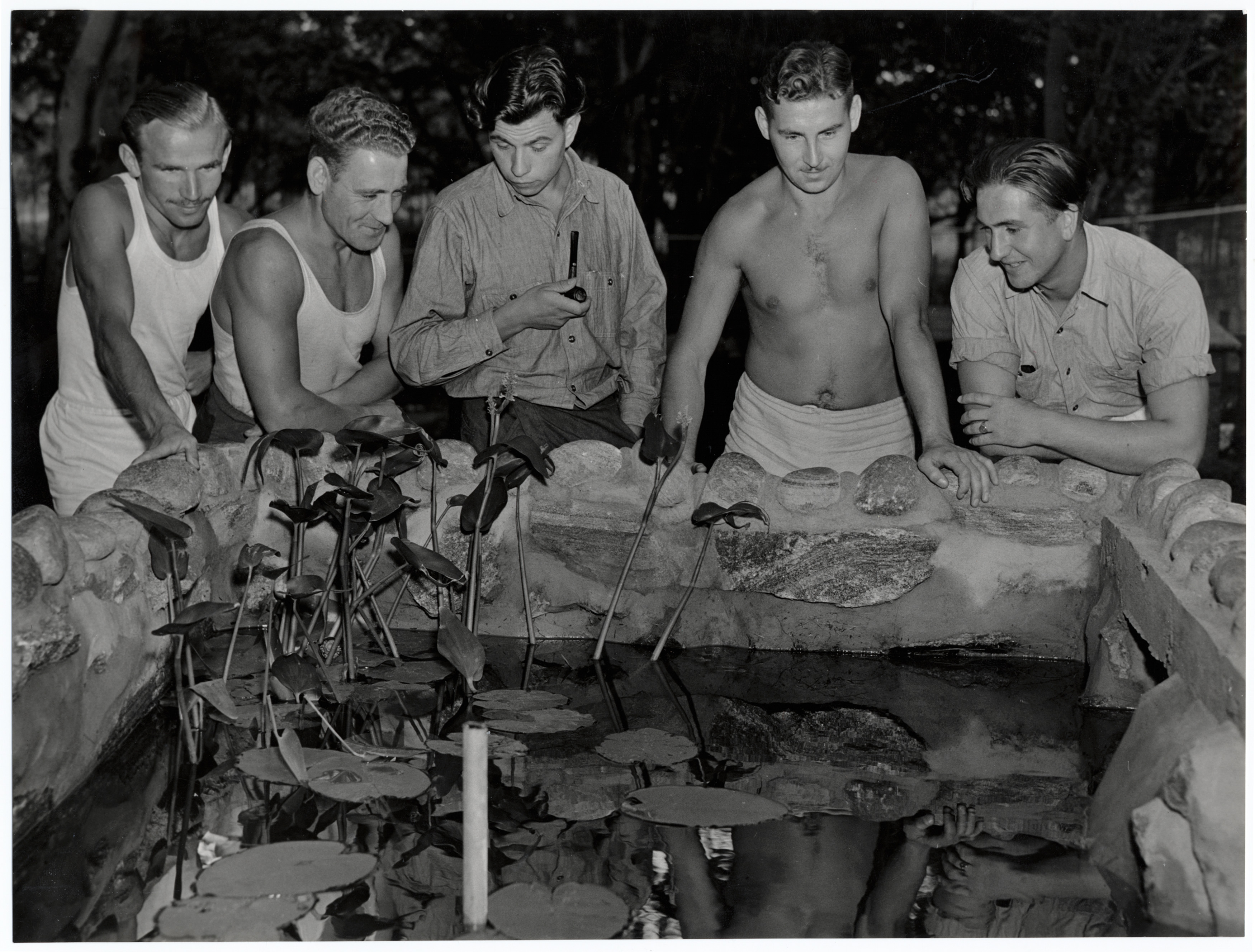
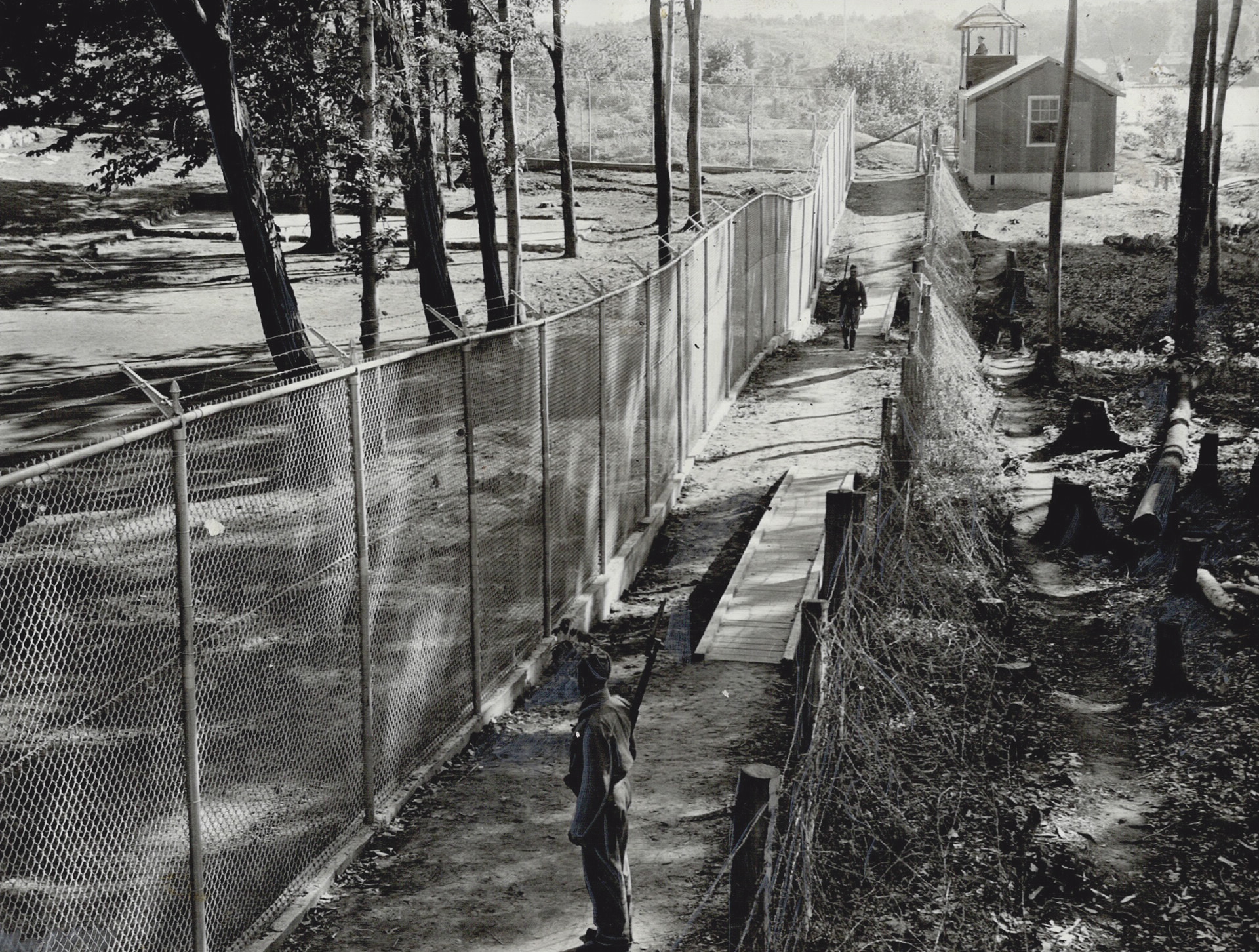
While prisoners often complained the enclosure was too small, they quickly set about improving their recreation and sporting grounds. In the summer months, prisoners could often be found sun bathing on the grounds or playing tennis. The Commandant also permitted groups of prisoners to swim in the bay under the watchful eyes of armed guards. In the winter, prisoners turned to skating, hockey, and table tennis. Much like the swimming parties in the summer months, small groups of officers were granted parole walks outside the enclosure and some took this opportunity to ski or snowshoe.

Music was also popular in camp and the prisoners established a small orchestra. Speakers set up around the enclosure allowed for the radio to be broadcast throughout the camp. Orchestral and dance music – but not jazz – as well as the BBC’s latest war news and hockey broadcasts proved the most popular. The YMCA also regularly provided prisoners with films while other movies were purchased from Toronto through the prisoners’ canteen fund.
Several prisoners had worked as professors and teachers in their civilian lives and they soon developed a comprehensive educational program. Courses included Latin, French, Italian, Spanish, English, Swedish, Russian, History, Religion, Law, Music, Agriculture, Art History, Stenography, Political Economy, Civil and Family Law, and Book-keeping. These proved especially popular and, as of February 1946, nearly every POW in camp was taking at least one course. In addition to courses offered by the POWs, the War Prisoners’ Aid of the YMCA also arranged for local educators, like W.A. Fischer of the Barrie Collegiate Institute, to deliver regular lectures on a variety of topics.
In addition to coursework, reading was a popular activity, with over 2,000 books in the camp library by mid-1943. Prisoners also had access to Canadian and international periodicals like the Globe and Mail, Toronto Daily Star, Picture Post, New Yorker, and Readers’ Digest. By June 1945, Canadian Geographical Journal, Canadian Nature, Coronet, Dog World, Home & Garden, Rod & Gun, and La Revue Populaire had also been added to the camp’s collection.

Camp 20 had several talented artists who busied themselves painting with oils, watercolours, and crayons. Some painted for themselves while others traded their art with their comrades and, in the latter half of the war, sold their work to guards and camp staff through organized art sales. These artists also dedicated their talents to decorating common and private rooms throughout the camp.
The prisoners also had their own small zoo, which at one time included several monkeys, rabbits, fish, and even a black bear. The bear, christened “Nellie von Gravenhurst” was later moved to Camp 23 (Monteith), where she was more commonly known simply as “Nellie”.

In 1944, the prisoners began renting and working a 150 acre farm near the camp. Groups of prisoners, ranging from fifteen to 100 men, worked under parole, leaving the camp under armed escort in the morning and returning in the evening. The prisoners kept pigs, a few sheep, chickens, and three horses – Hannibal, Caesar, and Maxi – which required them to build a piggery, hen house, and barn. The prisoners also erected a one-and-a-half storey farmhouse to be used during the day. The prisoners grew beans, swiss chard, tomatoes, potatoes, turnips, and cabbages to supplement their rations and even tapped maple trees to make syrup during the winter months.

While the prisoners at Camp 20 enjoyed superior living conditions and privileges compared to some other camps, the atmosphere was far from paradise, especially for the anti-Nazis in camp. In December 1944, the Department of National Defence categorized Camp 20 as a “Black” internment camp, with “Black” referring to POWs categorized as pro-Nazi. Most of the “Whites” (anti-Nazis) and “Greys” (those in between) were transferred to other camps and replaced with Blacks.
Congregating pro-Nazis in a single camp was intended to allow for concentrated re-education and de-nazification programs but it proved a constant struggle for Canadians to change the minds of pro-Nazi POWs, some of whom were willing to go so far as to murder the anti-Nazi POWs in camp. As such, most of the camp remained “Black” as of November 1945 – six months after Germany’s surrender. While some would change their opinions of Nazism in the coming months, re-education efforts were interrupted by the transfer of most of the POWs to the United Kingdom in June 1946.
After the war, the former camp was converted into a hotel, first as the Leyland Holiday Village Hotel in 1948 and then as the Gateway Hotel from 1949 into the early 1960s. The hotel, now in poor condition, changed hands in 1965 and the new owners prepared to demolish it. The main structure was destroyed in a fire in 1967 and another fire the following year destroyed many of the remaining structures. Today, little remains of Camp 20. Housing developments cover much of what was Camp 20, the prisoners’ farm was also lost in a fire, and the Gravenhurst Industrial Park now occupied the land once farmed by the prisoners.
Location:
Pictures:







Further Reading:
- Posts about Camp 20 (Gravenhurst)
- Porter, C. J. The Gilded Cage: Gravenhurst German Prisoner-of-War Camp 20, 1940-1946. Gravenhurst, ON: Gravenhurst Book Committee, 2003.
 POWs in Canada