Date Opened: May 1942
Date Closed: December 1942
Capacity: 10,000 (intended)
Type of POW: Combatant Other Ranks
Maximum Strength (POW): 12,607 (October 1942)
Description:
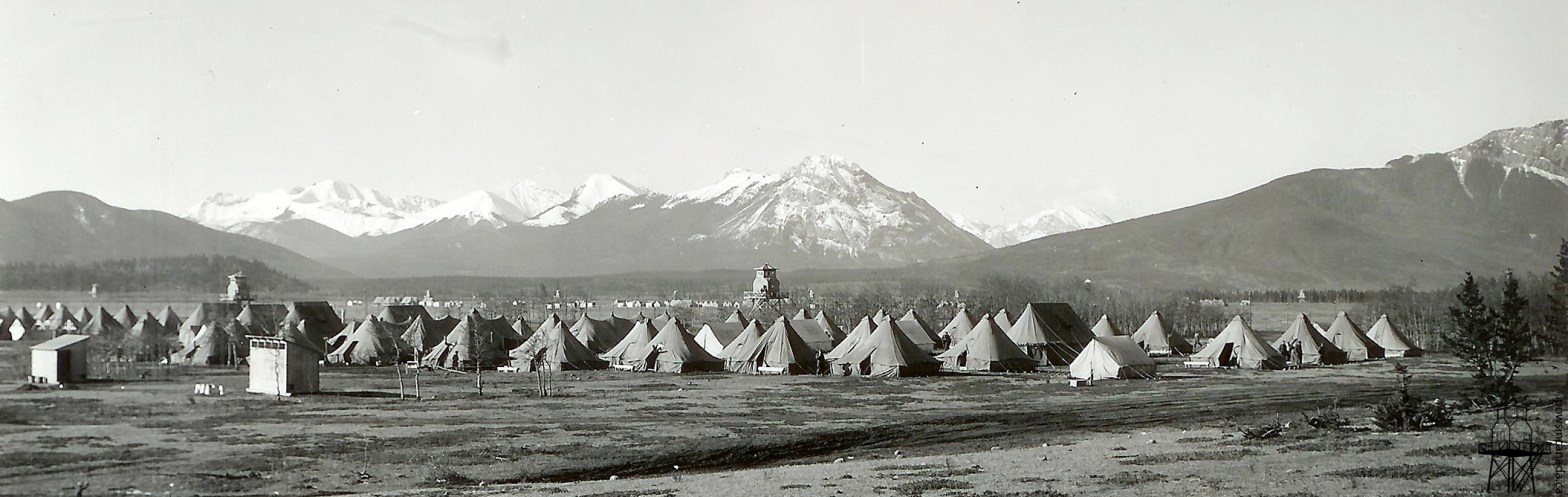
The pending arrival of thousands of German combatant POWs from North Africa prompted the Canadian government to establish two large, purpose-built internment camps at Medicine Hat (Camp 132) and Lethbridge (Camp 133). As the first of these camps was only expected to open in late 1942, the Department of National Defence erected a temporary tented internment camp on the Morely flats near Ozada, Alberta: Camp 133 (Ozada).
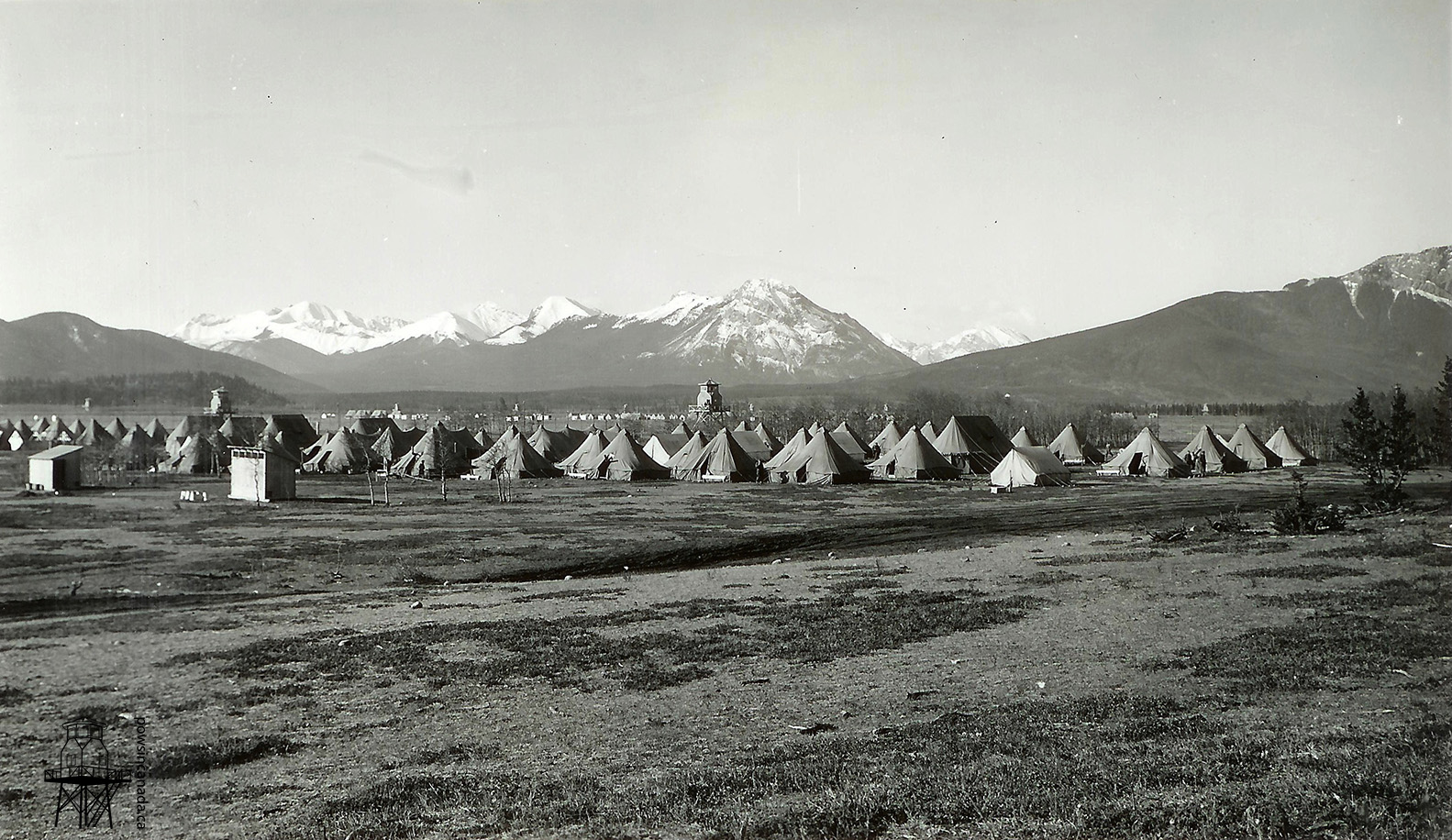
Quickly erected in the Spring of 1942, Camp 133 (Ozada) was built on a one mile square area leased from the Stoney Indian Reserve, land belonging to the Stoney Nakoda First Nation. By the time the first POWs arrived in May 1942, the camp was surrounded by twenty-eight guard towers, floodlights, and barbed-wire fences. As the camp was only temporary, POWs and guards alike lived in tents for the duration of their stay and, at its peak, just over 12,600 POWs were living in 3,400 tents at Ozada.

The temporary nature of the camp meant recreation facilities were limited at Ozada. Only a few tents were available to reading or education “rooms” and the camp library was limited to what prisoners from Gravenhurst, Espanola, and Angler brought with them. Instruments brought from these camps allowed some orchestras to survive but all the musicians recently arrived from North Africa were left without instruments. With lots of space, the prisoners quickly began organizing sports and at least four football (soccer) pitches were established within the enclosure.
The camp’s picturesque location at the foothills of the Rocky Mountains prompted many POW artists to take document their internment through sketches, paintings, and engravings. Even Dr. Jerome Davis, director of the War Prisoners’ Aid if the YMCA was struck by the natural surroundings:
The camp itself is located in the midst of the mountains. The view is so beautiful that before this place was every thought of as a camp site for prisoners of war, I had taken colored pictures of the panorama scene. In fact the setting is indescribable. Snow-capped mountains surround the camp. In spite of difficulties inherent in a temporary camp of this character, the large sized compound and the beautiful scenery is one off-setting factor.
Dr. Jerome Davis, “Report of Work in the Canadian Internment Camps During the Months of August and September, 1942,” October 1, 1942, B1984-0014/001 (09) – Davis Reports 1942-43, Boeschenstein, Hermann Fonds, University of Toronto Archives.
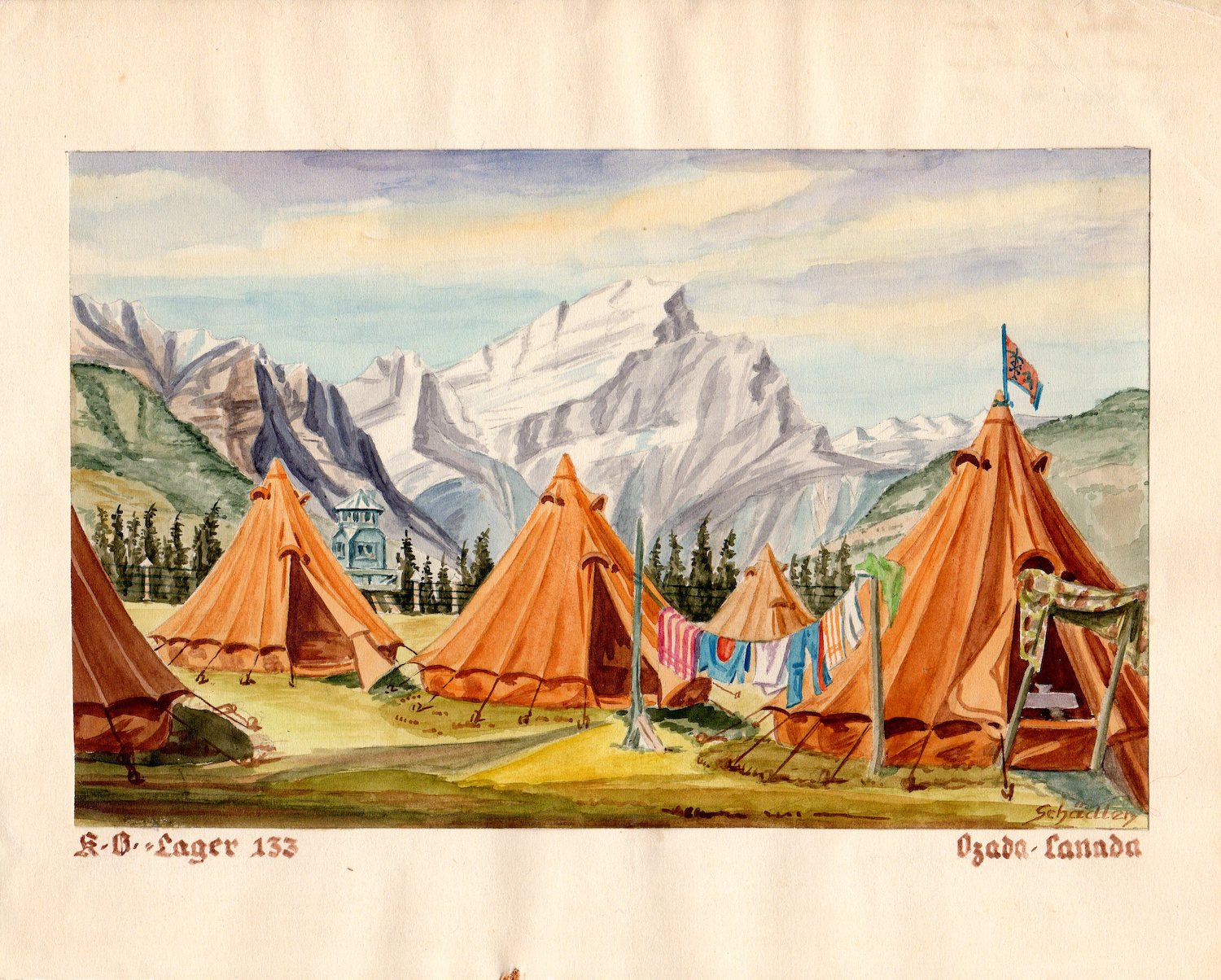
But the camp’s location in the foothills came with its own problems. Unpredictable mountain weather meant heavy rains transformed the camp into a sea of mud while winds blowing off the mountains flattened tents. Dropping temperatures in the Fall made life in tents increasingly uncomfortable, a problem only exacerbated by early snowfall.
Fortunately for the POWs, guards, and camp staff at Ozada, the newly completed Camp 133 at Lethbridge was ready by late November. The POWs were transferred to Lethbridge by train and Ozada was emptied by December 1942. Although the fences and guard towers remained standing in case the camp was needed in the future, the Ozada camp never reopened. Some buildings were relocated to Camp 135 (Wainwright) while the remaining structures and fences were later dismantled.
Grassland now covers much of the camp while the Trans-Canada highway runs through what was the north side of the main enclosure.
Location:
Gallery:


 POWs in Canada