
Date Opened: January 1945
Date Closed: June 1946
Capacity: 1,100
Type of POW: Combatant Officers
Description:
In October 1944, the Department of National Defence received credible reports of a planned escape at Camp 44 (Grande Ligne), in which the POWs responsible sought to sabotage local industry and thereby endanger the local population. Authorities believed it was therefore desirable to relocate the leaders of the plan to a secure camp where they could be closely monitored. Camp 130 (Seebe) was deemed the most suitable for the task but a replacement was needed to house the officers presently at Seebe. With an emphasis on a location that could be quickly made ready, authorities elected to use the recently vacated Wainwright Training Centre in Wainwright, Alberta.
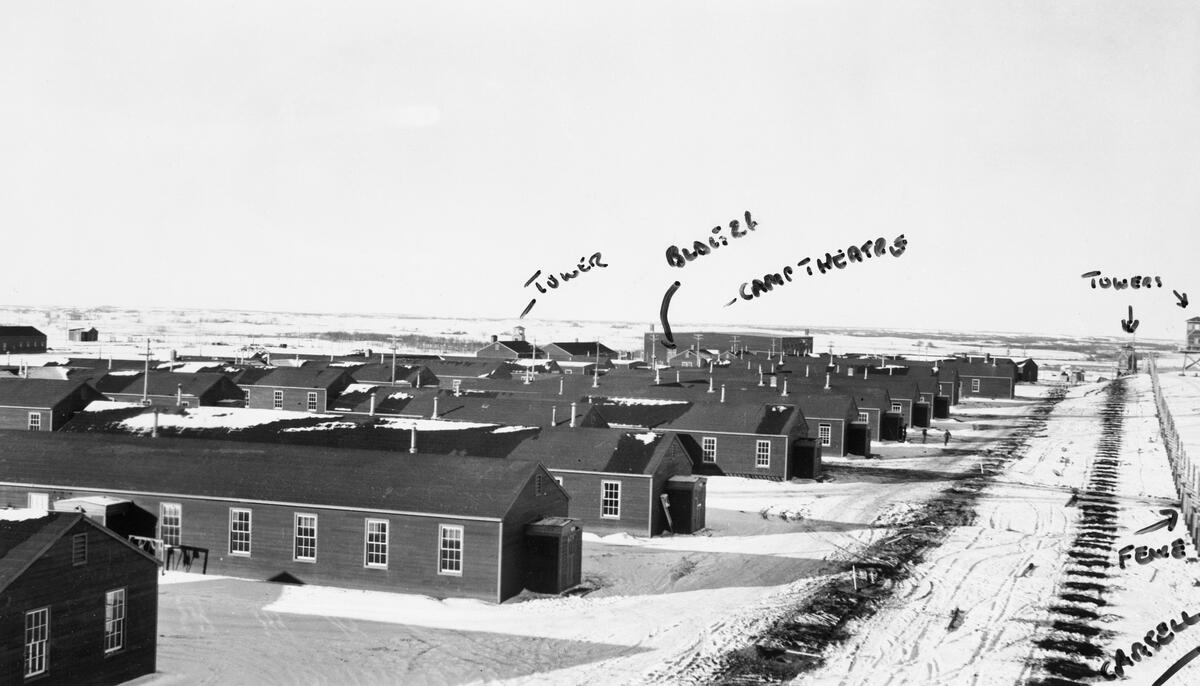
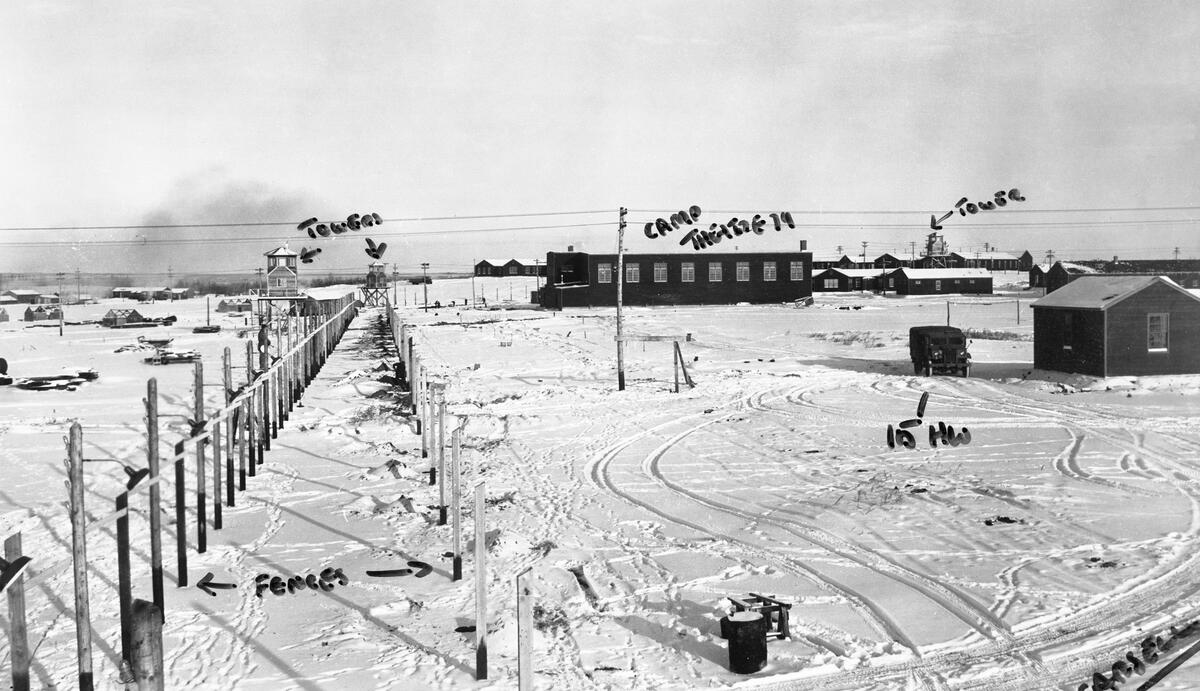
Closed following the Allied advances in Europe, the Wainwright Training Centre had trained thousands of Canadian soldiers between 1940 and 1944. With facilities already in place, converting the training centre into an internment camp proved relatively easy and Camp 135 soon had separate quarters and messes for the officers and other ranks, recreation halls, canteens, a library, a hospital and dental clinic, a carpenter shop, a boot repair shop, and a tailor’s shop.
The first POWs – 404 officers, 106 other ranks and fifteen civilians – arrived from Camp 130 in January 1945. They were later joined by additional prisoners from Camp 20 (Gravenhurst), Camp 30 (Bowmanville), and Camp 44 (Grande Ligne). As with all officers’ camps in Canada, the smaller number of other ranks served as orderlies and assisted with the day-to-day operation and maintenance of the camp.
As all the prisoners transferred to Wainwright had come from other camps and most were well-accustomed to POW life, they soon set about rebuilding and replicating the educational and recreational programs they had left behind. A twenty-two piece orchestra was assembled and, within a year, the musical talent grew to include three separate orchestras.

As in other camps, sports proved the primary pastimes of many POWs. In the summer months, prisoners played basketball, tennis, handball, volleyball, and, of course, football (soccer). At least ten separate football teams were raised in the camp and competed against one another. Officers were also permitted parole walks outside the enclosure and frequently explored the nearby grounds of Buffalo National Park to walk or pick berries and mushrooms. The recreation fields were flooded in the winter to turn them into hockey and skating rinks. Parole walks continued, although many prisoners opted to ski rather than trudge through the snow.
Thanks to several talented artists in camp, many of the barracks and messes were decorated with murals. The camp’s carpenter shop did “excellent work,” turning out an array of articles, although the prisoners chose to produce more practical items like suitcases rather than intricate models. That being said, one prisoner made a fully functional clock. And unlike other camps, knitting proved a most popular pastime, with many prisoners knitting clothing to bring to their families once they were repatriated.
Work opportunities remained limited in camp. While most of the prisoners had come from camps with attached farms, there were no such facilities at Wainwright. Camp staff did, however, permit the prisoners to start raising chickens in September 1945.
The prisoners’ transfers, often unexpected, often interrupted their studies but lecturers quickly organized courses to meet demand. Some 700 students were enrolled in courses in the Winter semester of 1945/1946, taking secondary school classes or courses on agriculture, forestry, civil engineering, architecture, mechanical engineering, economics, law, education, theology, English, Spanish, French, and Russian. Several others took correspondence courses through the University of Saskatchewan on subjects like political science, history, and English.
But not everyone was content remaining at Wainwright. In March 1945, Klaus Conrad and Heinz Meuche climbed over the fence and disappeared. The pair were on the run for a year, but were taken into custody in Indiana. Tensions were also strong between the anti-Nazis and pro-Nazis in camp. A group of Nazis transferred from Gravenhurst were among the primary troublemakers and were apparently willing to kill anyone who opposed them or who spoke out against the Nazi cause. Some thirty to forty of these Nazis planned on a mass escape in April 1945 but the anti-Nazis thwarted this, tipping off the guards about location of the escape tunnel.
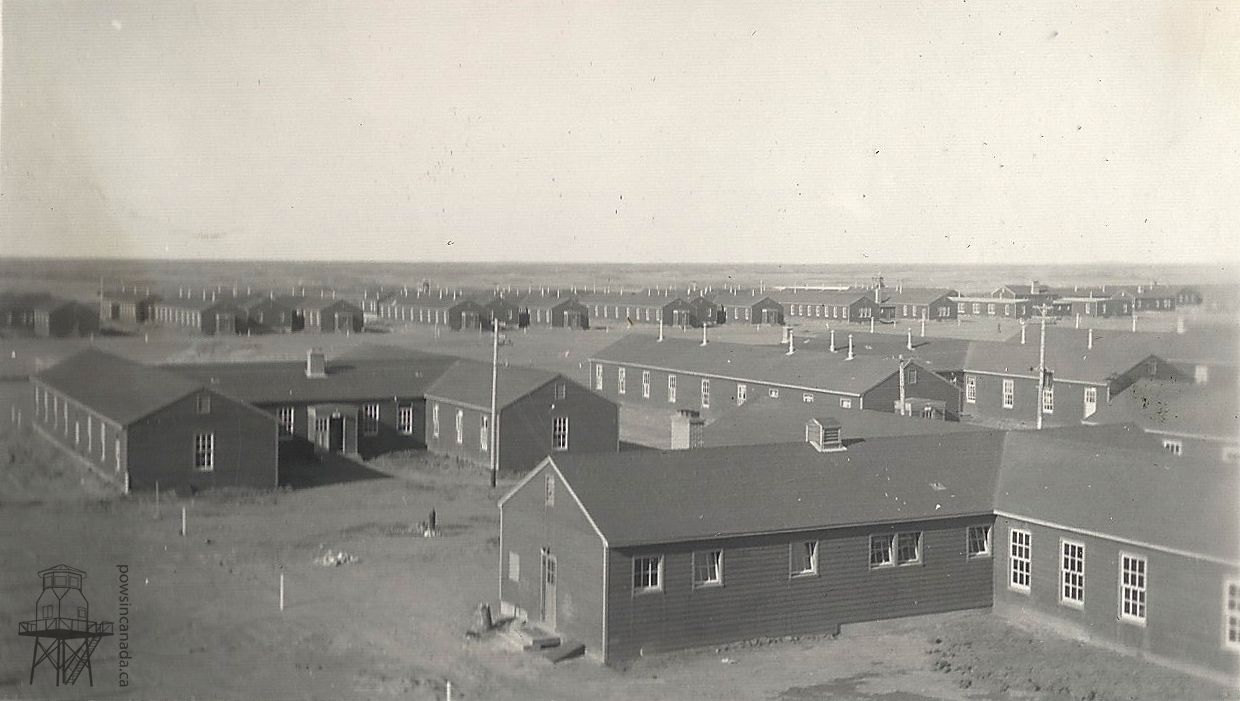
Re-education was met limited with success at Wainwright for, by February 1946, about the half the camp was “grey” and the rest divided between “white” (anti-Nazi) and “black” (pro-Nazi). Canada was becoming more appealing, however, and about 25% of the camp expressed hope of remaining in Canada or settling here after the war. Those who hoped to stay would soon be disappointed for, in May 1946, most of the camp was transferred to the United Kingdom for their eventual repatriation, while the remaining 250 POWs were transferred to Camp 130.
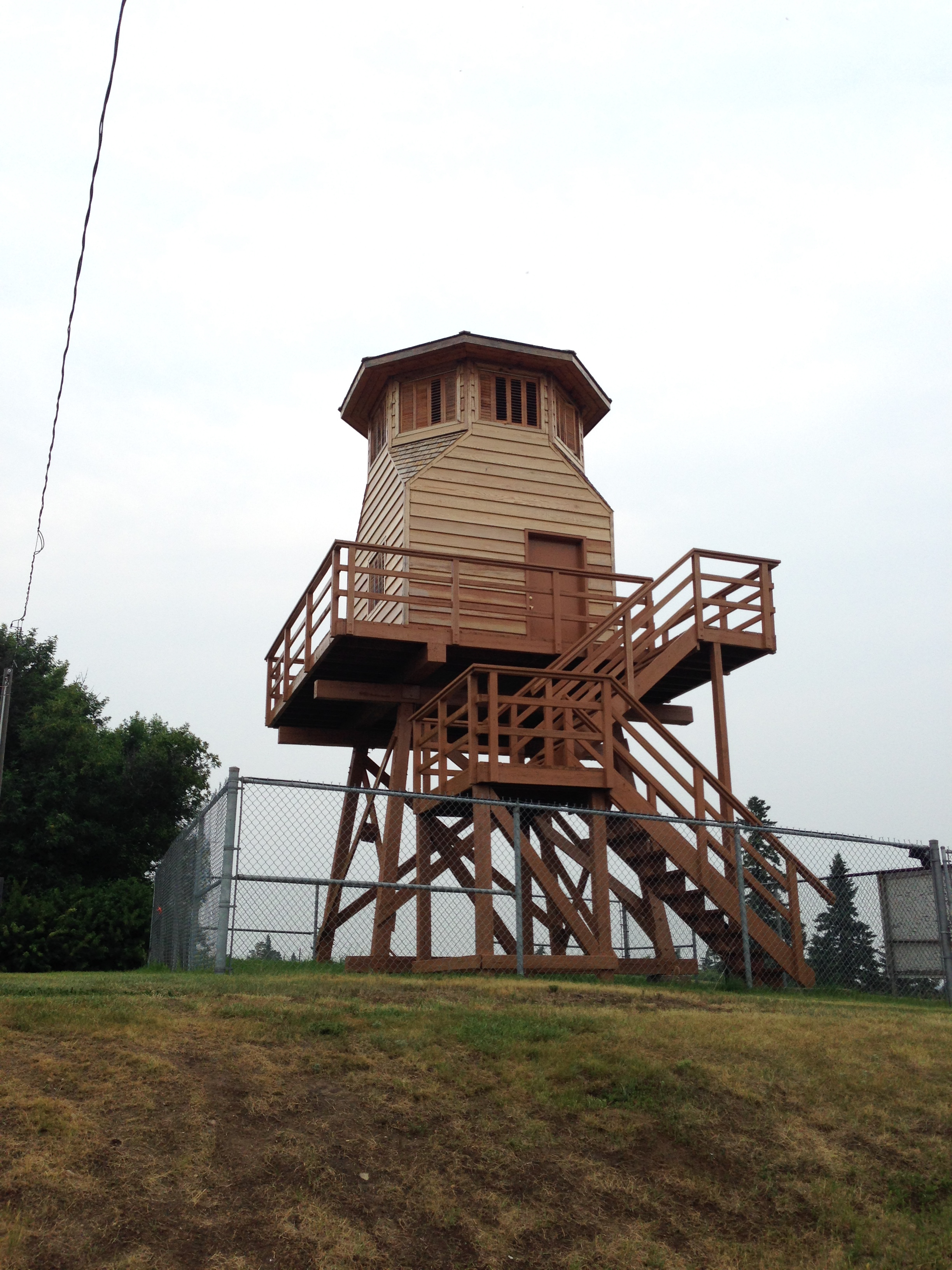
Camp 135 closed after the last prisoners left but rather than dismantle the facility, Department of National Defence elected to reopen the site as a training camp. Today, Canadian Forces Base (CFB) Wainwright is one of Canada’s busied bases and houses 3rd Canadian Division Training Centre and the Canadian Manoeuvre Training Centre. Although most of Camp 135’s buildings have since been dismantled, one of the guard towers has survived (see gallery below).
Location:
Pictures:
Further Reading:
- Posts about Camp 135 (Wainwright)
- Conrad, Klaus. Canadian Escapades – Kanadische Eskapaden: The True Story of the Author’s 3 Escapes from WW2 POW Camps. Chelmsford, MA: Germancosm, 2009.
 POWs in Canada