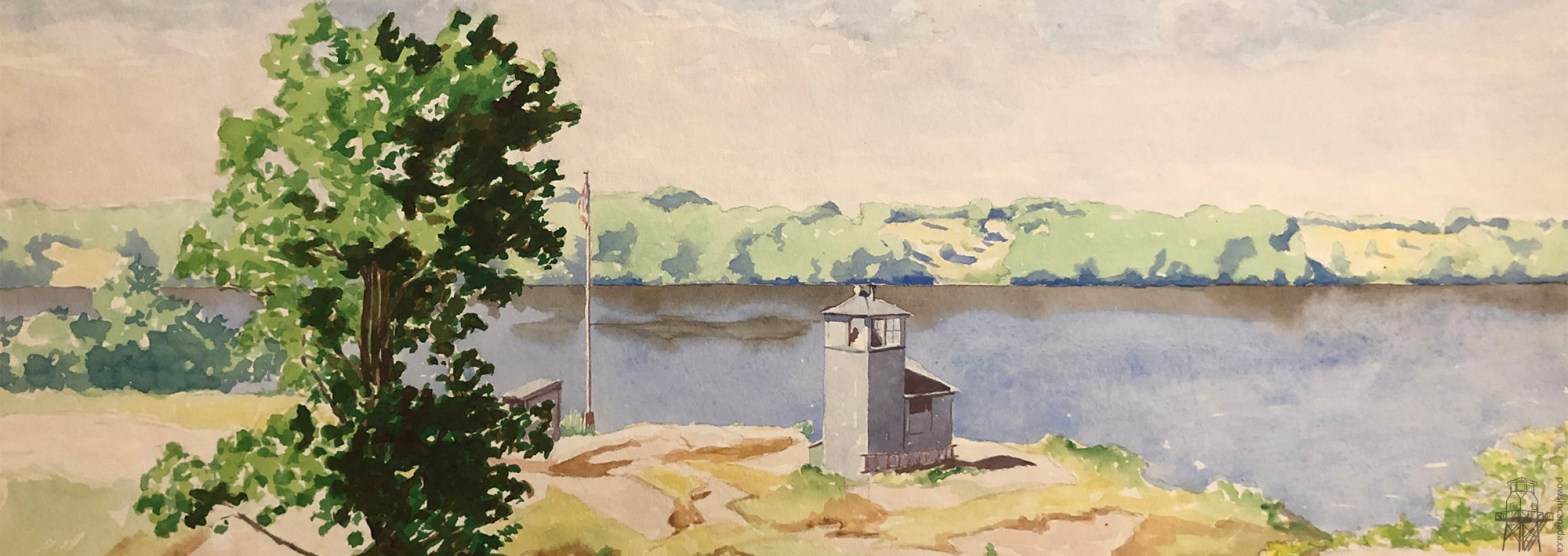
The scene is calm: a solitary watchtower overlooking Muskoka Bay. The silhouette of at least one person – maybe two – keeping a watch on the surroundings can be seen through the tower’s windows while the Union Jack flies from a nearby flagpole. While the surroundings seem peaceful, even serene, the view remained just out of reach of the artist, a German prisoner of war interned at Camp 20 in Gravenhurst, Ontario.
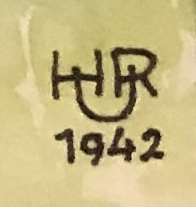
The stylized initials “H.U.R.” were that of Dr. Hans-Ulrich Roll, a German Naval officer captured in 1941. Dr. Roll was later transferred to Canada, where he spent the rest of the war in various Canadian camps from 1942 and 1946. A talented artist, Dr. Roll documented his internment through a series of watercolours, sketches, and pastels. Some he gave away, traded, or sold while he was in Canada, but he held on to several favourites and a sketchbook until his passing. As we look back on his work some eighty years later, these pieces provide an uncommon look of life as a German officer in Canadian internment camps.
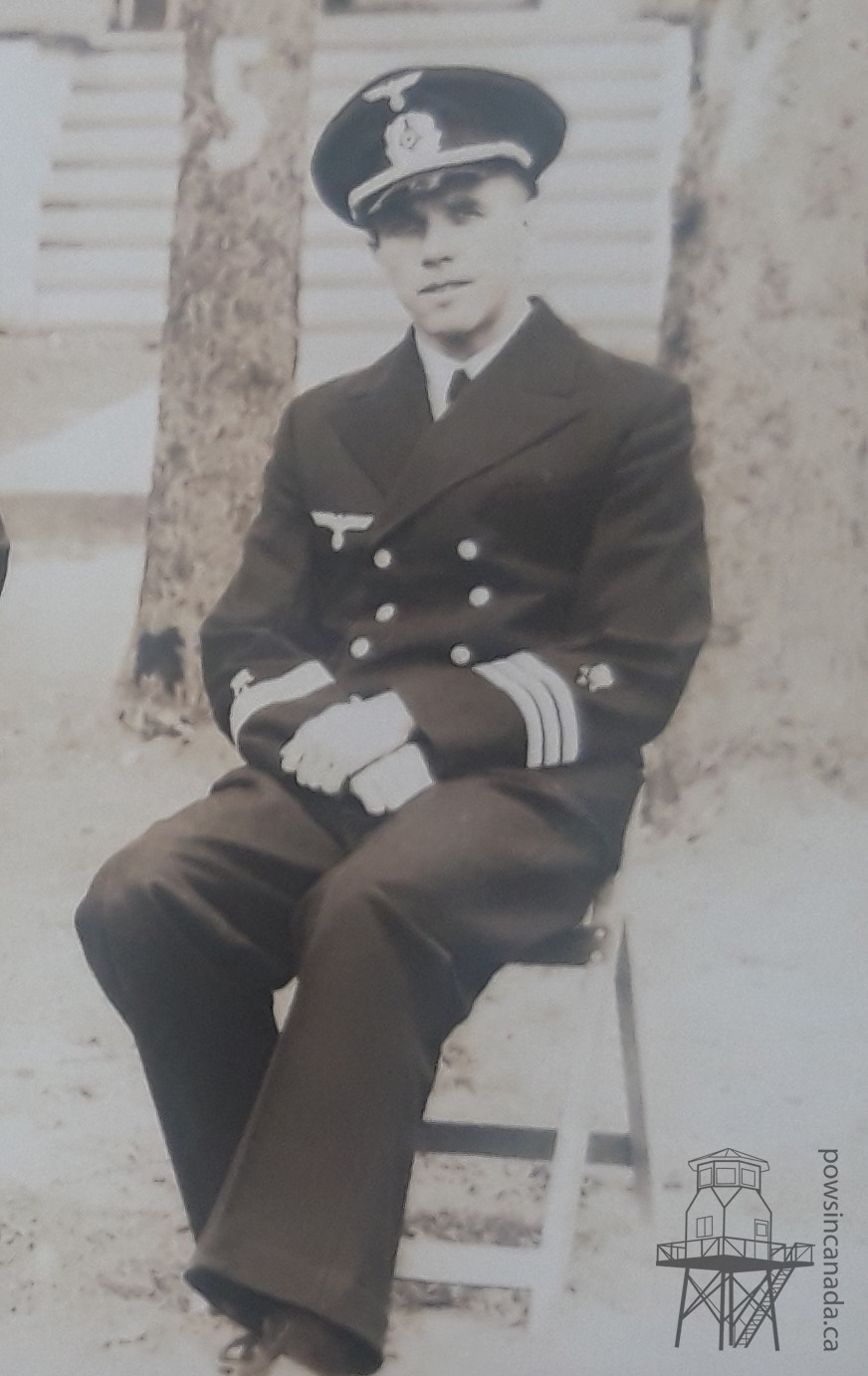
Hans-Ulrich Roll was born in Danzig in 1910. He developed a keen interest in the sciences and pursuing courses in mathematics, physics, and biology in university. He enlisted in the Kriegsmarine in the mid-1930s and began work in the German Naval Weather Service while pursuing his doctorate. He graduated with a PhD in Meteorology and Oceanography in 1939, with his dissertation, “Zur Frage des täglichen Temperaturganges und des Wärmeaustausches in den unteren Luftschichten über dem Meere (auf Grund von Messungen bei Helgoland)” (Regarding the question of daily temperature fluctuations and heat exchange in the lower air layers above the sea [based on measurements near Heligoland]).1 Kapitänleutnant Dr. Roll was then assigned to the German Auxiliary Cruiser Pinguin as the ship’s Meteorological Officer.
The Pinguin had started its career as a merchant freighter before it was converted into a commerce raider tasked with hunting Allied merchant ships. Armed with six 5.9-inch guns, a 75 mm gun, anti-aircraft guns, two torpedo tubes, mines, and a float plane, the ship was designed to appear as a merchant vessel before engaging its targets at close range, even flying Allied or neutral nations’ flags. The Pinguin proved quite successful, sinking fourteen British and Norwegian merchant vessels between July 1940 and May 1941, but this was short-lived.
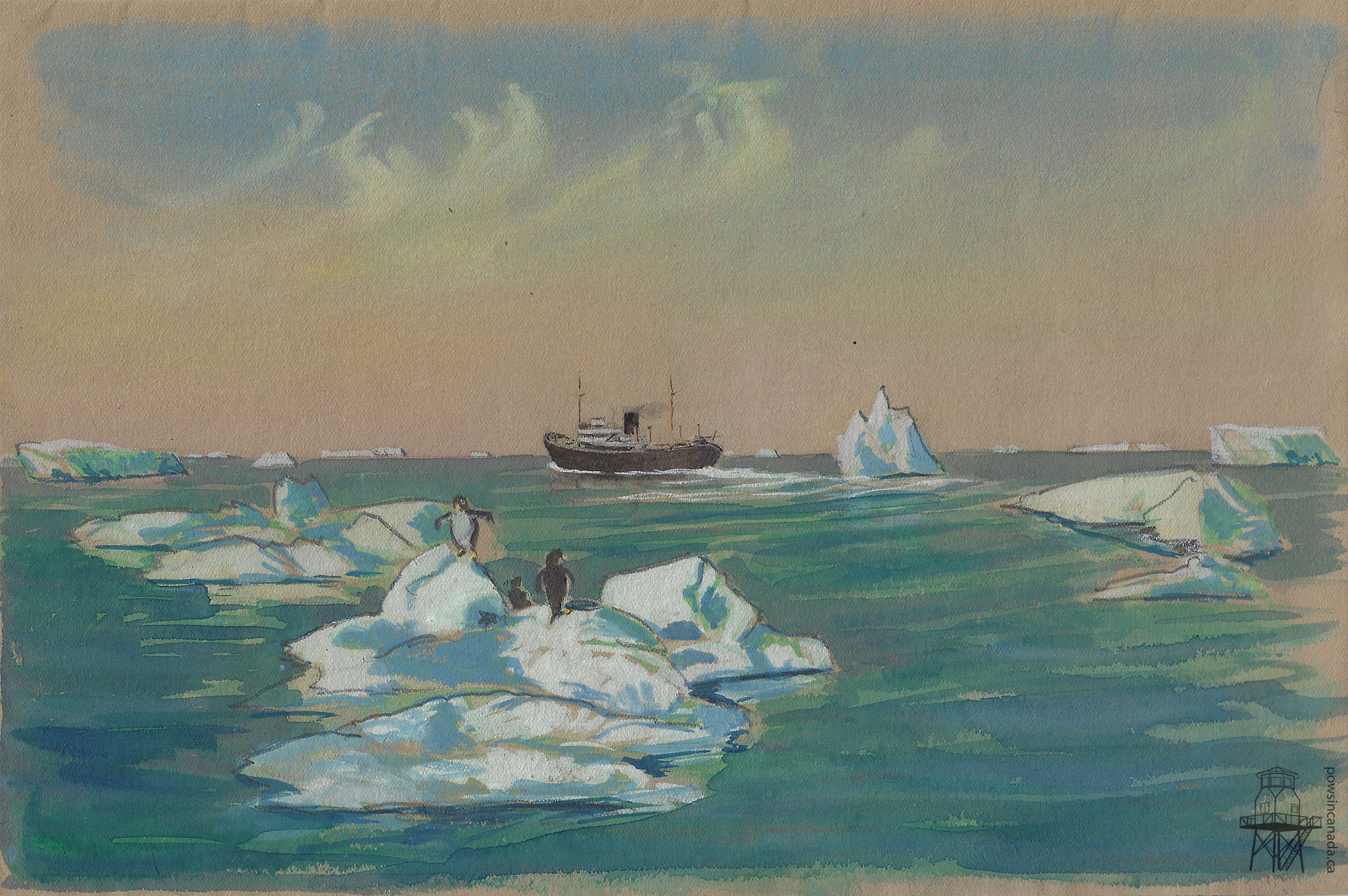
On May 7, 1941, the British Heavy Cruiser HMS Cornwall intercepted a distress message from one of the Pinguin’s victims and altered course to search for the Pinguin. One of the Cornwall’s search planes eventually spotted the Pinguin and the Cornwall closed in. The Pinguin attempted to disguise itself as a neutral vessel but, as it was apparent the Cornwall was not to be fooled, the Pinguin’s crew opened fire. The Cornwall’s guns quickly responded and, after a brief engagement, a salvo struck the Pinguin’s sea mines and a catastrophic explosion tore the Pinguin apart. Only sixty of the 400-man crew and twenty-two of the 200 Allied POWs aboard the ship survived and were rescued by the Cornwall. Among them was Dr. Hans-Ulrich Roll.
Dr. Roll and the rest of the survivors were transferred to internment camp in South Africa but were later relocated to the United Kingdom. At some point after his capture, British intelligence personnel interviewed him to learn more about the Pinguin, its crew, and its purpose, but they were met with little success. The report noted,
[The Pinguin’s] Senior Meteorological Officer, Dr. Ulrich Roll, who bore the rank of Kapitänleutnant (Lieutenant-Commander), was among the survivors, but it must be stated that his interrogation proved unsatisfactory. Dr. Roll, aged 31, was obviously a most intelligent man, with high qualifications and he knew well which questions to avoid and which not to answer. It appeared that he had been educated at Heidelberg, Göttingen and Gotha universities. He had specialized in mathematics and physics for four years, with a view to becoming a professional meteorologist, and subsequently spent a further three years in the study of meteorology alone.
“Interrogation of Survivors from Raider 33 (PINGUIN) and of other Raider Prisoners,” October 1941, U-Boat Archive.
Dr. Roll spent the several months in a British internment camp but, in late March 1942, he was among a group of POWs transferred to Canada to wait out the end of the war. Upon their arrival in Halifax, Roll and many fellow officers transferred by train first to Camp 30 at Bowmanville, Ontario and then to Gravenhurst the following month.
Camp 20 at Gravenhurst, Ontario, housed German combatant officers and a small number of other ranks in a former sanatorium on the shore of Muskoka Bay. The scenery around the camp appears to have caught Dr. Roll’s eye as he began painting in the Summer of 1942. With his service pay – $28.35 a month at this point – Roll purchased supplies from the camp canteen, which stocked oil and watercolour brushes and paints, coloured pencils, and drawing paper.
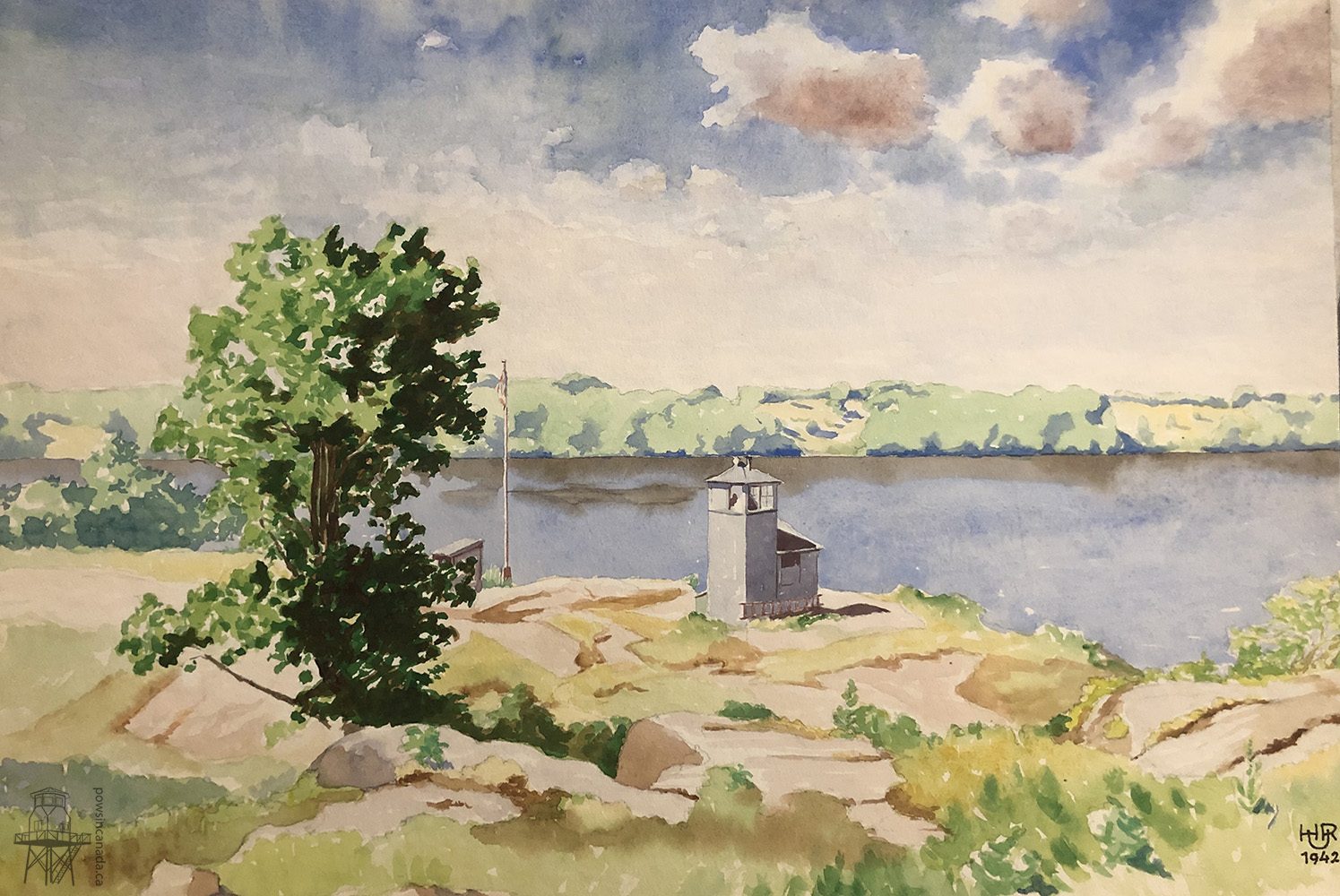
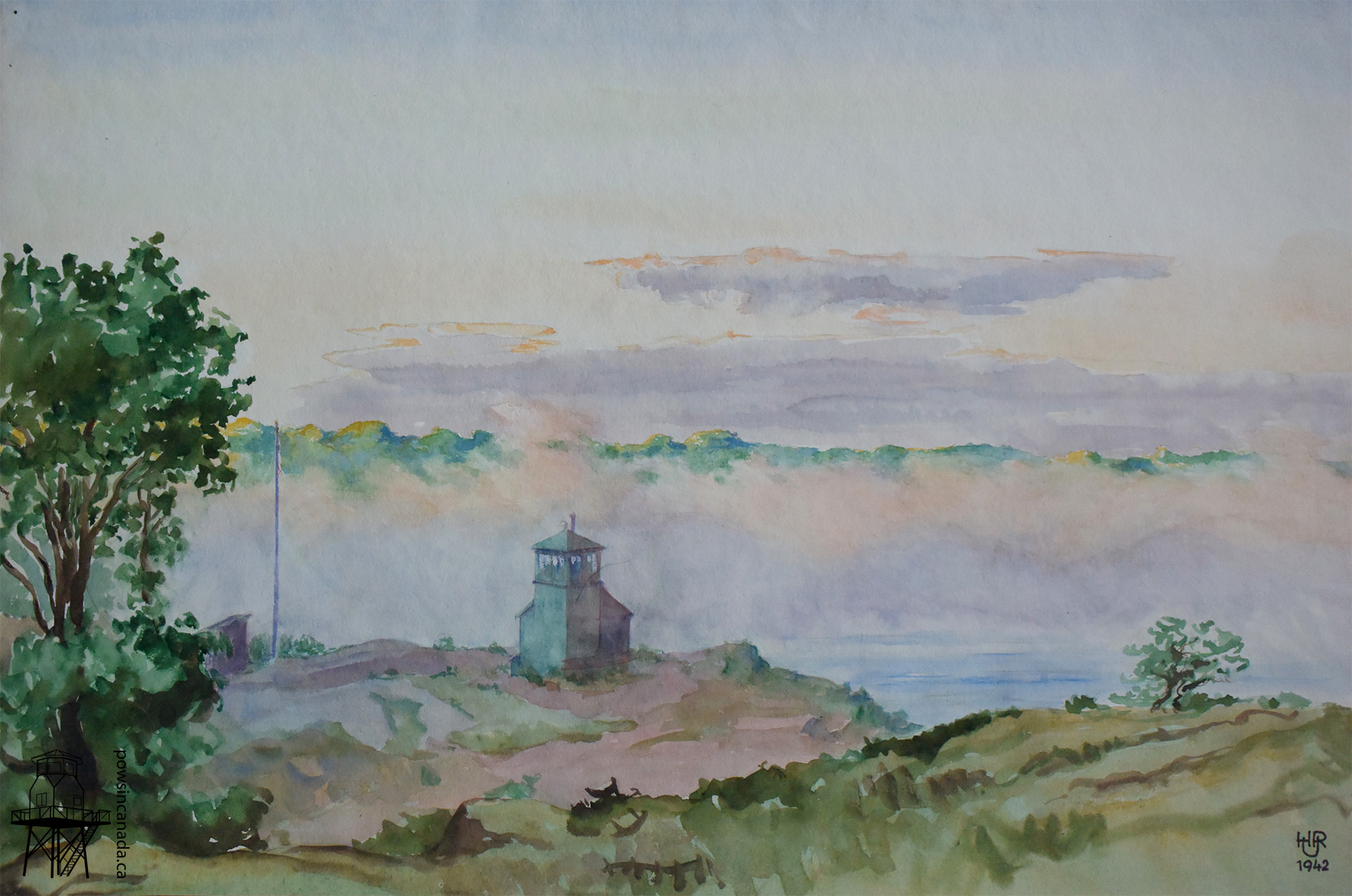
The guard tower overlooking Muskoka Bay appears to have been Dr. Roll’s favourite setting at Gravenhurst as he painted – and kept – at least two watercolours of the scene, one depicting the Bay on a sunny day and another on a foggy morning. Both seem to be calm, serene days. The lone guard tower, perched upon a rocky outcrop of the Canadian Shield, overlooked the southwest corner of the camp as well as the prisoners’ swimming area in Muskoka Bay. As evident from the painting above, the tower was manned by the Veterans Guard of Canada, with one guard up top keeping watch and two in reserve below. The camp’s flagpole, flying the Union Jack, can be seen just to the left of the tower.
Spending the rest of 1942 in Gravenhurst, Dr. Roll was transferred to Camp 40 at Farnham, Quebec, as Canadian authorities made room for POWs arriving from overseas. He brought his art supplies with him and was soon back at work. Once again, Dr. Roll appears to have been attracted to the scenery beyond the camp, this time painting the Yamaska River that ran along the north side of the Camp 40’s enclosure.
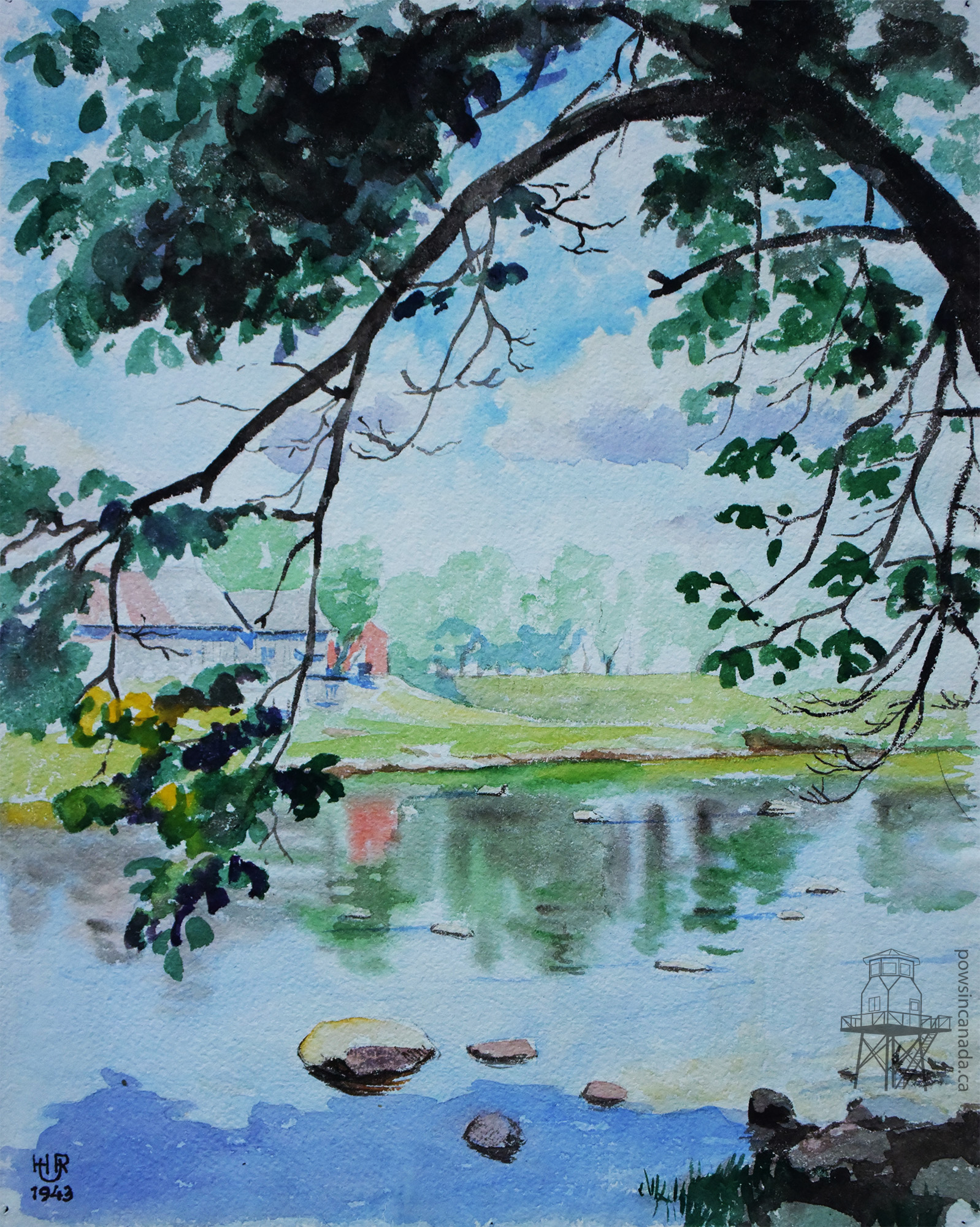
Like the river scene at Farnham, the subject of most of Dr. Roll’s paintings – at least the copies he kept – was the area surrounding, rather than within, the camps he was interned in. His paintings leave little or no indication that he was a prisoner of war, with the guard tower overlooking Muskoka Bay being a rare exception – but even then it is not obvious to the casual viewer. He may have had little or no interest in painting camp scenes and simply preferred painting landscapes, pr perhaps focusing on scenes beyond the confines of the internment camps allowed him a mental break or “escape” from his internment and his life as a prisoner of war.
A series of three sketches Dr. Roll completed in 1943 provide a bit more insight on the life of German officers in Canada’s POW camps. While these still give no direct indication they depict a prisoner of war camp or have a military connection (apart from a uniform sleeve), they provide a seldom-seen glimpse into the interior of a prisoners’ barracks.
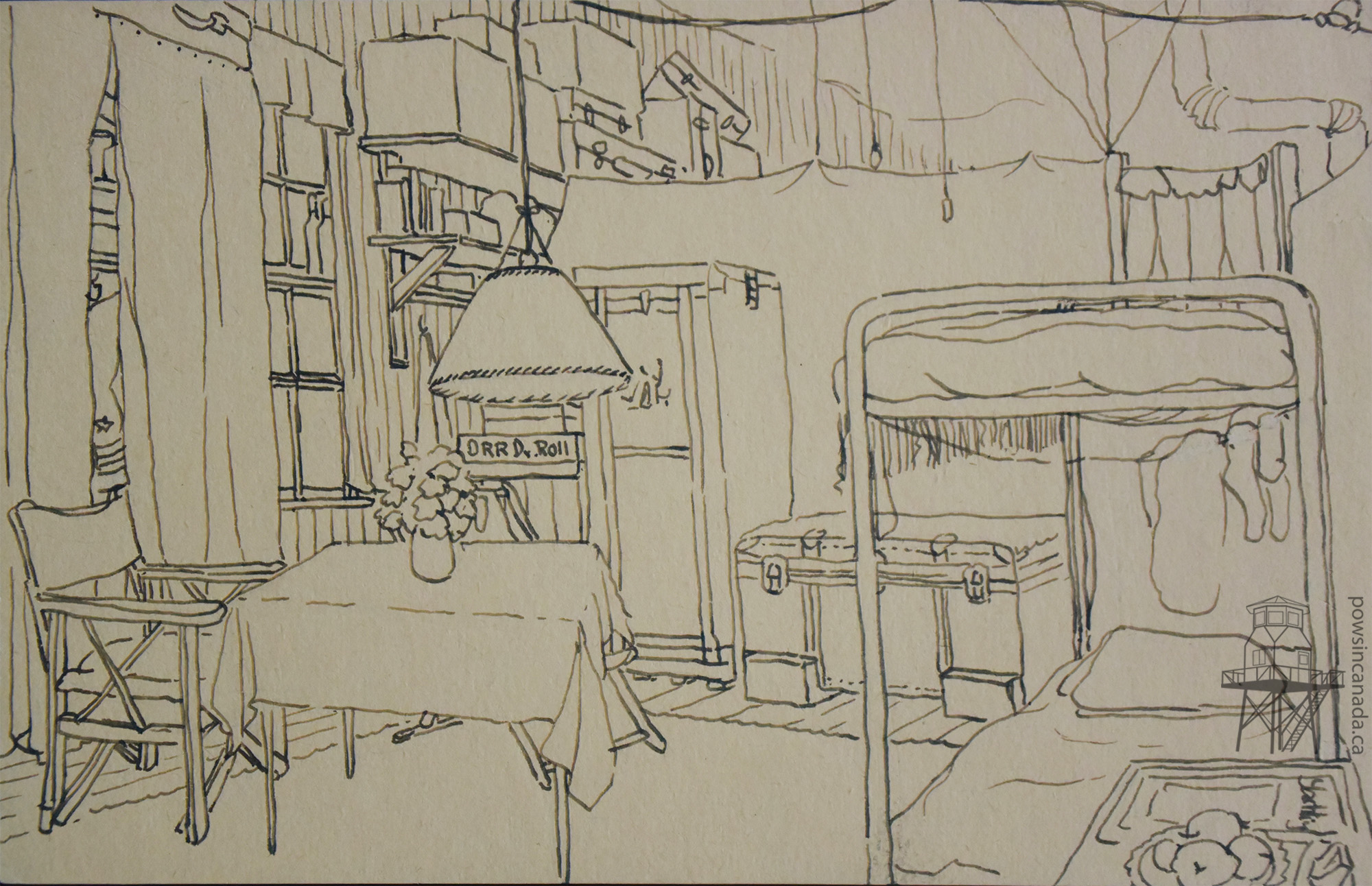
Coming from a repurposed sanatorium at Gravenhurst, the prisoners were somewhat surprised, and disappointed, in the standard army barracks they were now to live in at Camp 40. The same style and layout used by Canadian soldiers across the country, each of these barracks were designed to hold about 150 men in two large, open wings.
As one might imagine, privacy thus remained a luxury at Farnham, but the prisoners soon improvised. Blankets and sheet were hung from the ceiling to separate the barracks into “rooms” and, as the sketch suggests, Dr. Roll shared his with at least one other officer. A set of bunk beds can be seen on the left while a small table, adorned with flowers likely picked from the prisoners’ gardens, and two mismatched chairs occupy the center of the shared space. Suitcases, boxes, and other luggage are piled on shelves while other suitcases and crates have been use to build makeshift furniture. Comparing Dr. Roll’s sketch to a photograph taken by a delegate from the International Red Cross during a visit to the camp bears striking similarities.

As Canadian internment operations continued to evolve, the arrival of thousands of prisoners of war from North African campaign prompted the temporary closure of Camp 40 and the opening of a new officers camp, Camp 44 at Grande Ligne, Quebec. So, in June 1943, Dr. Roll and the rest of the POWs at Farnham were moved by train to the new camp.

Located some thirty-five kilometres from Montreal, Camp 44 had formerly been the Feller Institute, or Institut Feller, a four-story boarding school with several outbuildings. The prisoners occupied rooms formerly used by the school’s staff and students, with senior officers sharing semi-private rooms with one or two others and junior officers sharing rooms with up to four or six men. Dr. Roll, thanks to his senior rank, was assigned room “B29” and shared it with only one fellow officer.
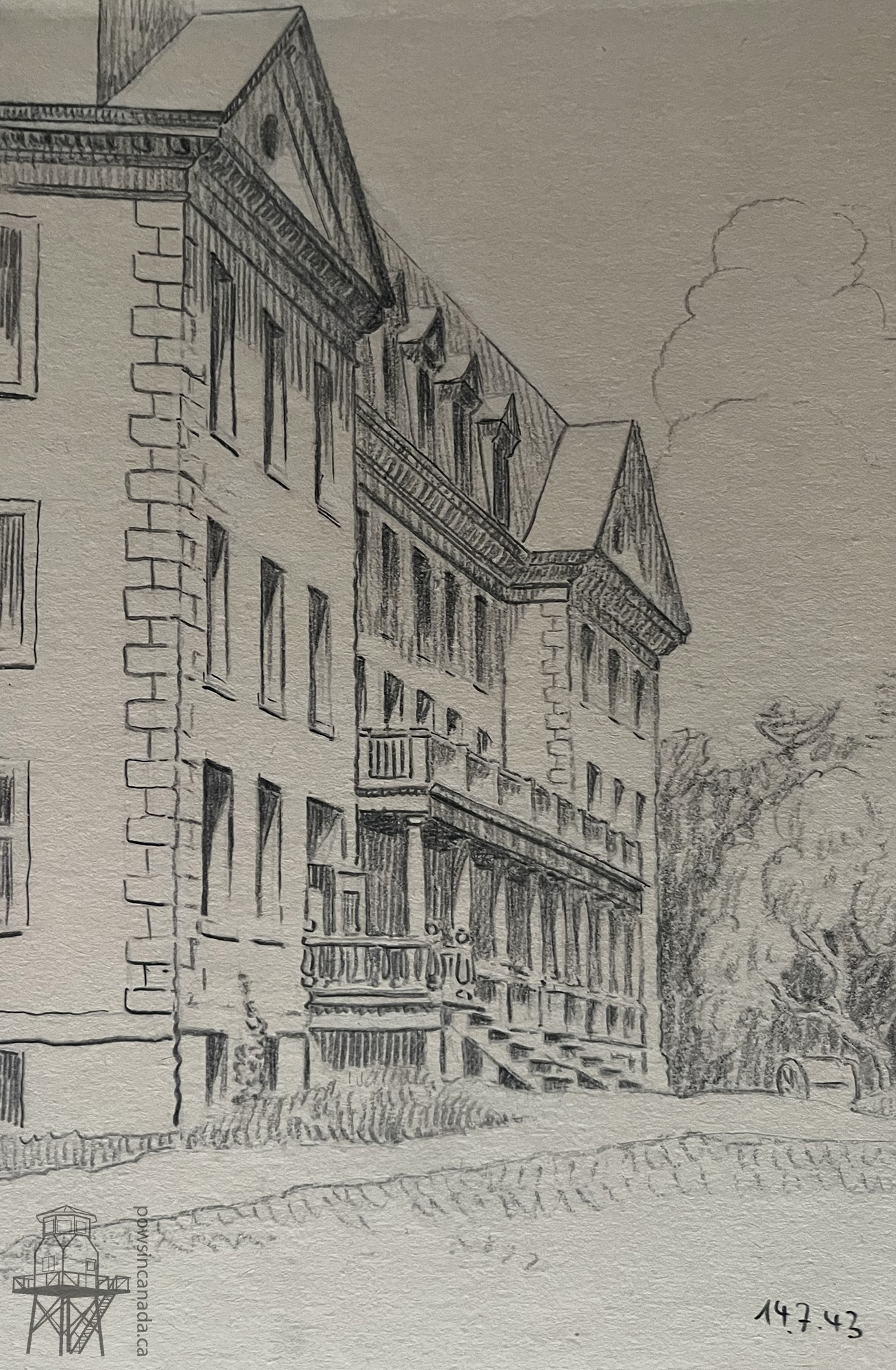

Like at Farnham, Dr. Roll took the time to sketch out his new living arrangements. Single beds, a proper chest of drawers, small tables, plants, framed art, and even just the the presence of actual walls indicate Grande Ligne was a decided improvement to Farnham’s army barracks and more in line with the accommodations granted to officers interned at Bowmanville and Gravenhurst.
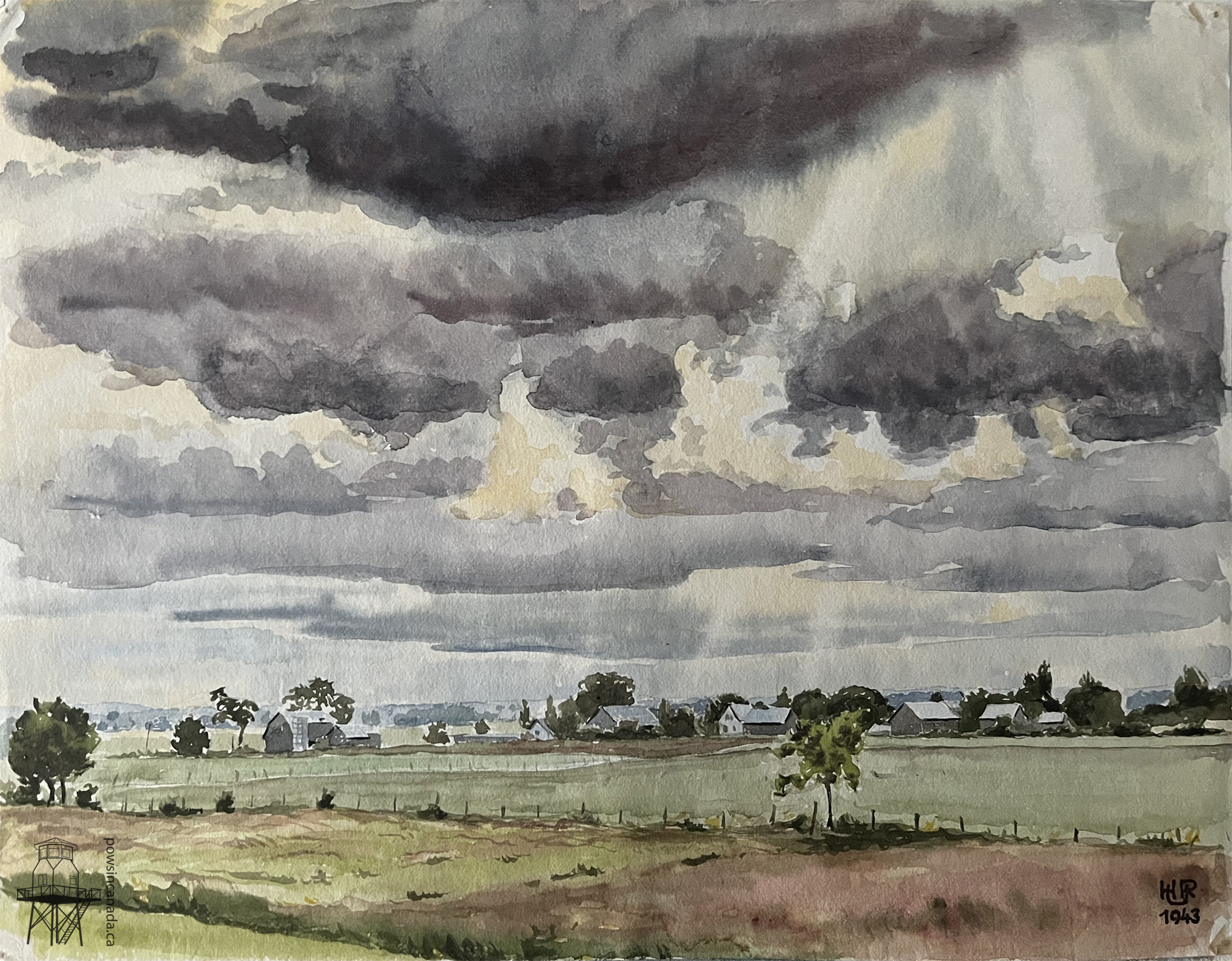
Dr. Roll then turned his focus outside the camp enclosure, completing a watercolour of the surrounding farmland in August 1943. Camp staff permitted prisoners to work on an adjoining sixty-five acre property, an opportunity that not only allowed them to supplement their rations with fresh vegetables but also provided them with a valued opportunity to leave the main enclosure. The prisoners planted potatoes, corn, oats, barley, turnips, and garden vegetables and also kept several cows, pigs, and chickens.
Art remained only one of Dr. Roll’s pastimes at Grande Ligne as, like other camps in Canada, Camp 44 offered prisoners a variety of recreational activities. Shortly after arriving in camp, he joined the newly established camp orchestra under the direction of Oblt. Hans Brandes. The orchestra numbered some thirty men and was equipped with instruments donated by the War Prisoners’ Aid of the YMCA and the German Red Cross.

Two houses located within the enclosure, the “Yellow House” and the “Red House,” that were formerly used by the school’s staff were converted into the “House of Art” and the “House of Music,” respectively. Dr. Roll likely spent time in both, honing his skills in art and music.
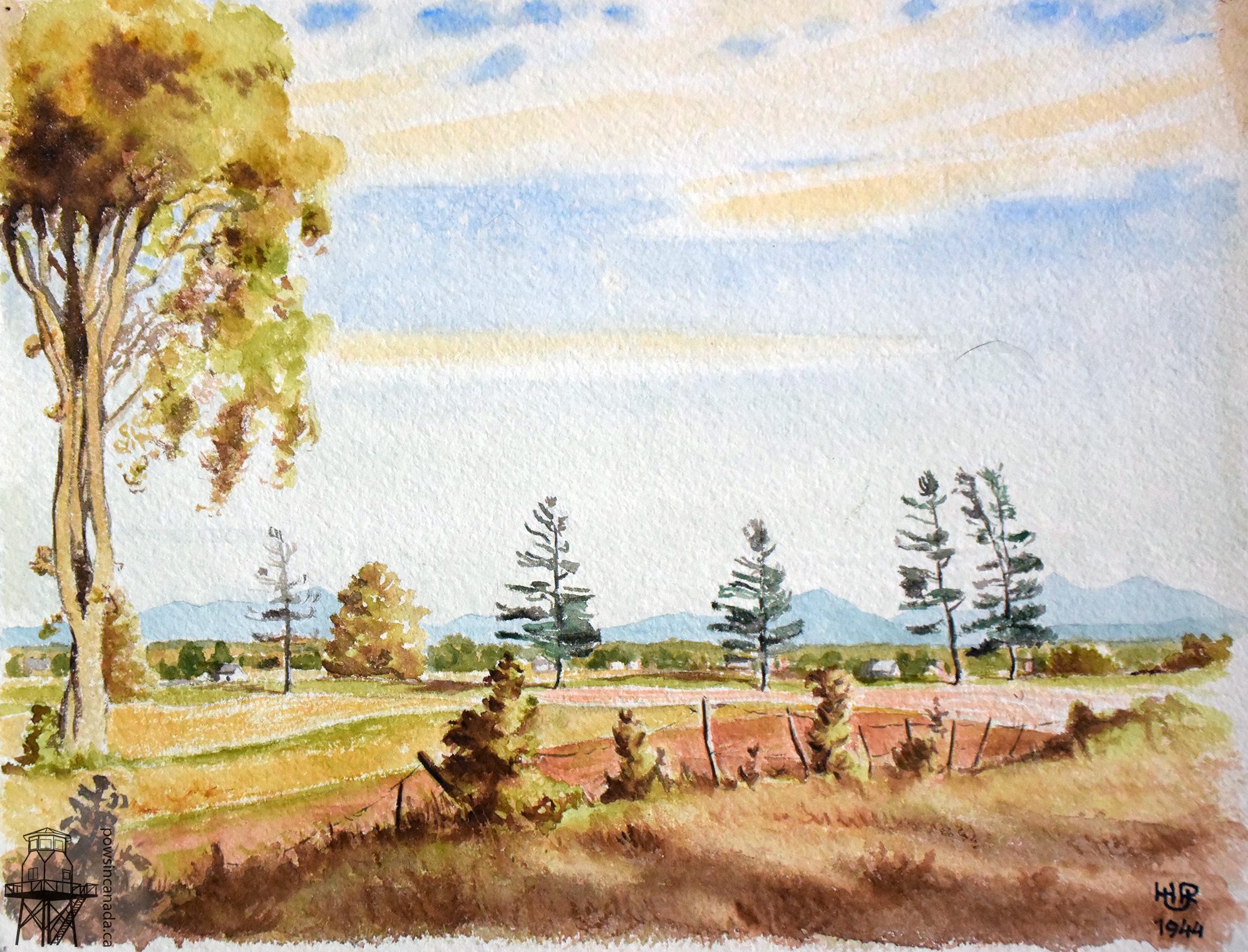
While Dr. Roll’s time in Grande Ligne remained uneventful through Summer 1944, the Fall would bring about significant change. In October, an anti-Nazi informant in camp identified Dr. Roll as a potentially dangerous pro-Nazi and member of the “Hari-Kari Club.” The “Hari-Kari Club” had been founded by several fanatical pro-Nazis in Camp 44 who, in the event of Germany’s surrender, planned on murdering anti-Nazi POWs in camp before rushing and overwhelming the camp guards – at any cost. Those who survived the assault would then proceed to and sabotage nearby industrial areas, airports, and important installations in an attempt to cause widespread mayhem.
While the plot seemed fantastical, other informants confirmed the existence of the “Hari-Kari Club” and camp staff sprang into action. Additional troops and machine guns were brought in to reinforce the camp guards and protect the nearby civilian population while preparations were made to transfer the pro-Nazis to a more secure internment camp.
The “Hari-Kari Club” were never able to carry out their mission for, in February 1945, the club was broken up and the prisoners transferred to Camp 130 (Seebe) and Camp 135 (Wainwright). Dr. Roll spent the next year painting and sketching the Rocky Mountains from the confines of Camp 130, but, for that, you’ll have to wait for Part II.
Stay tuned!
Interested in learning more about prisoner of war art and artists? Check out the new page about POW art at the link below:


Greetings Michael –
Another terrific PoW article from your continuing series. Great job! Congratulations.
Bob H.