Internment provided POWs and other internees with an unprecedented amount of leisure time, prompting many to take up painting and handicrafts to help pass the time. As prisoners were prohibited from owning cameras and photographs were generally taken under controlled conditions, prisoner of War art offers a unique perspective of what life was like for thousands of civilian internees, prisoners of war, and enemy merchant seamen (EMS) interned in Canada between 1939 to 1947.
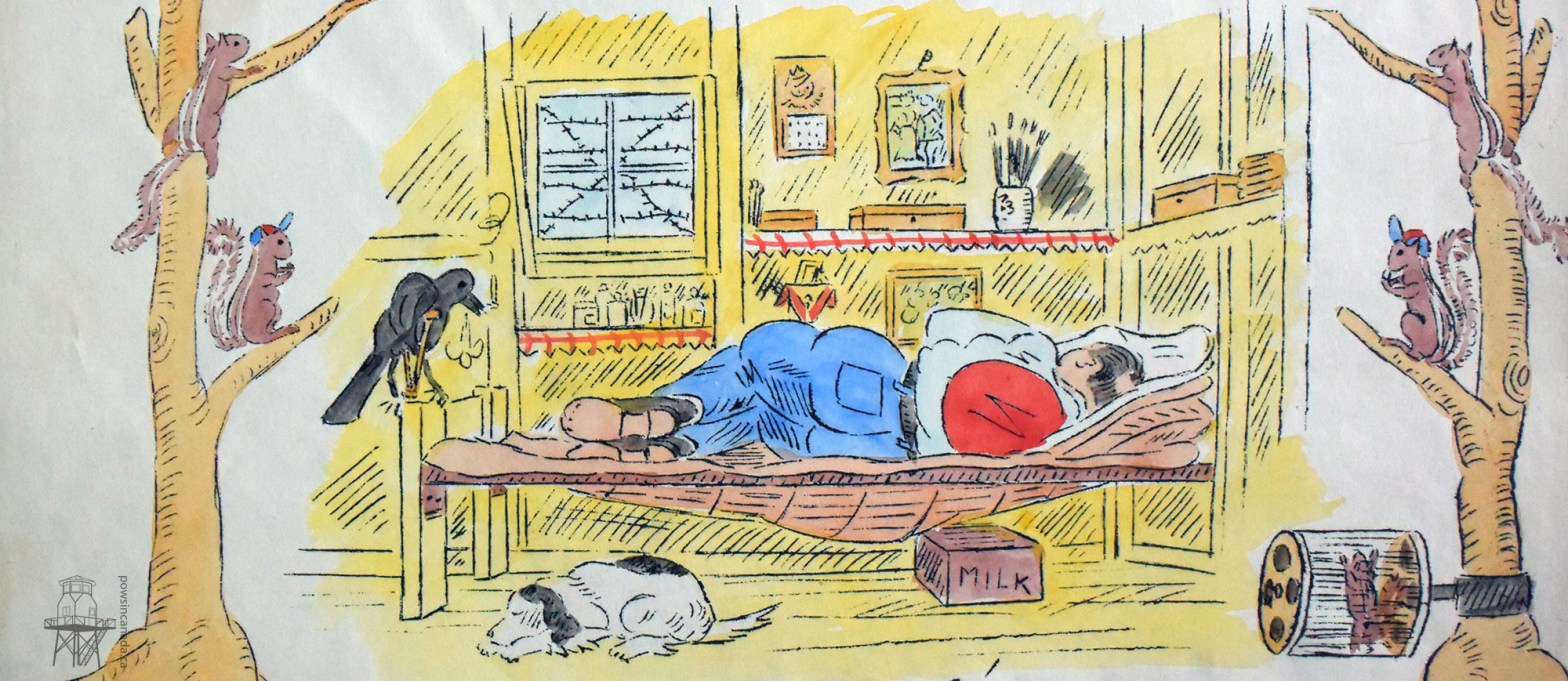
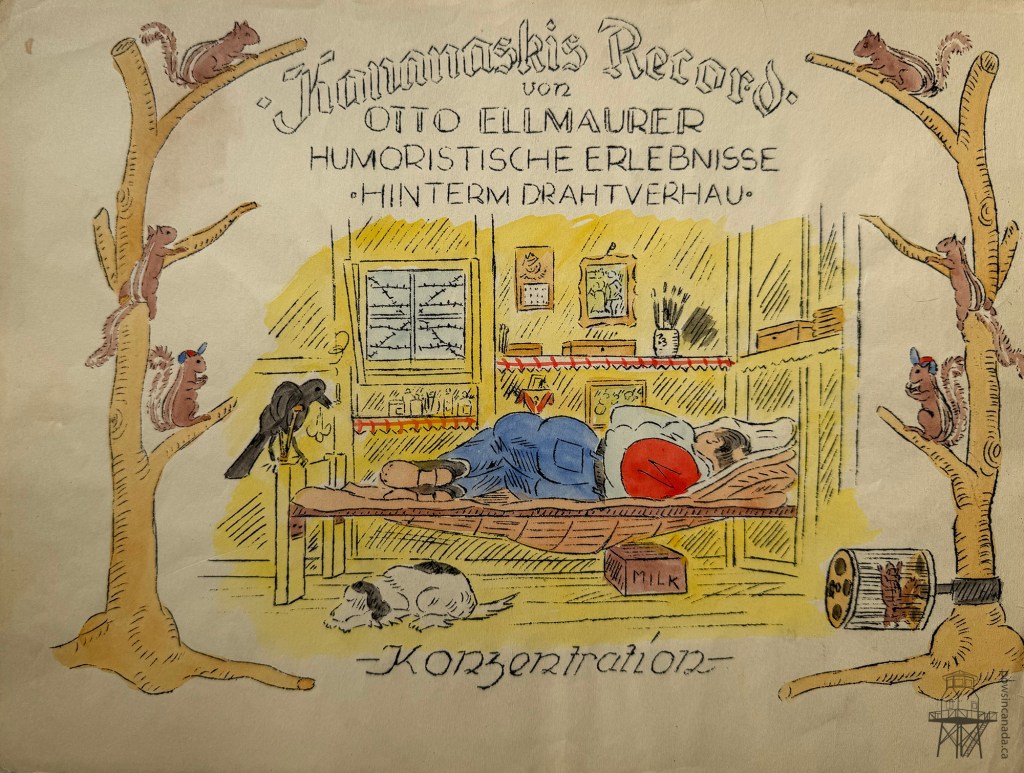
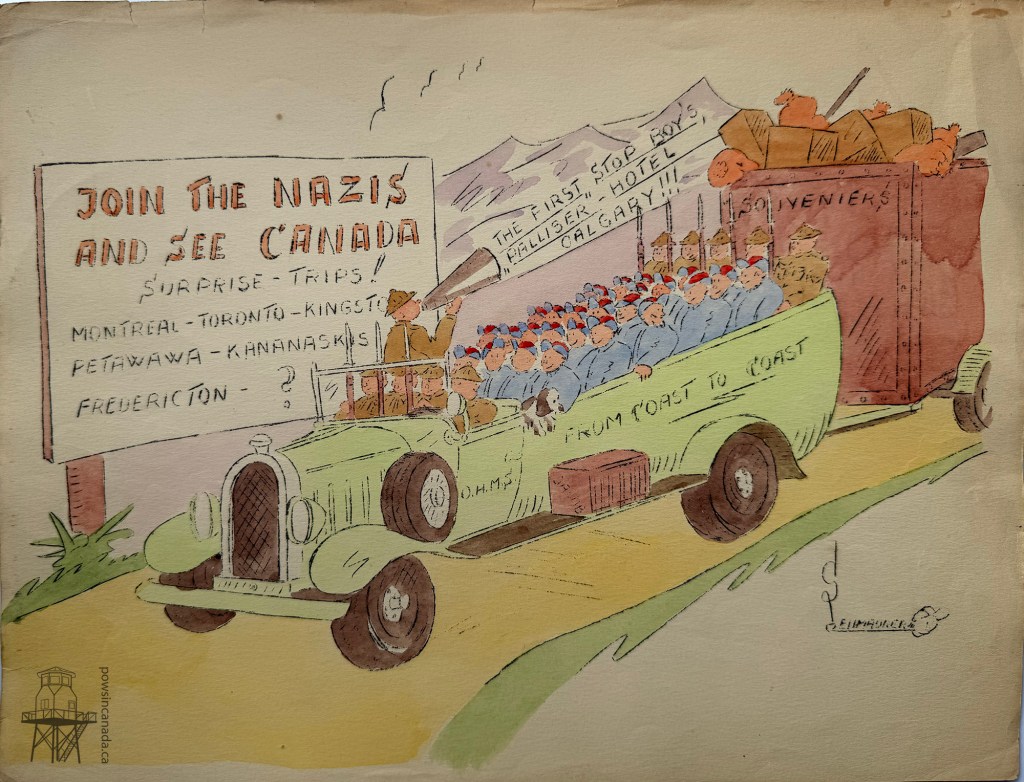
Among the first German-Canadian internees detained in 1939 were a handful of artists who wasted no time putting their talents to work. Using materials brought with them, mailed to them, or purchased from camp canteens, internees such as Montreal resident Otto Ellmaurer began documenting their experiences through art. Employing caricatures to poke fun at both POWs and guards alike, Ellmaurer’s work depicts a humorous and, in many cases, mocking depiction of internment.
As Canadian internment operations expanded in the early war years, more amateur and professional artists, eager to pass the time and hone their skills, took up drawing, painting, carving, and crafting. As the number of POWs in Canada increased, POW art and handicraft became more organized and groups of POWs were engaged in art in all but one internment camp by June 1942.

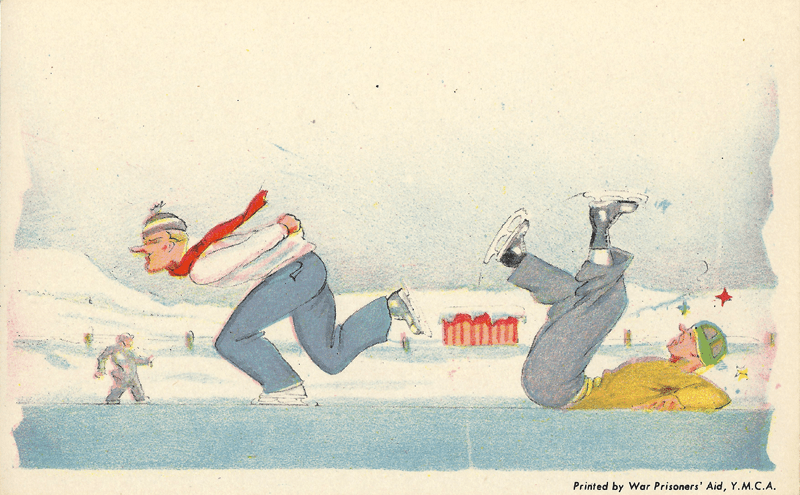
Art supplies were purchased from camp canteens or mail-order catalogues, scavenged from materials around camp, received in packages mailed from Germany, or even provided by international aid organizations like the War Prisoners’ Aid of the YMCA. But the War Prisoners’ Aid’s support for POW art did not end with providing prisoners with supplies.
In 1940 the War Prisoners’ Aid began soliciting designs from POW artists and printed them for Christmas cards, a practice they continued to the war’s end. In 1942, the organization expanded this program to include a series of nineteen colour cards featuring scenes typical of prisoner of war life. The majority placed a humorous spin on internment, but a few depicted the more sombre tones of a life behind barbed wire.
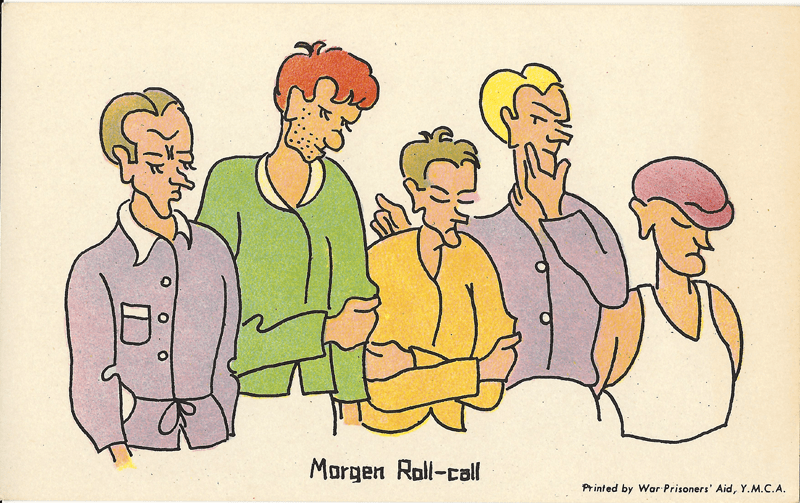

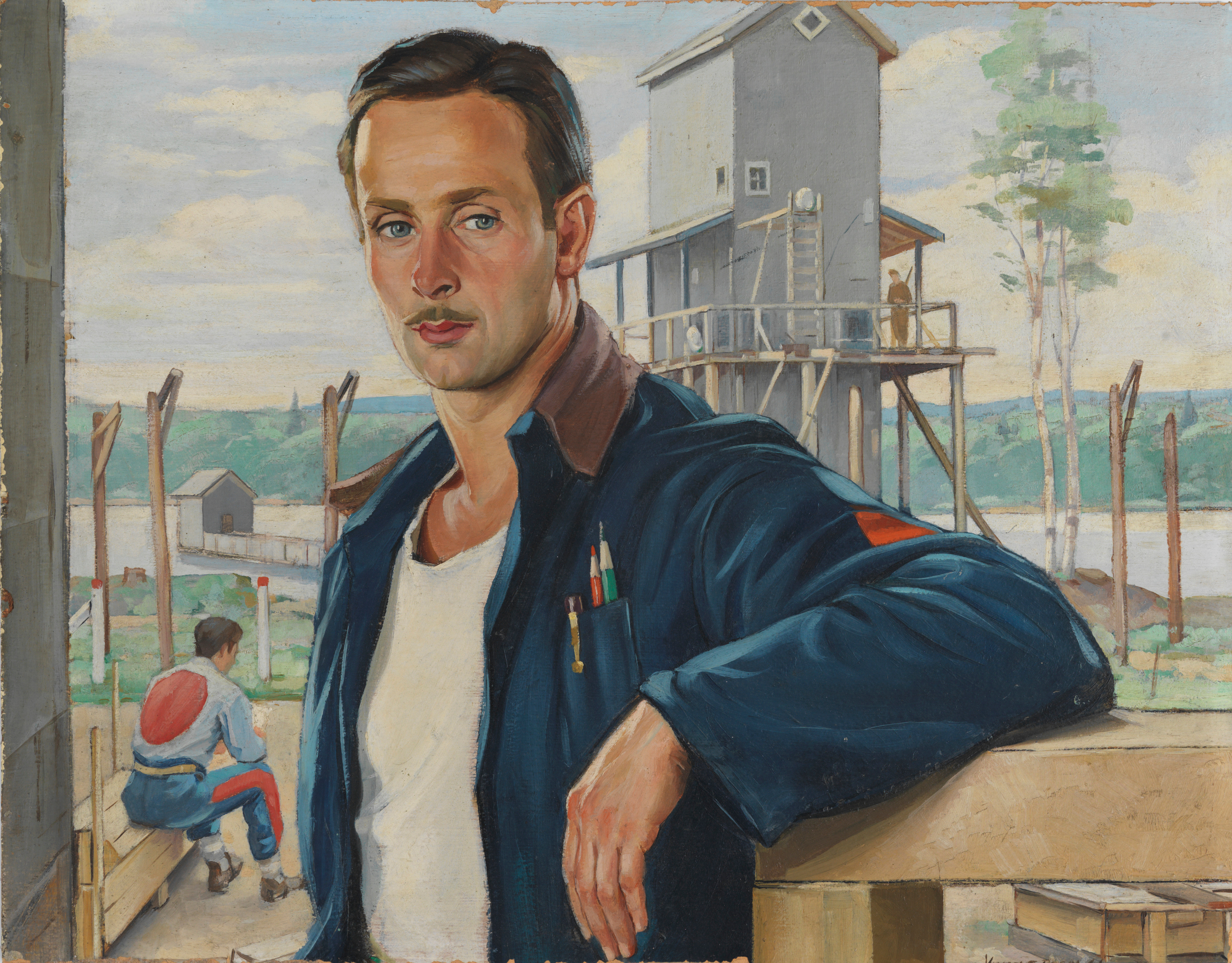
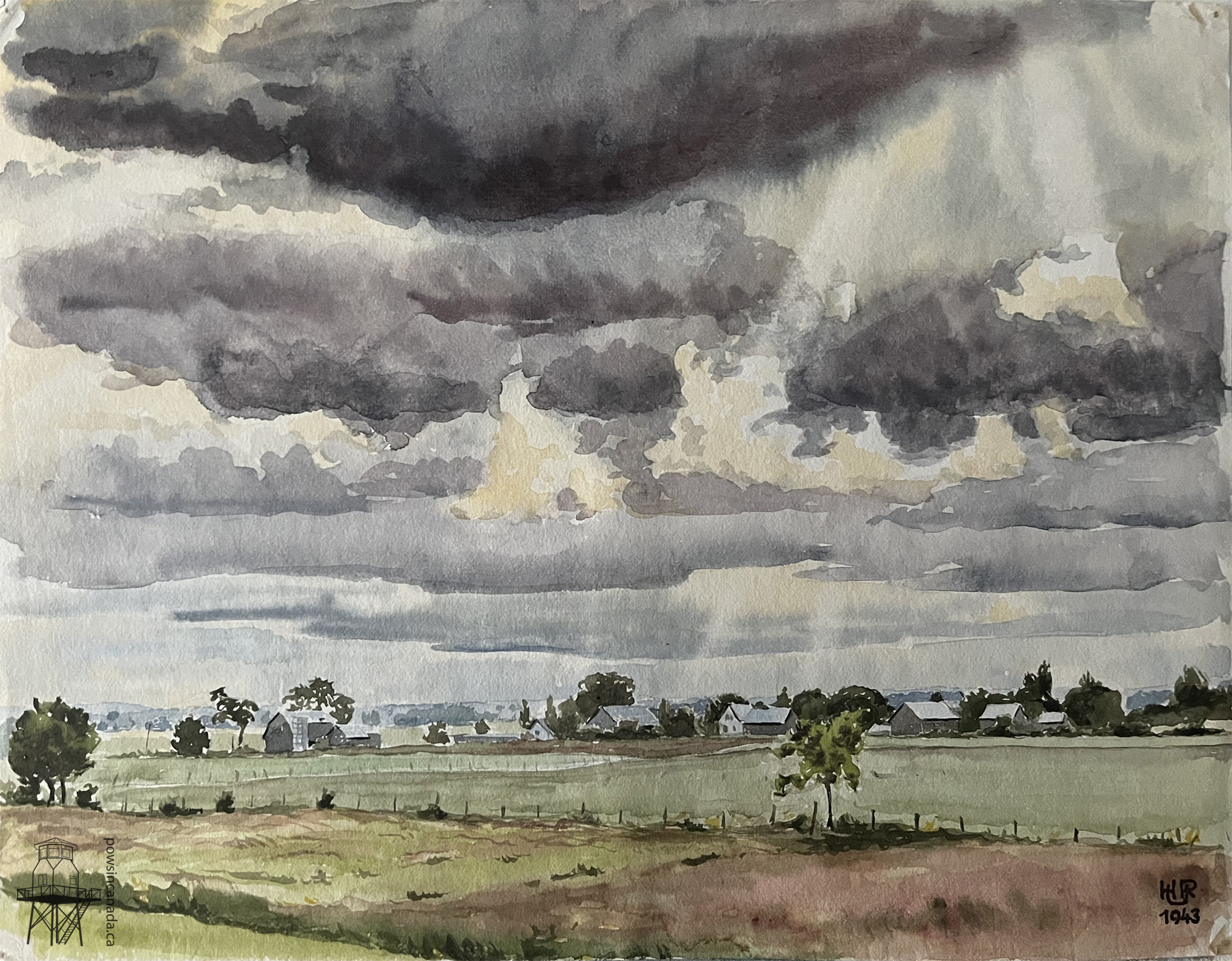
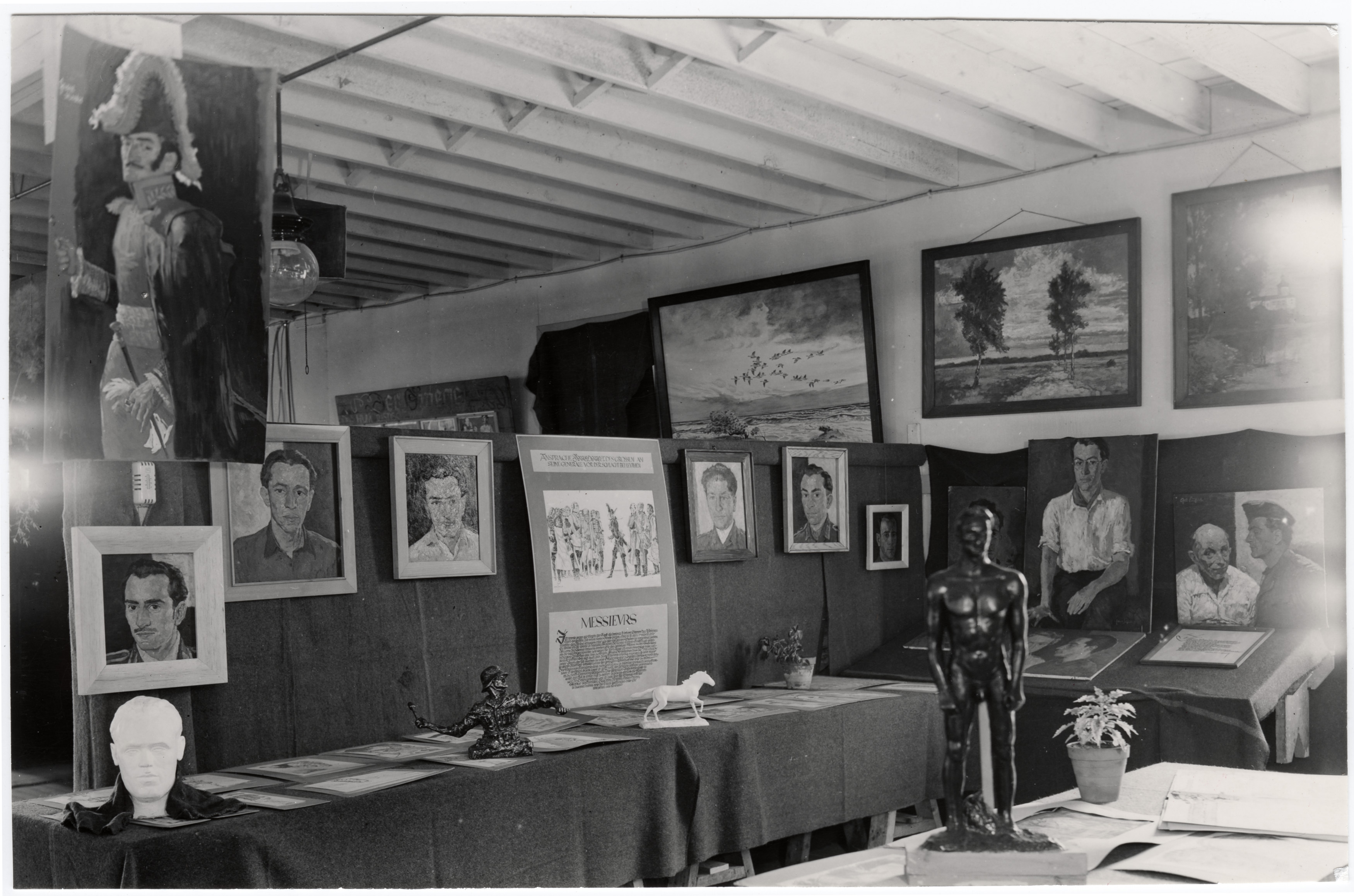
Prisoner of war art existed in many forms. Many artists turned their attention to their surroundings, focusing on more traditional portraits, camp scenes, or landscapes.

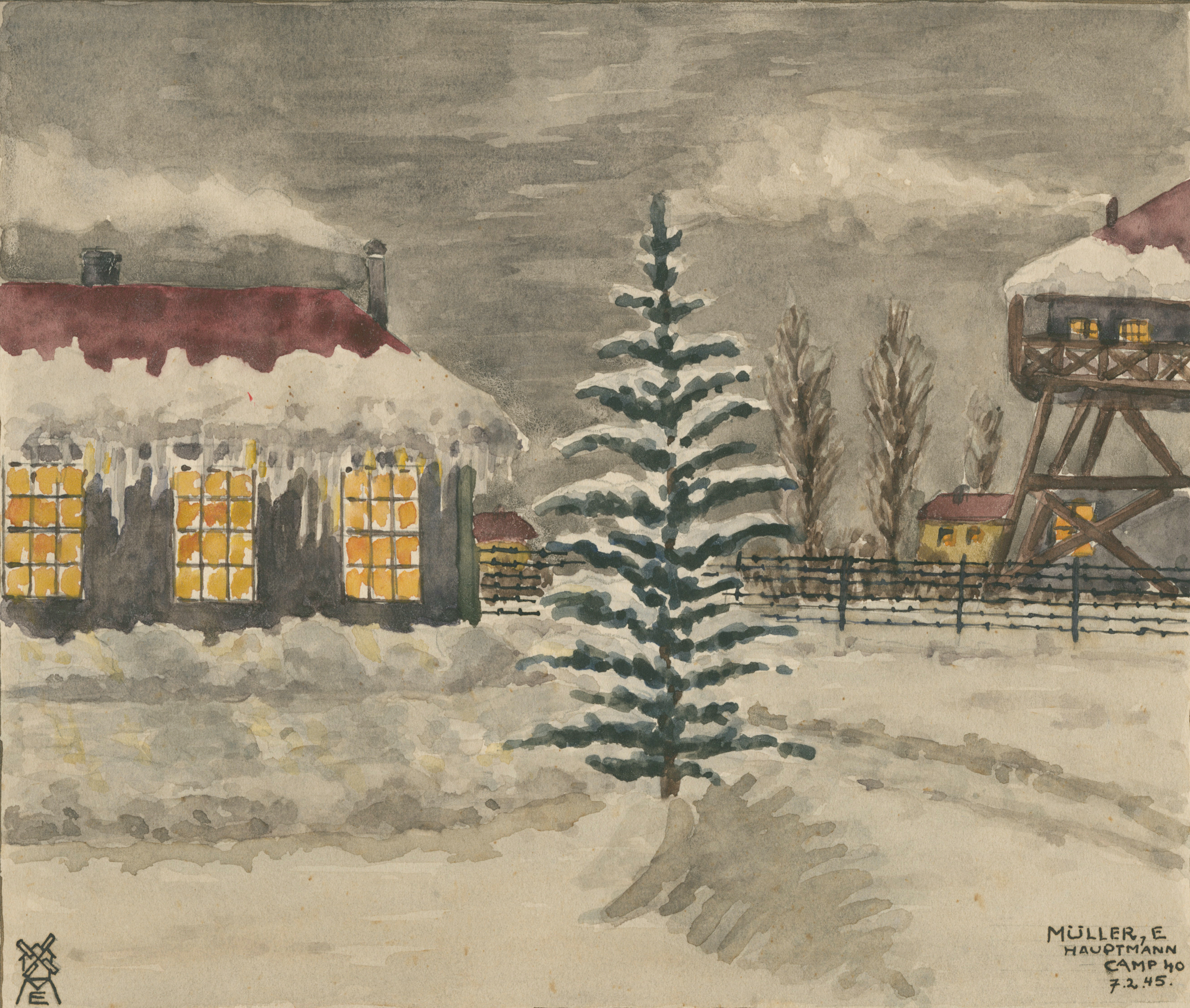
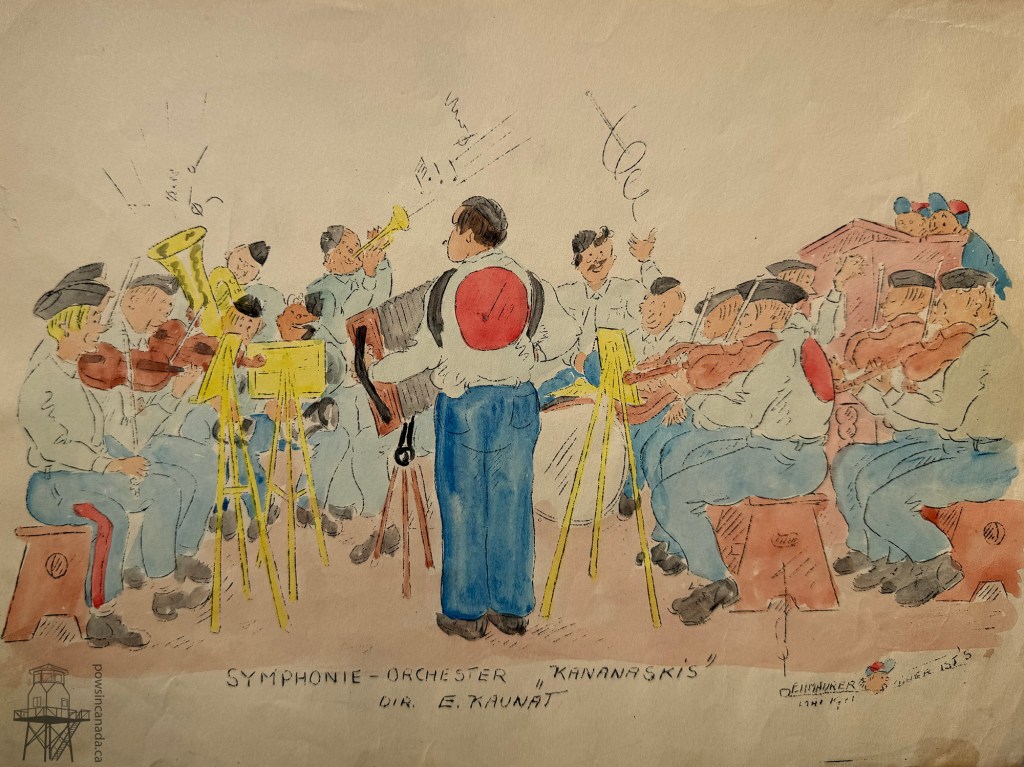
Others lent their hand at illustrating camp newspapers, birthday cards, theatrical and musical programs, and even the backdrops used by the camps’ theatre troupes.
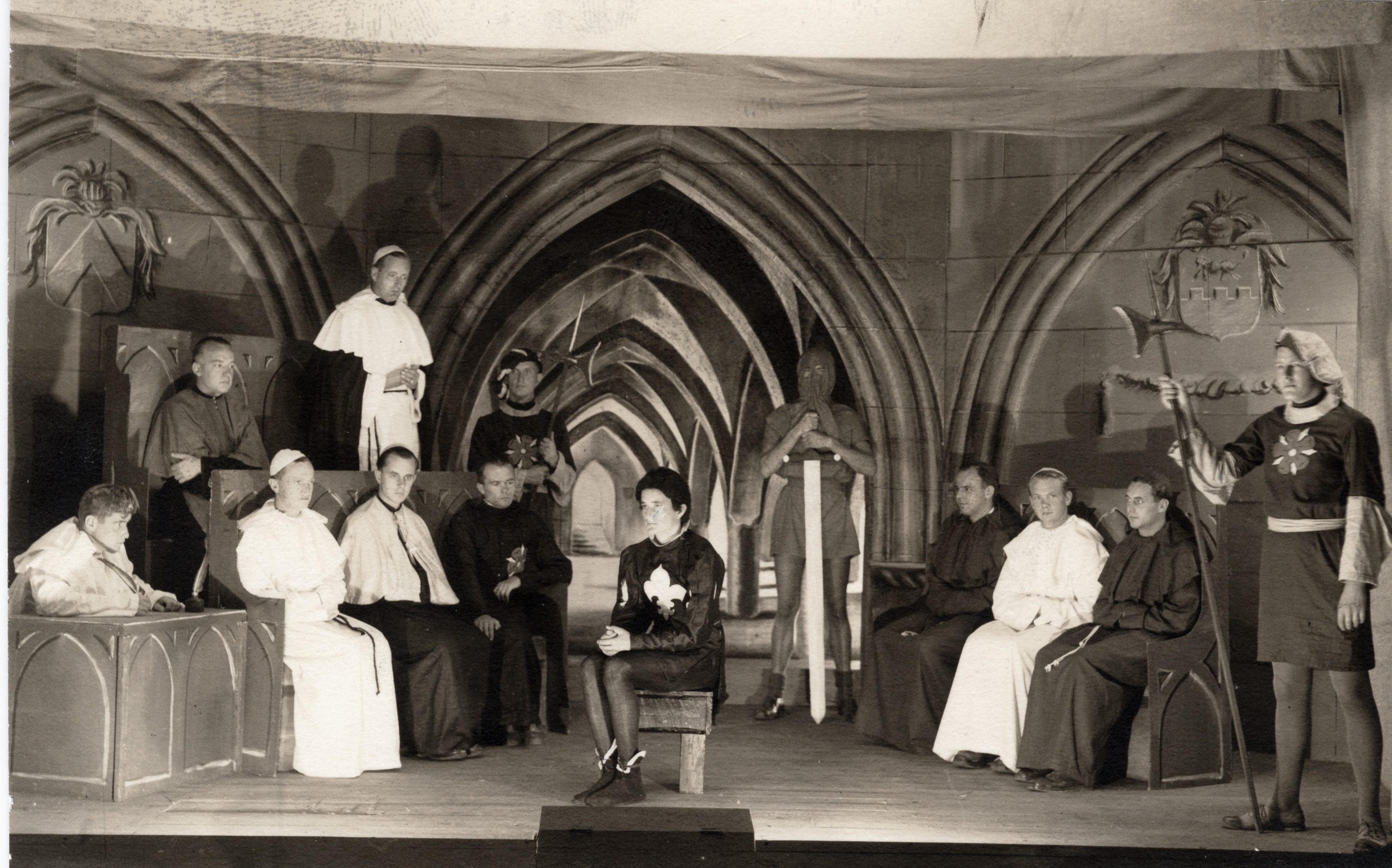
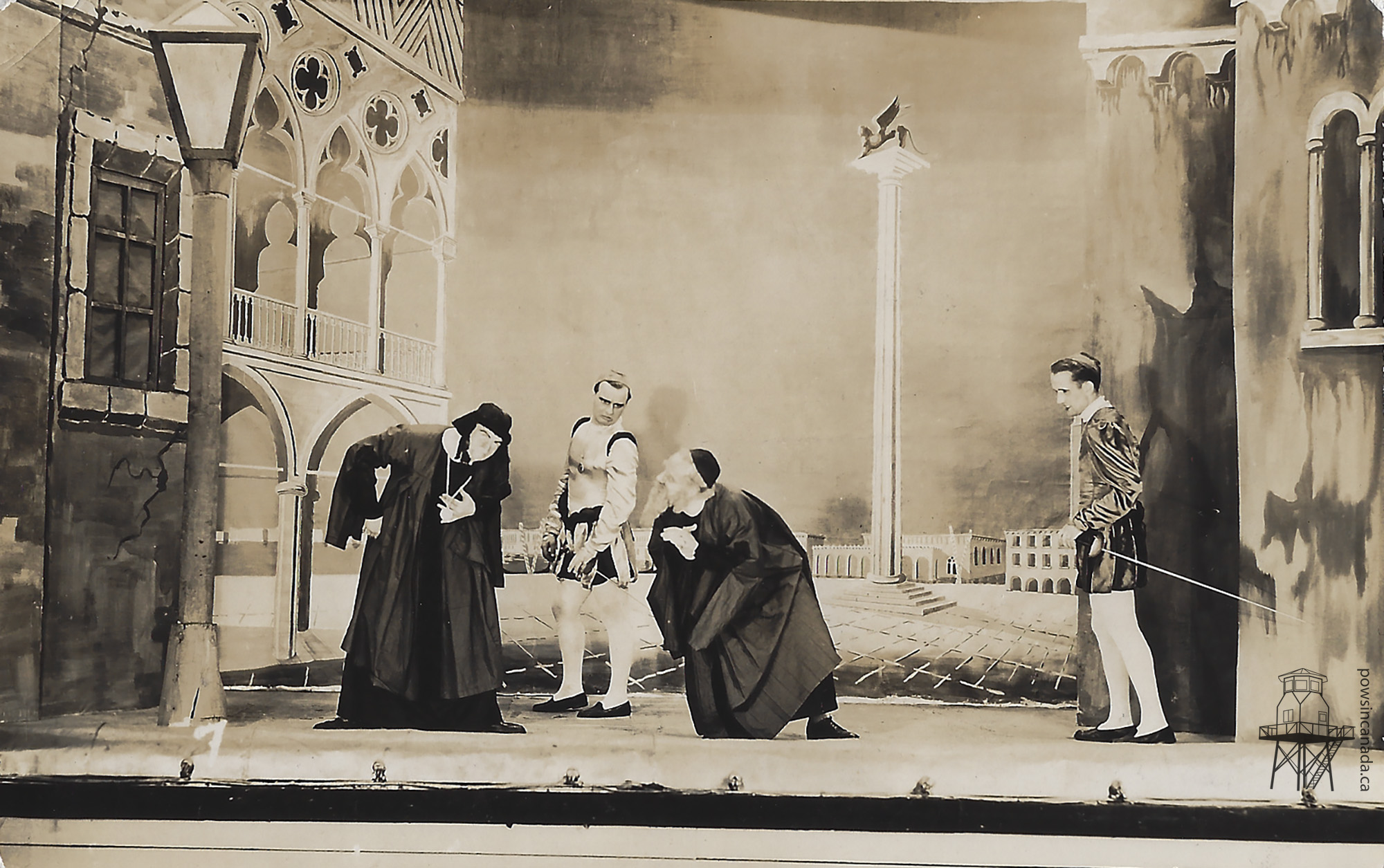
Theatrical backdrops were not the only large-scale canvases POWs had access to. In an attempt to make internment camps more comfortable living spaces, artists also decorated the interiors of mess and recreational halls with large murals, often depicting images of a Germanic nature.
…we were taken into a mess hall, bright and airy, with everything spic and span. Instead, however, of the row of floral stencils on one beam, all the beams were decorated and the three walls facing the kitchen were covered with a strip of murals reproducing in colour many of the well-known figures of the German caricaturist humorist, Wilhelm Busch—Max and Moritz, die Fromme Halene, and many others. On the third wall nearest the kitchen the artist—Uffz. Herbert Tauber (260975) from Vienna—he was at work on one of the last scenes of the series. He told me the work had been planned in collaboration with another professional painter in the camp, but that he had executed all the drawings in this particular hall. He was studying art in Vienna, still had four terms to put in and was very pleased at having this opportunity to keep his hand in. The effect of the murals and the other decorations was to make the mess hall much more like a German restaurant, and this emphasis on specifically German features was noticeable in other fields, and tended to become perhaps the outstanding characteristic of the camp.
Unknown author, “Camp 132,” nd, POW – Corresp, Reports, Notes, Misc Papers, Directives, 1942–1945, vol. 1, MG6E2 – Canada – National Defence – Streight, Harvey N. (Col.), Archives of Manitoba.
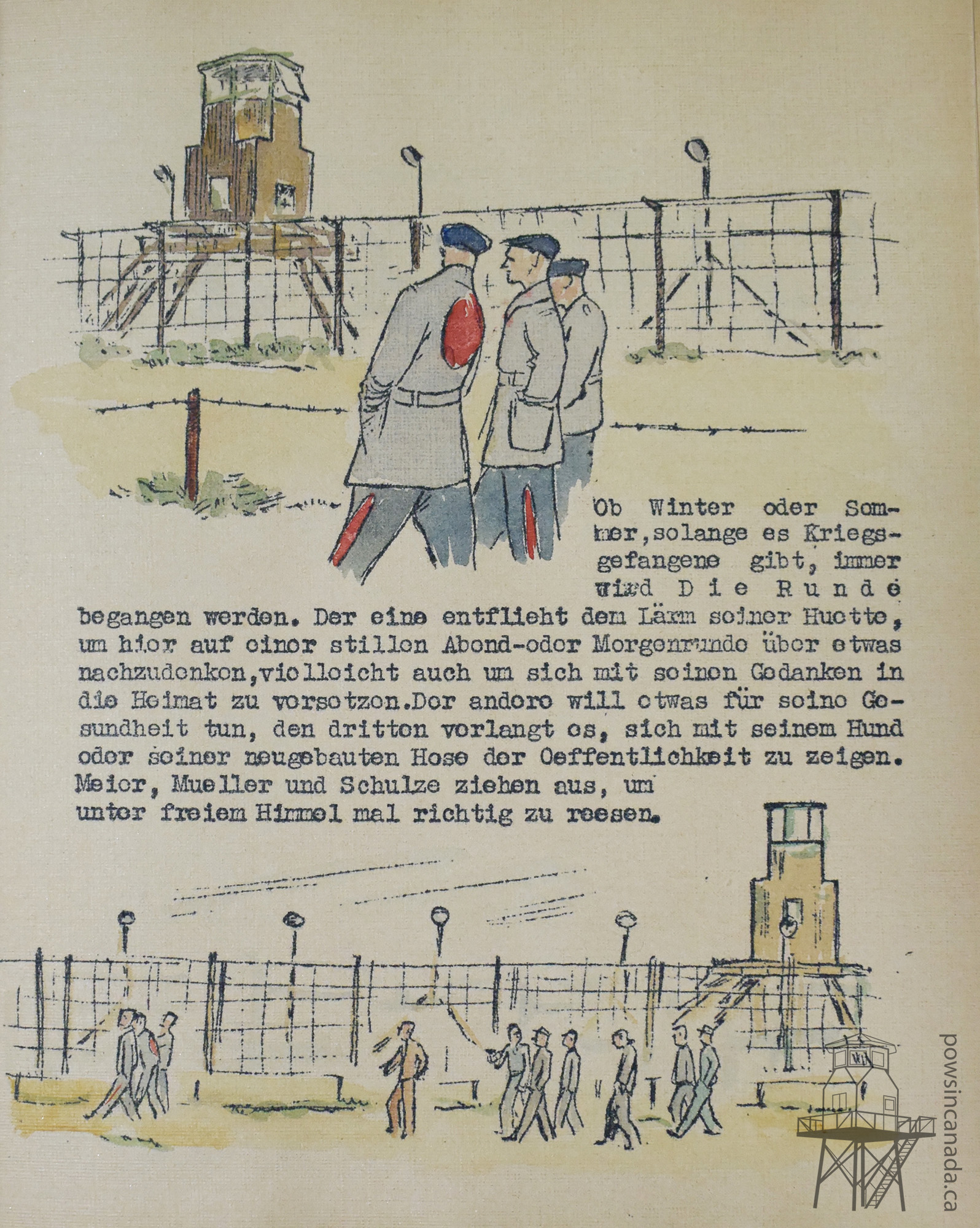
But for the most part, POW art was accessible and easily transportable. As one of the few visual souvenirs POWs could possess, paintings and sketches could easily be brought with them as they were transferred to other camps and during their eventual return to Europe. Prisoners in Camp 21 (Espanola, Ontario), Camp 132 (Medicine Hat, Alberta), and Camp 133 (Lethbridge, Alberta) even produced souvenir picture books illustrating their internment, often with humorous anecdotes of life behind barbed wire.
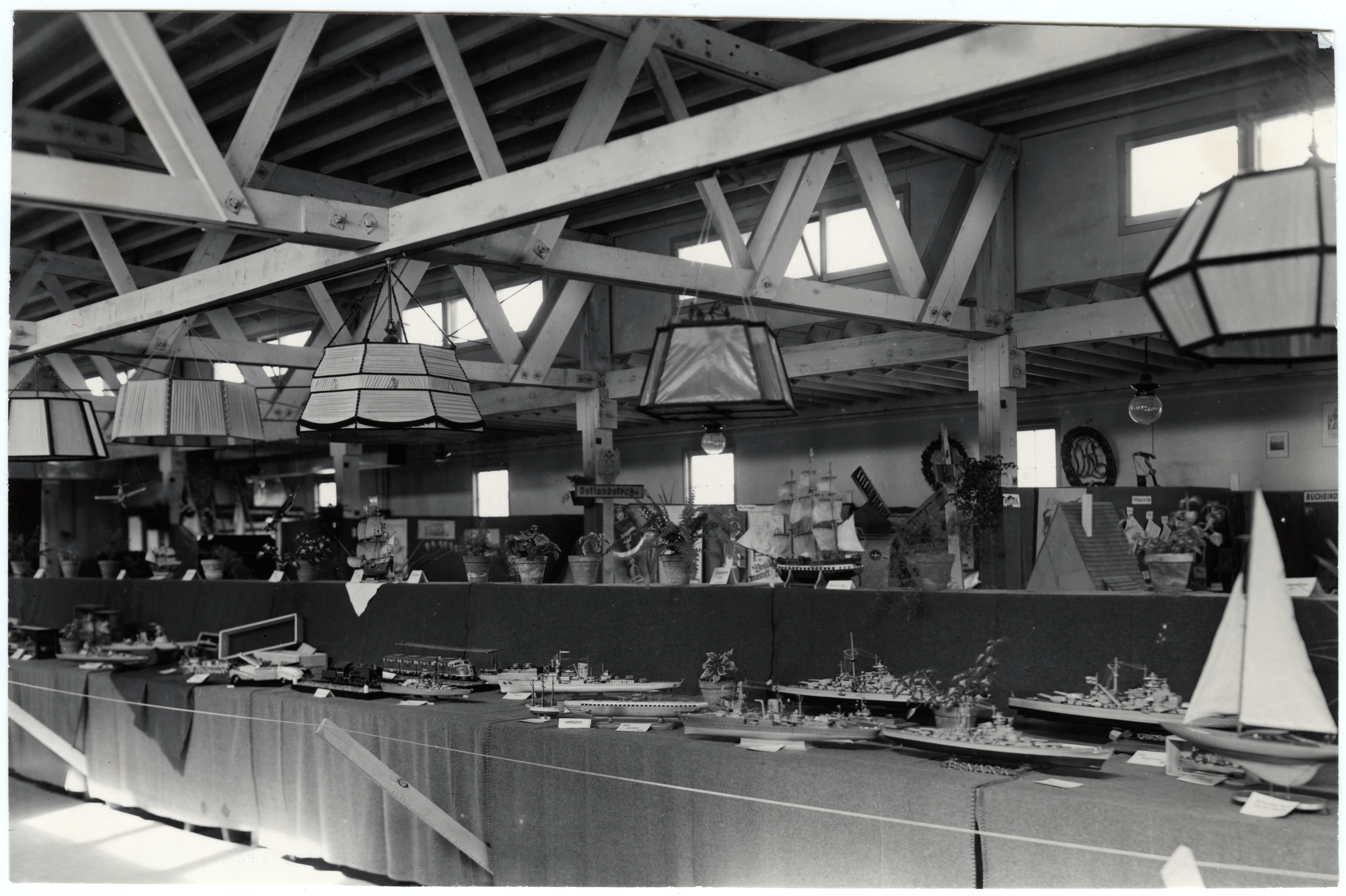
Eager to show off their work, prisoners began holding art and handicraft exhibitions and sales. Works were traded sold to their comrades in exchange for canteen tickets or goods but prisoners were prohibited from selling or trading with guards or camp staff for several years. But illicit exchanges were not uncommon, with guards, camp staff, and some civilians trading with the POWs, or even paying in cash. Following repeated requests from POWs and the War Prisoners’ Aid, restrictions on the sale of POW souvenirs were lifted, opening sales to guards, camp staff, and even some members of the public. Sales were conducted through official channels, with proceeds being credited to the artists’ accounts.
When Canada began employing POWs in outside labour projects, or work camps, in 1943, artists brought their supplies with them and continued their craft in bush camps and farm hostels. Artists like Georg Högel and Hans Krakhofer were among the many talented artists transferred to bush camps in Northern Ontario, where they took inspiration from their new surroundings and began sketching and painting the surrounding landscape, flora, and fauna.
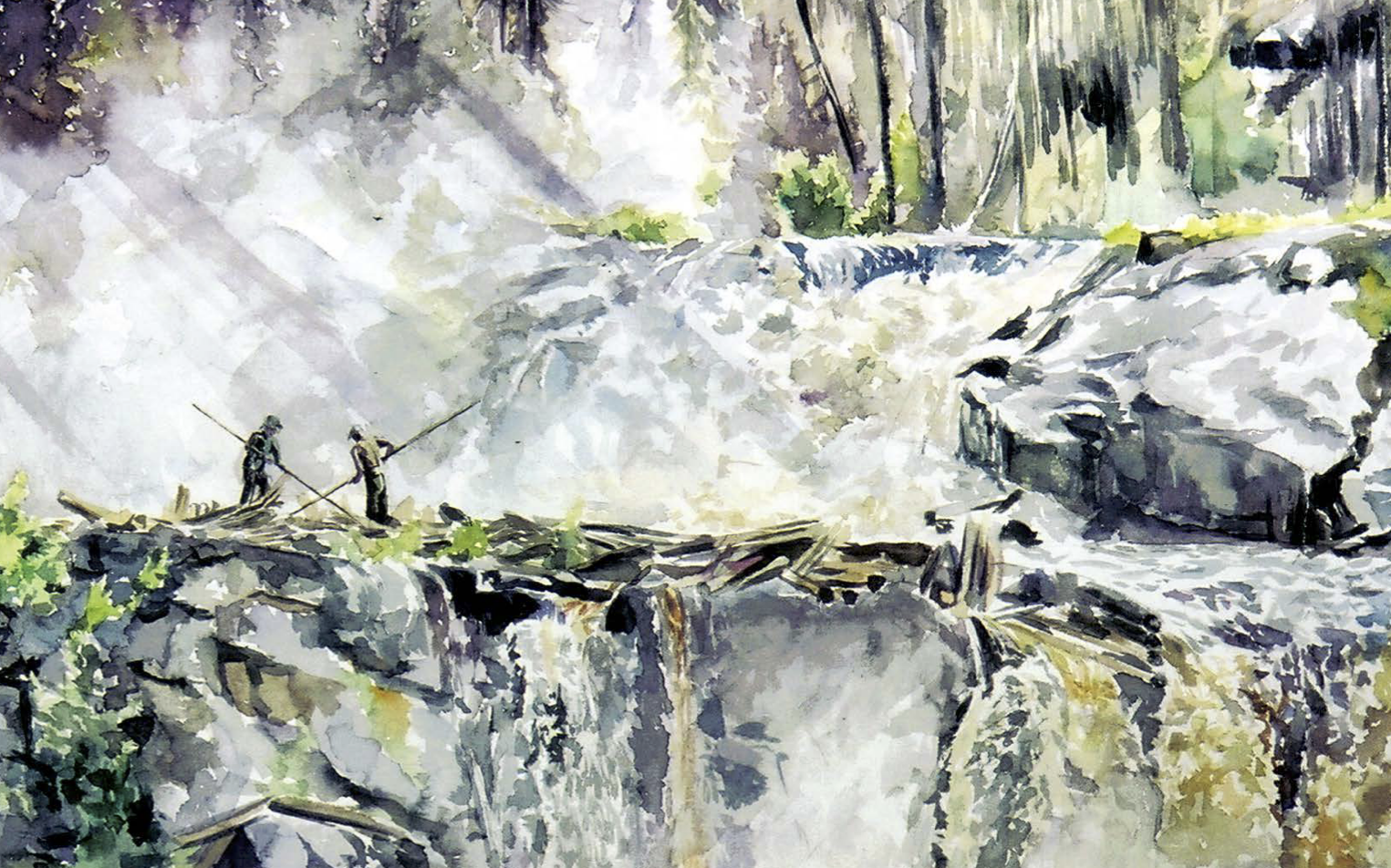
In 1946, Canada began transferring prisoners to the United Kingdom for their eventual repatriation to Germany. Prisoner of War artists and art collectors loaded their luggage with as much as they could but were often forced to give away or leave some of their work behind. One artist, Eric Wesselow, even enlisted the help of the War Prisoners’ Aid to help get his art back to Germany and shipped a case of his artwork to the organization’s director so that it could be forwarded to him in Europe.
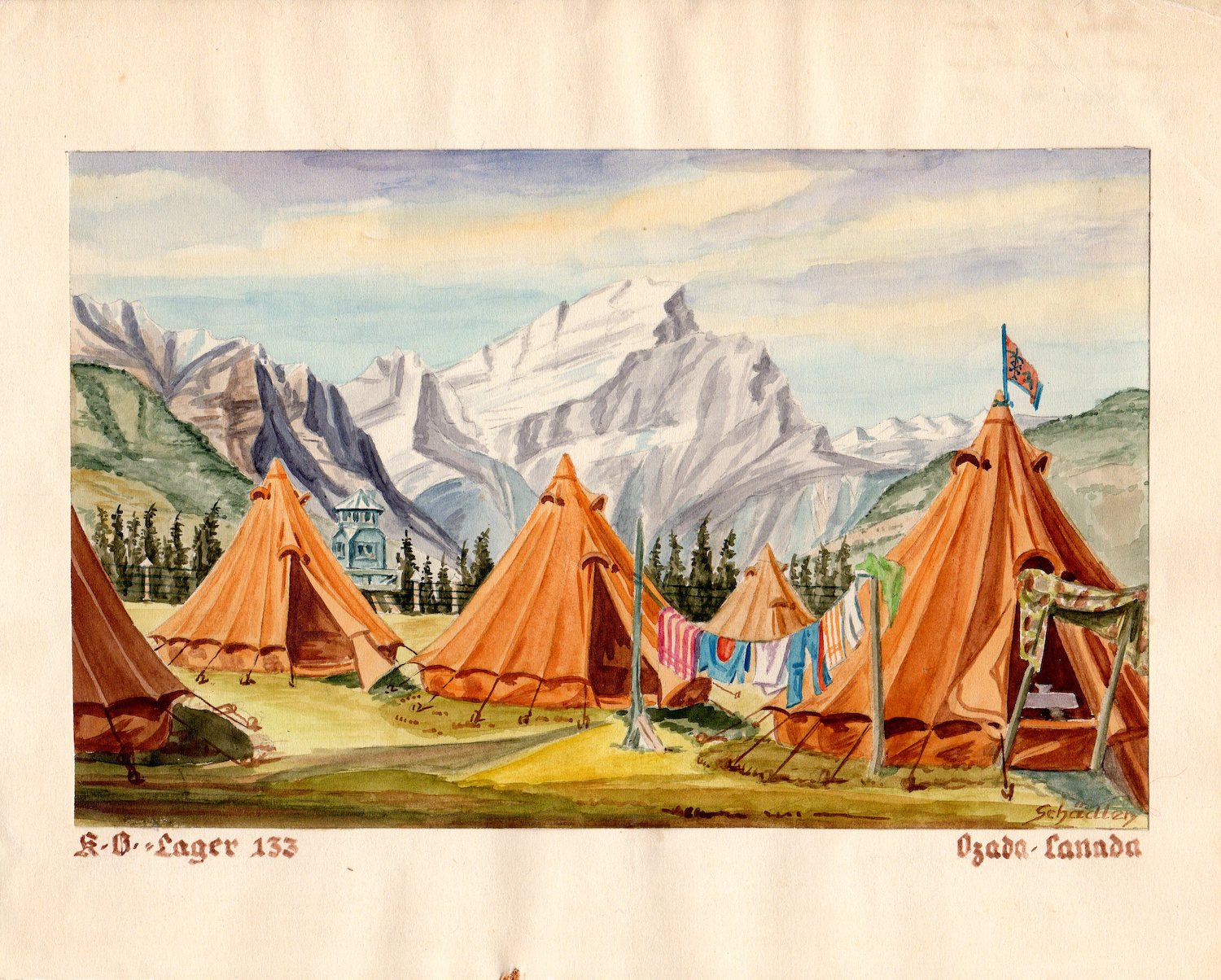
Today, prisoner of war art provides a glimpse into life in internment camps and labour projects and how prisoners perceived their internment, their friends, their captors, and their understandings of Canada and its peoples.
Further Reading:
- Posts about POW Art
- O’Hagan, Michael. “The View from Behind the Wire: Prisoner of War Art in Canada during the Second World War” in Behind the Lines: Canada’s Home Front During the First and Second World Wars. McIntosh Gallery. 2017. 235-249. (Request a copy)

