
Date Opened: July 1940
Date Closed: October 1941
Capacity: 1,200
Type of POW: Civilian Internees and Enemy Merchant Seamen
Description:
The Germany army’s invasion of France and the Lowlands in May 1940 prompted the British Government to turn to the Commonwealth for help interning its POWs. After Canada agreed a British request to accept thousands of internees and prisoners of war, the Directorate of Internment Operations was forced to significantly expand and open new internment camps across the country. Among them was Camp R at Red Rock in Northwestern Ontario.
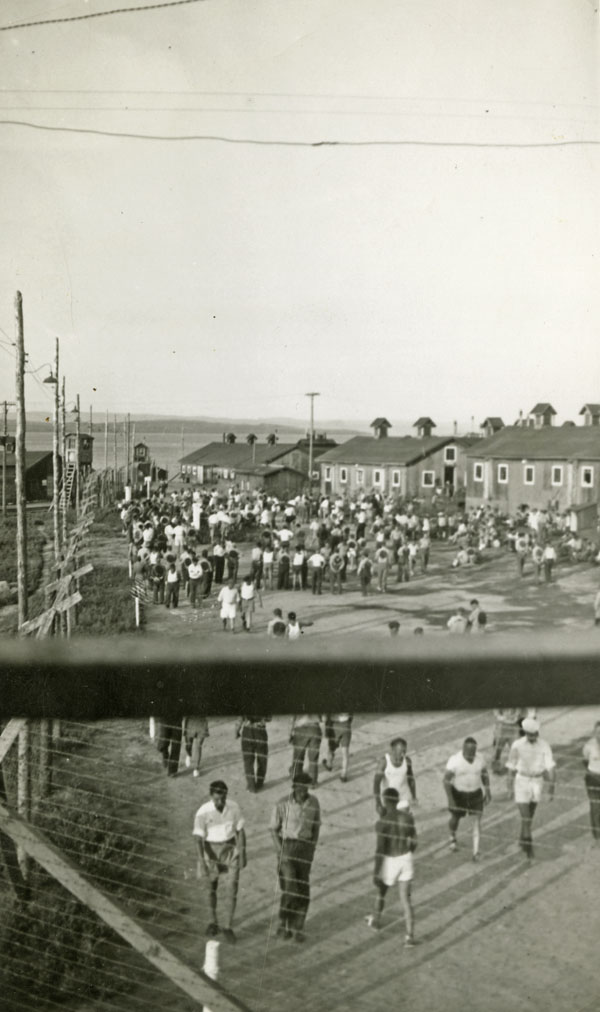
Located on the grounds of a plant owned by the Lake Sulphite Pulp Co. Ltd., Camp R’s enclosure was surrounded by two layers of barbed wire fences and five guard towers – initially only elevated platforms – each with a machine gun. Security was initially provided by soldiers of the Fort Gary Horse based out of Winnipeg but these men were later replaced by a company of the Veterans Guard of Canada.

Within the enclosure were quarters for the prisoners – previously used to house workers building the company plant – as well as a kitchen and mess hall and a recreation hall. Outside the fences were the officers’ quarters and administration building, guard quarters, messes, quartermaster’s stores, electrical shop, diesel hut, and ice house.
The camp accepted its first prisoners in early July 1940. The 1,145 POWs – all Civilian Internees and Enemy Merchant Seamen – included pro-Nazis, anti-Nazis, and approximately eighty Jews, a combination that proved a challenge for camp staff. In a report from November 1940, the British intelligence officer assigned to Camp R provided some insight into the divisions between these factions:
Camp ‘R’ is what has been described as a ‘mixed camp,’ which means that there are present both kinds of German. Those who are for Hitler and those who are not. Although this sounds a quite simple and clear-cut division, in Camp ‘R’ the ‘mixture’ is by no means a straightforward one of two ingredients. The ‘Hitler’ group can be divided into (a) radical, out-and-out National-Socialists, (b) recognizable but mild supporters of National-Socialism, (c) those who are National Socialists, not from conviction, but for personal convenience, and (d) those who are secretly opposed to Nazism, but who purposely conceal their opposition for fear of bringing ruin upon themselves and their relations. The ‘Anti-Hitler’ group contains no less than fifteen distinct types of prisoner. It contains genuine refugees; near-Communists; political fugitives; police fugitives; adventurers; ‘Devisenschieber’ – currency smugglers; International Trade-Unionists and, possibly, a few Nazi agents in sheep’s clothing.
Capt. K. Kirkness, “Camp ‘R’ – Morale Report No. 5,” November 26, 1940, C5377, RG24, LAC.
While the Jewish refugees were later transferred to another camp, a tense animosity between the pro- and anti-Nazi groups continued throughout the camp’s existence.
Prisoners did their best to fill their time, often busying themselves with sports. Gymnastics proved a popular activity during the summer months while hockey and skating proved favourites in the winter. Skating remained limited, however, as the camp only had thirty pairs of skates between the over 1,000 prisoners in camp so prisoners had to reserve times to skate.

There appears to have been limited interest or involvement in music or theatre at Red Rock. Internees did establish a small orchestra and choir, but it is unknown how often they performed. The manufacture of ships in bottles was a popular pastime, with several prisoners illicitly trading them to guards, some of whom later resold them to the local residents.
Although non-combatants, several attempted to escape the confines of Camp R. On October 4, 1940, Rudolf Rauschenbach and Ernest Mueller escaped from a working party at the Red Rock Inn. A lone guard later encountered the pair hiding in a shack and while Rauschenbach surrendered, Mueller ignored the guard’s orders and attempted to flee. The guard opened fire and Mueller was killed. This not not deter future efforts for, on January 18, 1941, Erich Weisser and Bruno Schwaiger escaped from Camp R and succeeded in making their way to Port Arthur (Thunder Bay) before being recaptured.
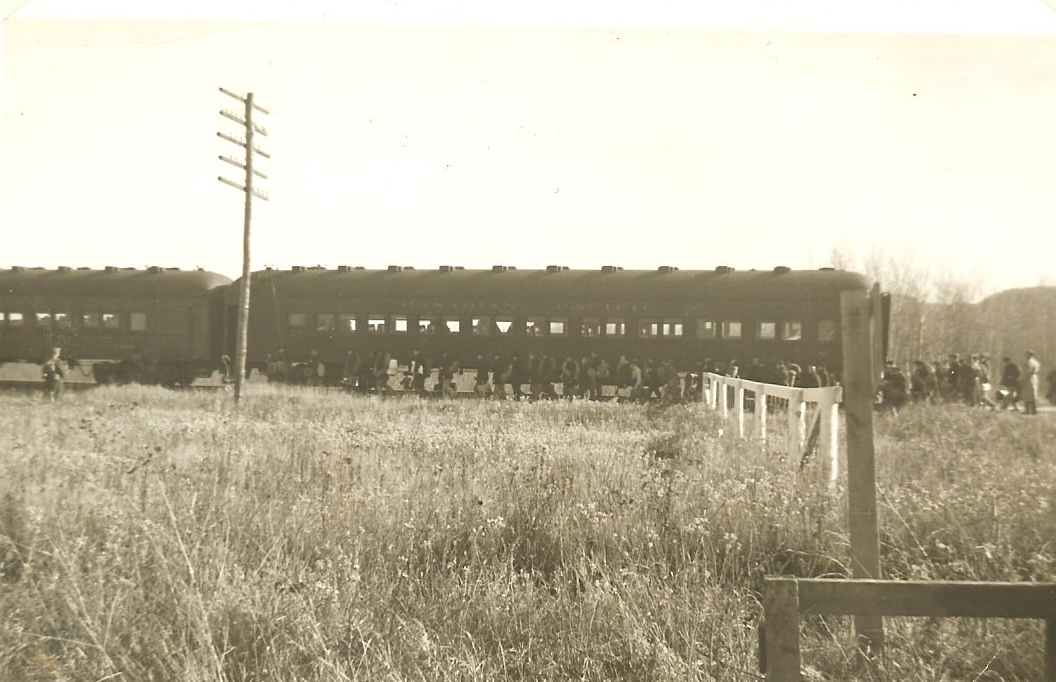
In 1941, the Department of National Defence began preparations to close Camp R. Even shortly after its its opening, authorities reported the site was ill-suited for an internment camp. The camp’s water supply was frequently deemed unsafe for drinking and the prisoners’ quarters presented several security concerns nor did they meet army standards. Rather than commit to an expensive renovation, the Department of National Defence elected to close the camp and transfer the prisoners elsewhere. It was originally proposed to move the prisoners to new camps at Neys (Camp W) and Angler (Camp X) but construction delays meant the prisoners were ultimately transferred to Camp 130 (Kananaskis) and Camp 23 (Monteith) in October 1941.
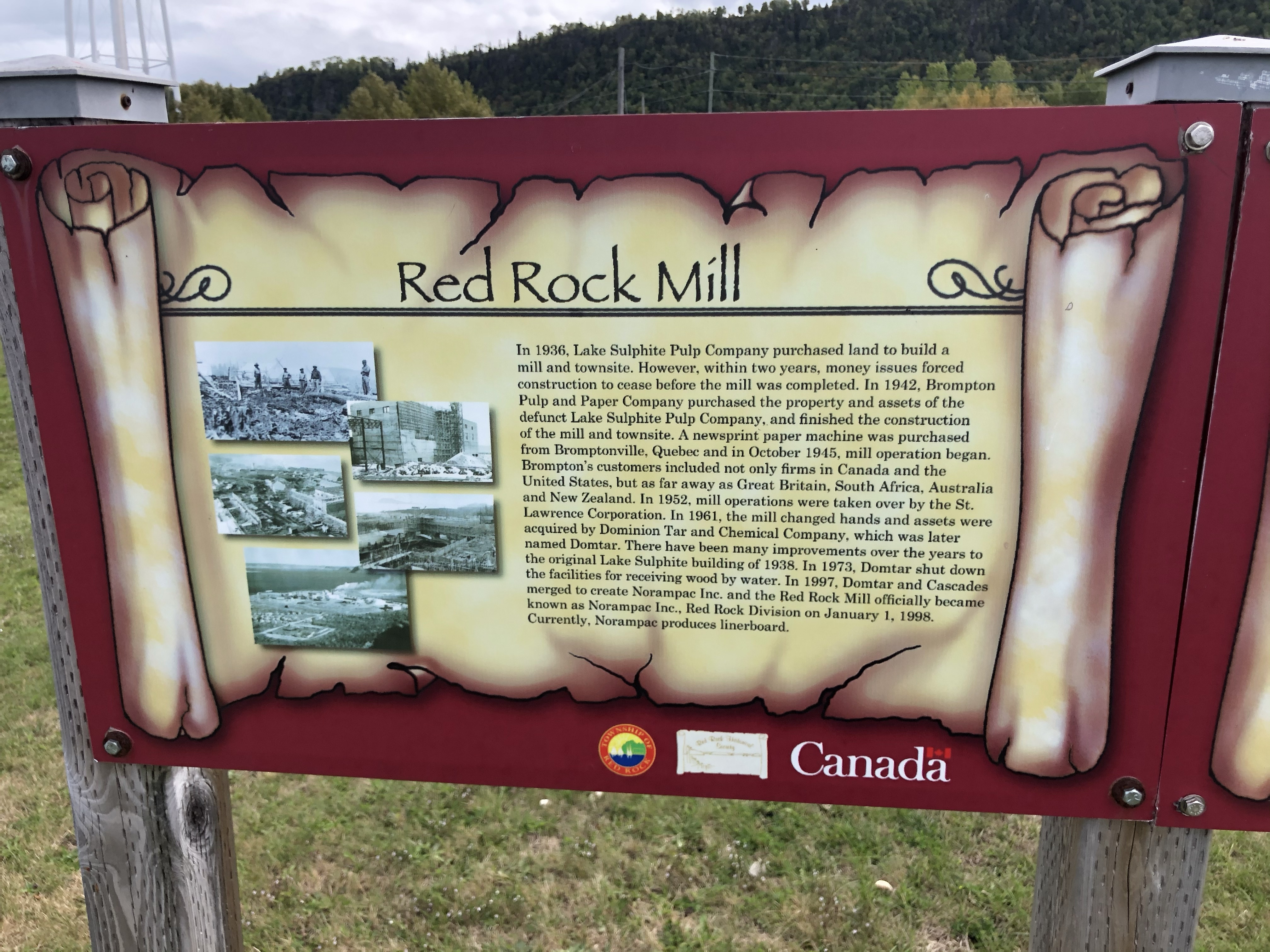
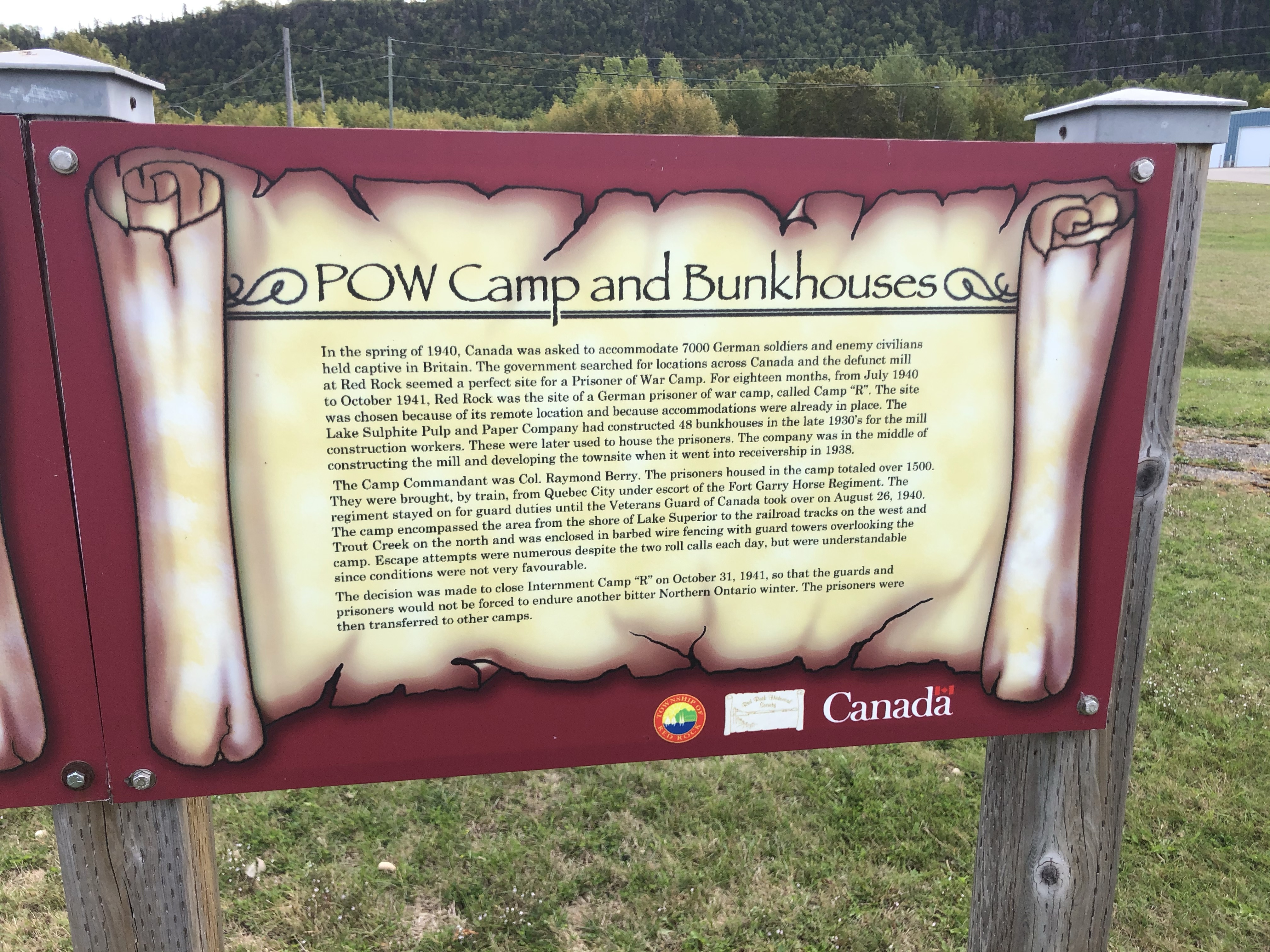
After the prisoners’ departure, Camp R closed and the property was later purchased by the Brompton Pulp and Paper Company. The mill would undergo several changes in ownership over the following decades and eventually closed in 2005. Although the buildings have since been removed, interpretative signage now marks the location and history of Camp R and the Red Rock Mill.
Location:
Pictures:




Further Reading:
- Posts about Camp R (Red Rock)
- Zimmermann, Ernest Robert. The Little Third Reich on Lake Superior: A History of Canadian Internment Camp R. Edited by Michel S. Beaulieu and David K. Ratz. Edmonton, AB: University of Alberta Press, 2015.
 POWs in Canada