
When I began researching prisoners of war interned in Canada, I discovered that there was no primary institution dedicated to preserving the history of a Canadian Internment Operations. While archives and museums have collections generally pertaining to local POW camps or work projects, there is no museum dedicated to POWs in Canada during the Second World War.
I began gathering POW letters and postcards, photographs, ships in bottles, art, handicraft, and other material relating to POWs and their guards. This material has proved invaluable in studying the experiences of POWs interned in Canada and their guards. Photographs and art give great insight into the daily life of prisoners in internment camps or those working on farms or in the bush while handicraft highlight the complex relationship between POWs and their guards and Canadian civilians.


Since 2008, the collection has grown to include over 1,000 photographs, letters and postcards, ships in bottles, paintings, and much more. I have since made this material available to other historians, archaeologists, researchers, and authors and examples from my collection have appeared in several articles, books, and videos.
If you are looking for material to use in your research or if you have items that you are willing to part with, please get in touch.

“Kananaskis Record” by Otto Ellmaurer, n.d., Author’s Collection. 
No. 4 Platoon of No. 11B Company, Veterans Guard of Canada while training in Nanaimo in September 1941. Author’s Collection. 
Cartoon postcard by POW working for Pigeon Timber Co. near Neys, Ontario. Author’s Collection. 
Prisoners pass their batons during a relay race at Camp 23 (Monteith). Left to right: Heinz Beuwe (Esso Hamburg), Josef Statz (Bismarck), Rudi Laurisch (Esso Hamburg), Unknown, and Unknown. Author’s Collection. 
Ships in bottles made by a POW. Author’s Collection. 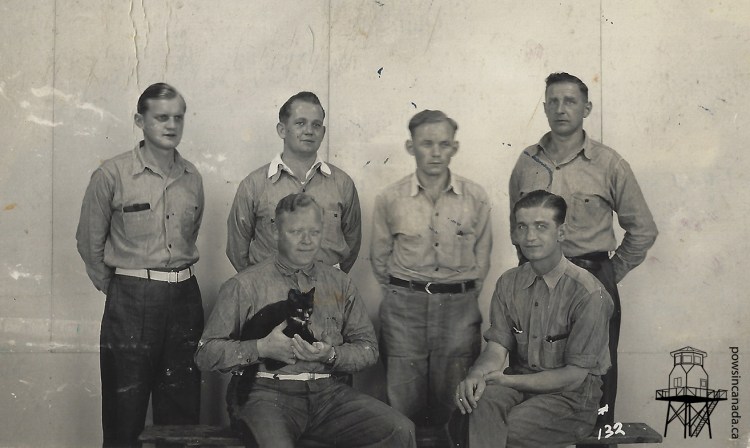
German EMS with their pet cat at Camp 100 (Neys). Author’s Collection. 
Linocut print of Camp 44 (Grande Ligne) by “befi” (believed to be H.D. von Tiesenhausen). Author’s Collection. 
“K.G. Lager 133 – Ozada, Canada” by Richard Schädler. Author’s Collection. 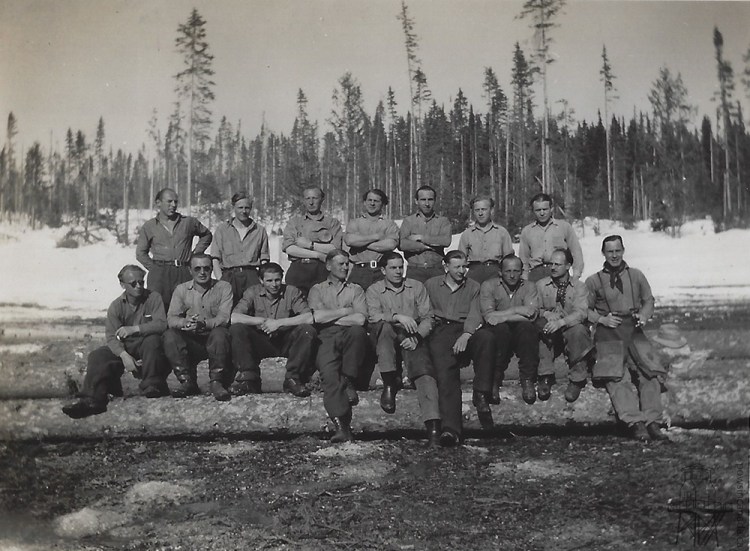
Group of POWs working for the Swanson Lumber Co. near Clearwater, Winter 1945-1946. Author’s Collection. 
Christmas postcard produced by the War Prisoners’ Aid of the YMCA for POWs interned in Canada in 1943. Author’s Collection. 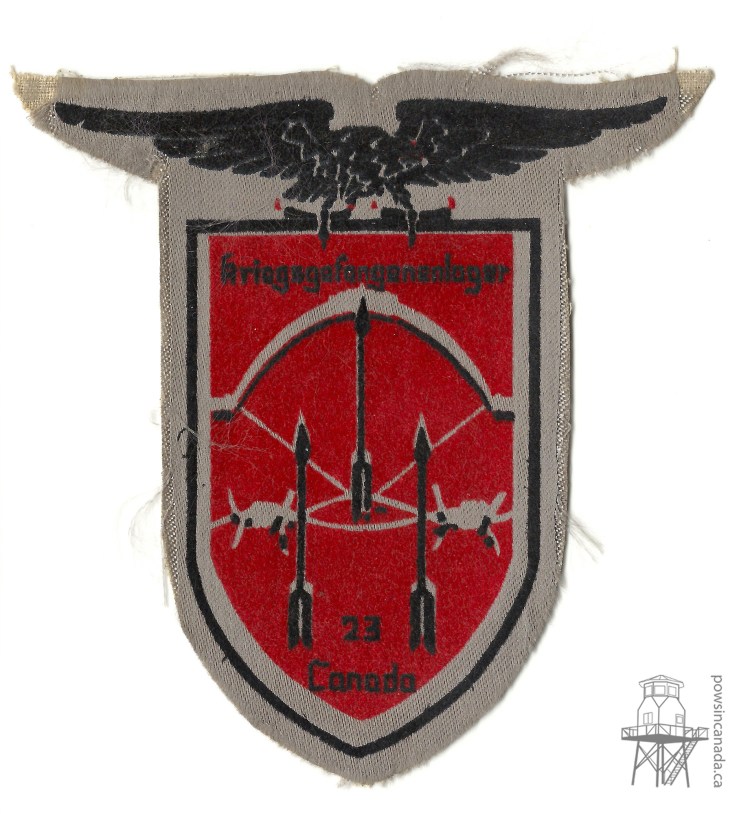
A patch produced by POWs at Camp 23 (Monteith) designed to be sewn on athletes’ uniforms. Author’s Collection. 
Left to right: Unidentified airman, Willi Keller (Bismarck), Werner Hager (Bismarck), Wenzel Holfeld (Lothringen), Kurt Fischdick (U-433), Wolfgang Rick (Landser Norwegen), Gerhard Heinecke (U-95), Heinz Wurst (Bismarck), Erich Reubold (Bismarck), and Helmut Burger (U-433). Author’s Collection. 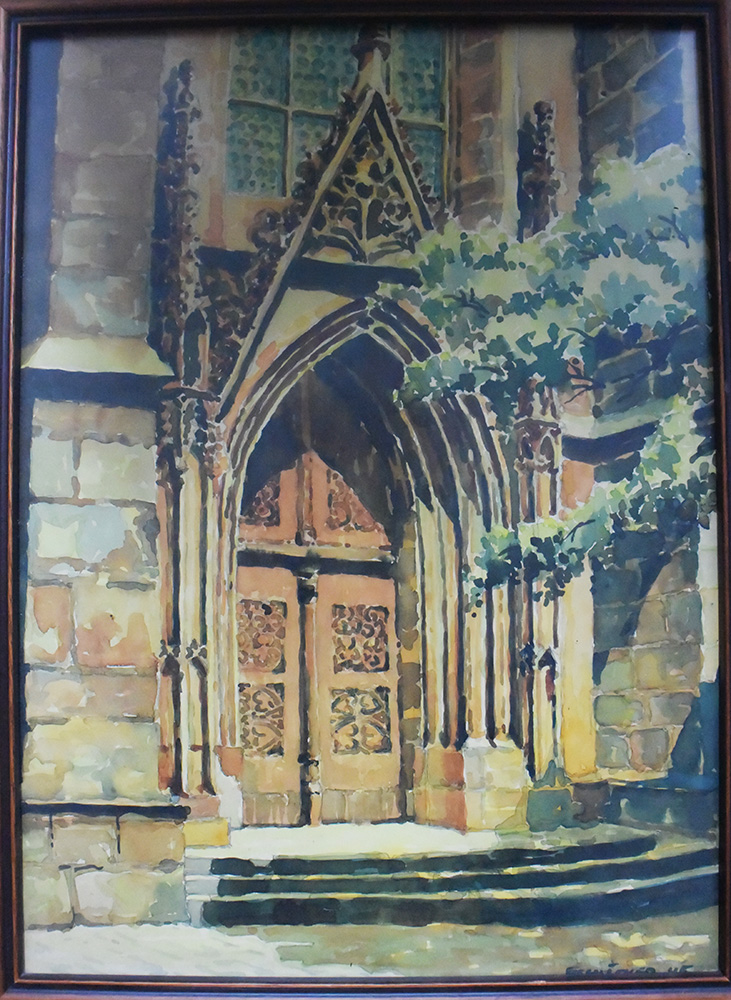
Untitled watercolour by Richard Schlicker. Author’s Collection. 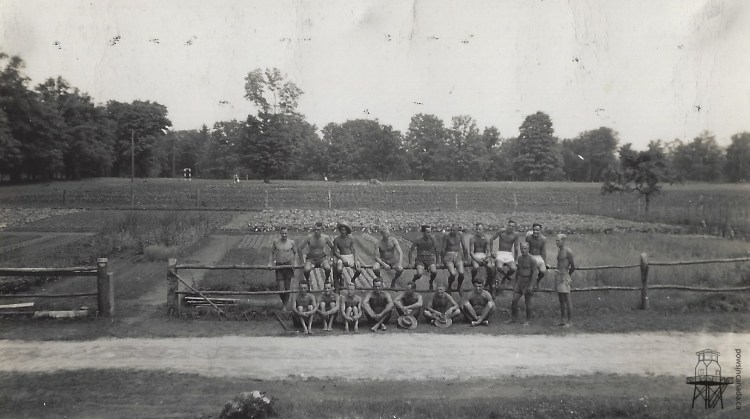
A group of POWs take a break from working on their vegetable gardens near Camp 20 (Gravenhurst). The field behind was used for games. Author’s Collection. 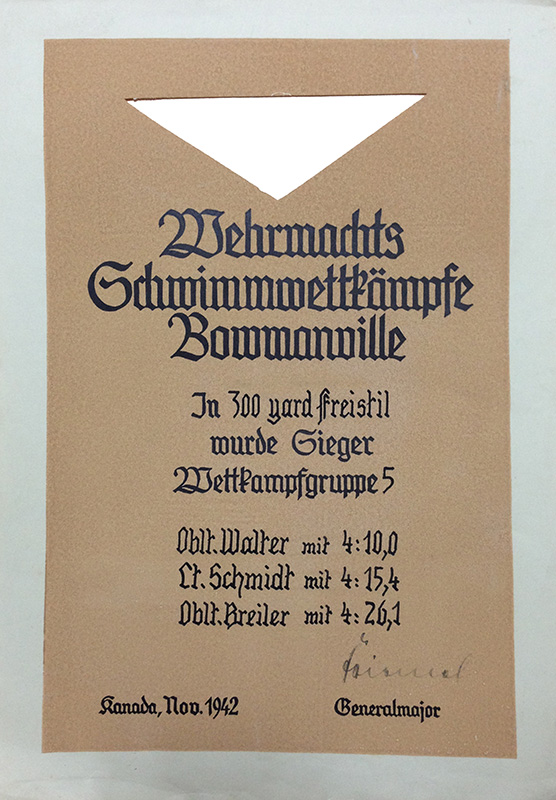
Denazified Sports certificate awarded to Lt. Schmidt at Camp 30 (Bowmanville). Author’s Collection. 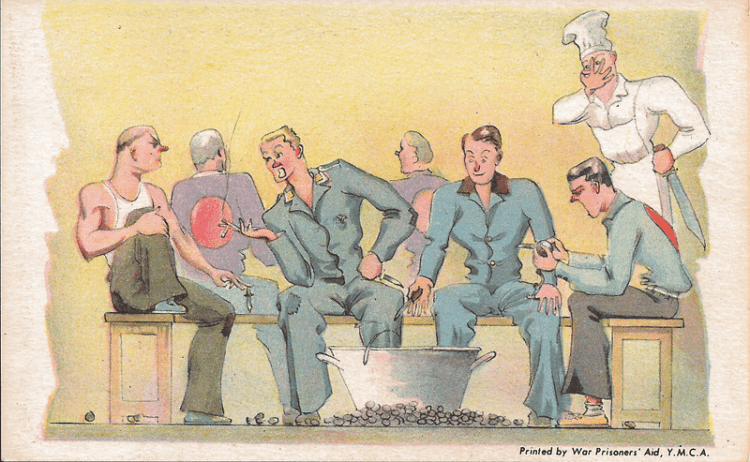
YMCA Postcard. Author’s Collection. 
Untitled watercolour by Hans-Ulrich Roll, 1942. The guard tower in the center overlooked the prisoners’ swimming area in Muskoka Bay, visible in the background.
 POWs in Canada